
You check your Amazon visibility before breakfast, answer launch messages at lunch, and return to your next manuscript late at night. You’re also watching uneven royalties, wondering which promotion worked and whether the next book will make the business steadier. That tension is the starting point for understanding what a sustainable author business looks like.
Most authors do not have a book problem. They have an author-business design problem. The work is to connect a strong book, a defined audience, discoverability, useful offers, and measurable financial goals without chasing every opportunity or expecting one title to carry your career.
Bradley Johnson Productions helps you connect book development, marketing, Amazon SEO, rankings, pricing, and long-term publishing strategy, although no service can replace your publishing decisions or consistent execution. Durable systems matter more than generic advice about motivation and productivity. They can help you build a profitable author ecosystem with greater freedom, sustainability, and purpose.
From selling a book to building an author ecosystem
You may still measure your author business by one launch, one retailer dashboard, or one royalty statement. That view makes your book carry every commercial responsibility, even when your skills, ideas, and reader relationships could support more than a single product.
The shift is not a demand to monetize every interest. It is a broader way to judge fit. Your book remains central, but it can also introduce readers to teaching, speaking, collaborations, retreats, or rights opportunities that suit your subject and working style.
The industry signal behind the ecosystem model
On September 2, 2025, the Alliance of Independent Authors described independent publishing as a route to creative businesses that extend beyond books, including courses, speaking engagements, retreats, and rights licensing. The point affects you whether you write practical nonfiction or commercial fiction: independence gives you room to build connected assets instead of relying on one format. The author ecosystem funnel checklist fits this workflow by showing how related offers can connect without treating every reader as a prospect for everything.
“I’m publishing a book” becomes “I’m building an author business,” a mindset the Alliance of Independent Authors says helps beginning authors make smarter long-term decisions.
That change is gradual, not compulsory. Russell Nohelty’s advice is to build one revenue-producing skill each year, then add another over time. The Alliance of Independent Authors reports that this approach could make an author a dynamo in half a decade, but you still need to test whether a course, workshop, talk, or licensing opportunity fits your readers.
Why first-time and established authors face different consequences
If you are publishing your first book, the immediate task is proving that you can finish, position, and release a useful project. An emerging author may need to expand a connected intellectual-property portfolio, while an established independent author is more likely to need repeatable income systems and clearer audience segments.
Weak positioning says, “Buy my book about backyard gardening.”
Strong positioning: “The Backyard Harvest Guide helps apartment gardeners grow five reliable vegetables, then leads interested readers to a seasonal planning workshop.”
What changes when authors rely mainly on book sales
A book-only definition is incomplete because it ignores what your readers may need next. The Alliance of Independent Authors says beginning authors make wiser long-term decisions when they shift from publishing a book to building an author business, while its feature also presents independent publishing as a foundation for diverse creative work.
That does not make books secondary. Your book can remain the proof of expertise, the entry point for a series, or the core intellectual property behind another offer. Bradley Johnson Productions helps independent authors connect book development, marketing, Amazon SEO, rankings, pricing, and long-term strategy, although no guidance can decide which opportunity suits your audience or replace consistent execution.
Practical rule: Keep the book at the center, then test one related offer that solves a clear reader problem before adding another.
The book is a starting point, not a finish line. You build sustainability by choosing the next useful connection, measuring its response, and protecting the freedom to keep writing what you love.
A sustainable model is a portfolio of assets, audiences, and income streams
Your book can remain the cornerstone without carrying the entire business. Treat its ideas, rights, reader relationships, and proven questions as assets that support related offers.
That shift changes the revenue math. You are not replacing books with courses or memberships. You are deciding where each format fits, then testing demand before adding operational weight.
The book as intellectual property rather than a single product
When you view a book as intellectual property, you can connect it to courses, speaking, coaching, affiliate recommendations, memberships, sponsorships, and licensed rights. The Alliance of Independent Authors reported on September 2, 2025 that Joanna Penn described nonfiction books becoming online courses, podcasts attracting corporate sponsors, affiliate income, and subscription communities.
You can also examine translation, audiobook, film, television, and merchandise rights. The Alliance of Independent Authors reported on September 2, 2025 that licensing these rights may expand income without multiplying an author’s workload, although you still need contracts, quality control, and clear audience demand.
Bradley Johnson Productions connects book development, marketing, Amazon SEO, rankings, pricing, and long-term strategy, although no service can prove demand for every possible offer. Your author publishing strategy checklist fits this workflow by helping you assess which asset deserves attention first.
The revenue math behind books, courses, and services
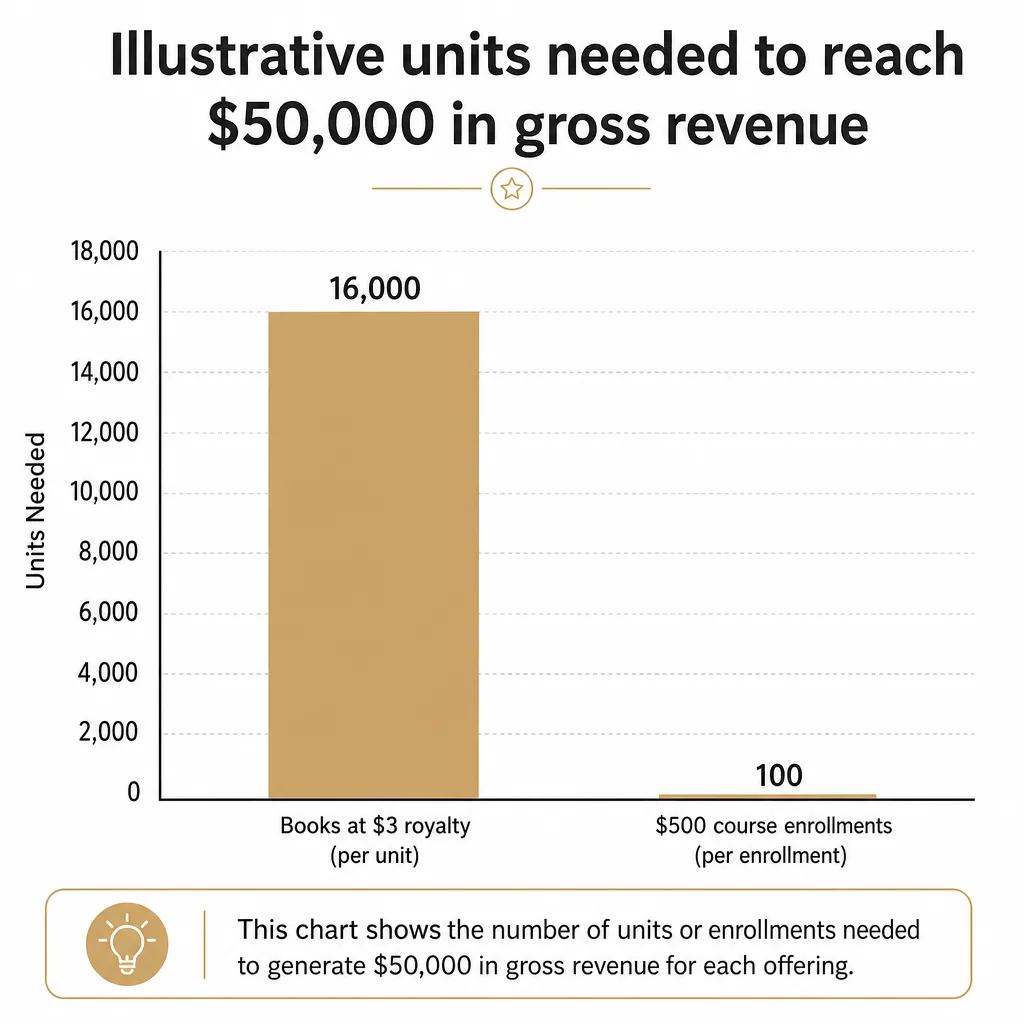
Consider two illustrations. A $500 course sold to 100 students produces $50,000 in gross sales. A book earning a $3 royalty per sale requires about 16,000 annual sales to produce the same amount. Neither example is a forecast. Each shows how price, audience size, delivery effort, and retailer dependence change the path.
Weak example: “The Author’s Confidence Course is available for anyone who wants more help.”
Strong example: “The $500 Nonfiction Book Blueprint helps first-time experts complete a market-tested outline and launch plan in six weeks.”
The chart compares those illustrative unit counts: 16,000 books at a $3 royalty versus 100 enrollments at $500. You still need audience trust, useful delivery, and compliant sales practices.
How the revenue model changes
| what changed | before | after | who it affects |
|---|---|---|---|
| Primary revenue logic | Depend mainly on book royalties | Use the book as a cornerstone for courses, speaking, memberships, sponsorships, affiliate income, coaching, or rights licensing | All independent authors, especially authors with expertise or an expanding catalog |
| Illustrative path to $50,000 | About 16,000 books at a $3 royalty each | 100 students buying a $500 course | Authors comparing scalable products with unit-based book sales |
| Workload relationship | More income generally depends on more book units and ongoing promotion | Some intellectual-property rights or products can add revenue without multiplying workload, subject to execution and demand | Authors evaluating licensing, teaching, or repeatable offers |
Sustainability means choosing one reinforcing system instead of chasing every opportunity
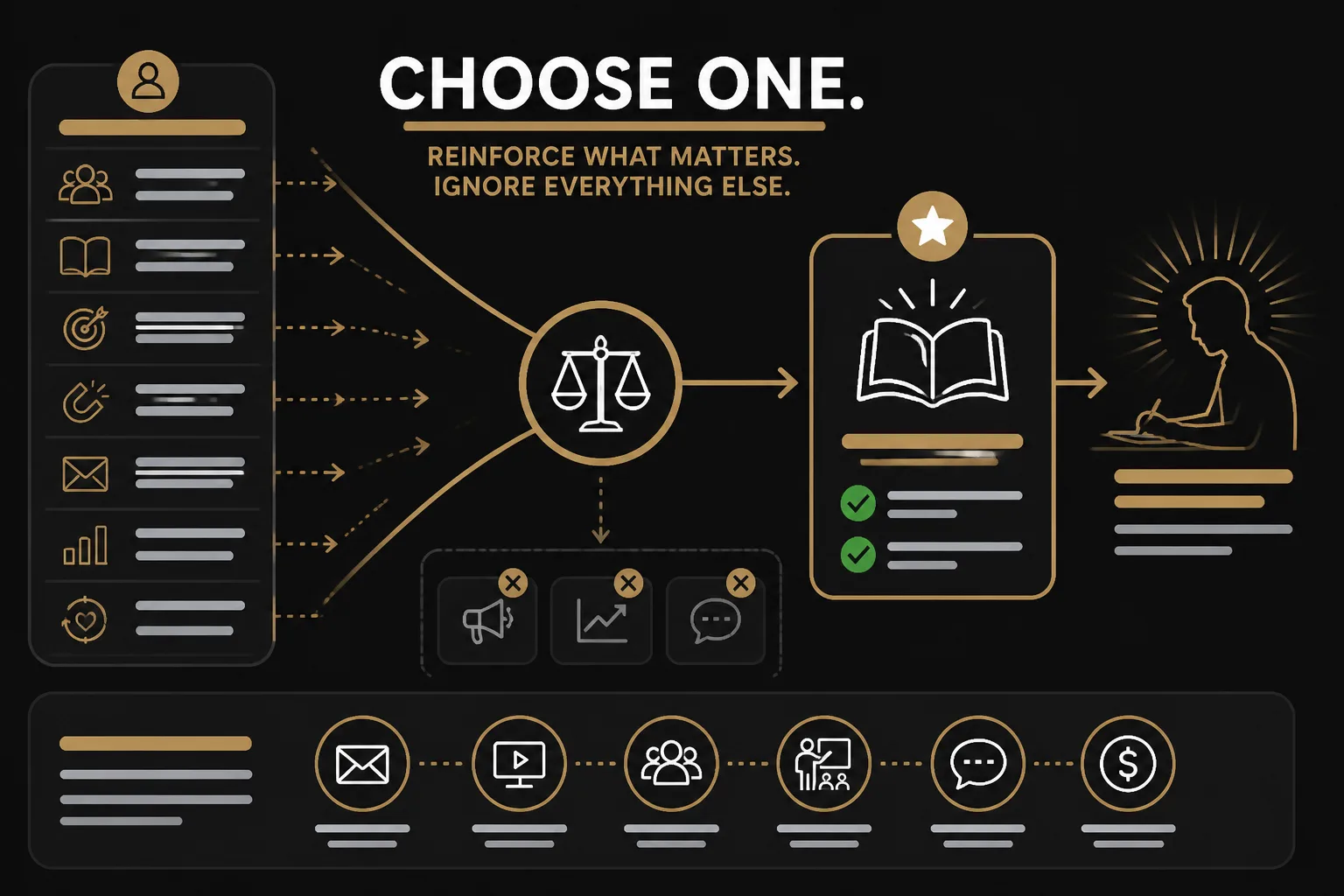
A larger menu of products doesn’t automatically make your author business safer. If you split your attention between courses, speaking, consulting, memberships, ads, and new books, you may create more work without building a stronger connection with your readers.
You need one reinforcing system first. Match your audience with your strongest skill, then choose an offer that supports your books instead of competing with them.
For nonfiction authors, expertise can become a second product
Your nonfiction book can open a path into teaching, speaking, consulting, or a focused course. The strongest option usually follows a problem your readers already want solved, not a random product category. A leadership author might turn a book about difficult workplace conversations into a small workshop for managers.
Weak version: “Buy my complete business success empire,” with unrelated coaching, templates, and memberships.
Strong version: “The Difficult Conversations Workshop,” a focused $149 session that helps managers apply the book’s framework.
That offer reinforces the book, gives your audience a clear next step, and lets you test demand before building a larger program. For aspiring authors, a small experiment is safer than constructing a full business around an unpublished idea.
For fiction authors, catalog and reader fit come first
Fiction sustainability depends more heavily on a coherent catalog, reader segmentation, pricing, series strategy, and discoverability. You may not need a course or coaching offer. You may need the next connected book, a better series page, or clearer Amazon positioning for different reader groups.
Weak version: “Mystery readers, join my general author productivity membership,” disconnected from the novels.
Strong version: “The Harbor Street Mysteries,” a clearly branded series with segmented reader emails, consistent pricing, and Amazon keywords that match the books’ actual promise.
Bradley Johnson Productions connects book development, Amazon SEO, rankings, pricing, and marketing with long-term ecosystem strategy. Its limitation is practical: it won’t replace your writing, publishing capacity, or direct knowledge of your readers.
“Trying every opportunity at once creates overwhelm, while a quarterly experiment gives you a way to test one promising activity, measure it, and keep or discard it,” according to the research informing this model.
What works
- Audience fit: You choose an offer that answers a proven reader need.
- Reinforcement: Your book, email list, and next offer support one another.
- Measured testing: You evaluate one activity before adding another.
What fails
- Opportunity chasing: You add every promising channel and create operational overload.
- Unrelated diversification: You confuse readers with offers that don’t match your books.
- Premature expansion: You build a large product before demand is visible.
The quarterly experiment rule for testing new income
Choose one promising activity for the next quarter. Define the audience, offer, and evidence that would justify keeping it. If you write fiction, test a series-focused reader segment or pricing change. If you write nonfiction, test a workshop or speaking topic tied to your book.
The guide to mapping an author’s reader journey fits this workflow because it helps you match the next offer to what your readers already need.
The ecosystem model follows the move from publishing freedom to business responsibility
You can now publish a book without waiting for a traditional gatekeeper, yet that freedom leaves more decisions on your desk. You choose the positioning, retailer strategy, pricing, rights, promotion, and financial plan.
Finishing and launching a book is no longer the whole business milestone. You may still begin with one title, but sustainable publishing asks you to build reader relationships, test related offers, and create repeatable operations around your work.
From completing a manuscript to operating a publishing business
When ebooks expanded independent publishing access around 2007, you gained a practical route from manuscript to reader without securing a conventional deal. The opportunity was direct control. You could publish on your schedule, retain more decisions, and reach readers through digital retailers.
That control also transferred responsibility to you. A finished file was once treated as the main destination. Now you must decide how your book is positioned, how readers find it, which rights remain available, and how each publishing activity supports your wider author business.
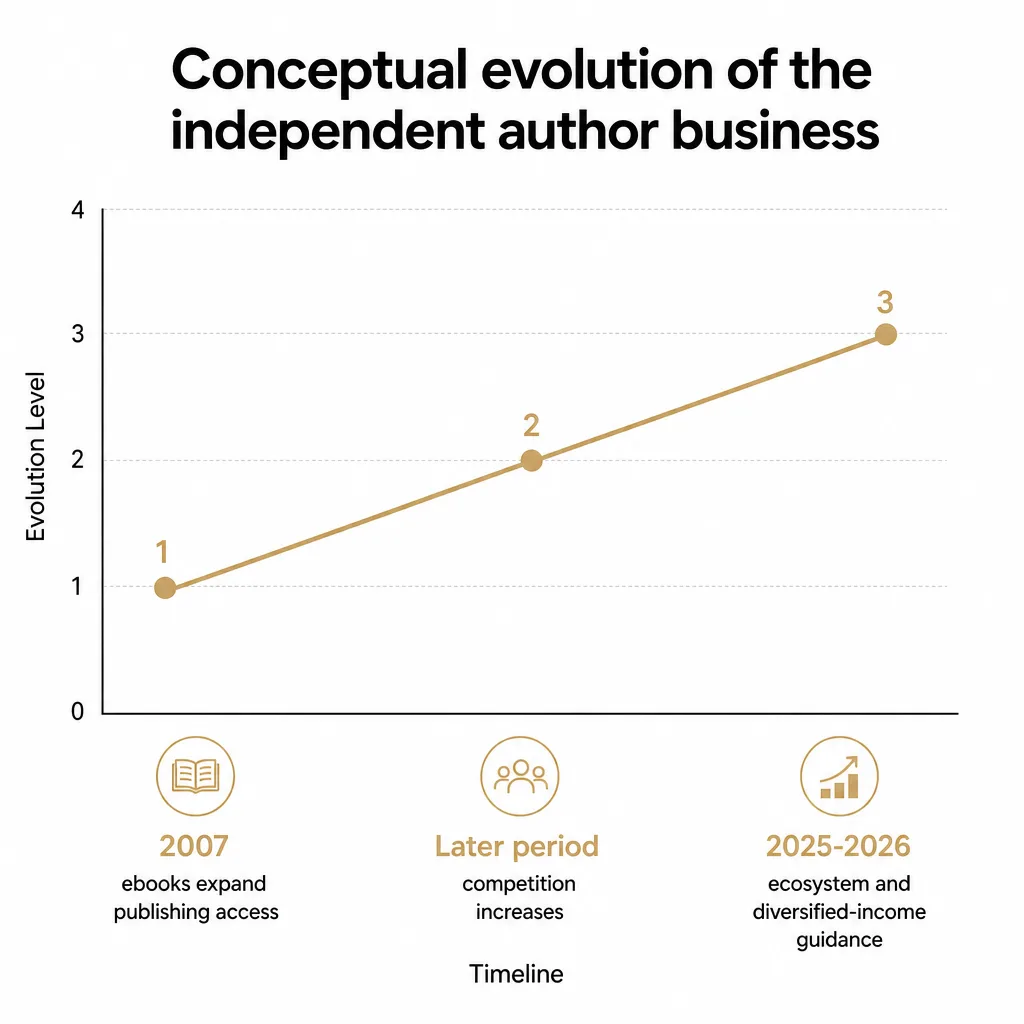
- 2007: Publishing access: You could use ebooks to move from completed manuscript to published edition with fewer traditional barriers.
- Later period: Market competition: You faced more books competing for similar readers, making visibility, category choice, cover presentation, and audience fit business concerns.
- 2025-2026: Ecosystem guidance: You are increasingly advised to connect books with reader relationships, adjacent offers, rights opportunities, and repeatable operating processes.
This is a conceptual timeline, not a quantitative market measurement. Its stages are represented by values of 1, 2, and 3 to show progression, so you can read the chart as a change in business expectations rather than a claim about market size.
Why competition made visibility and positioning business issues
As more authors gained access to the same retailers, publishing your book stopped being enough to help the right readers find it. You had to make clearer decisions about genre signals, search language, pricing, packaging, and the promise on the sales page.
That shift also changed the meaning of marketing. You are not only announcing a launch. You are learning which audience responds, which message earns attention, and which activities you can repeat without exhausting your writing time. Bradley Johnson Productions helps authors examine these choices, although its guidance cannot replace your own knowledge of the book and its readers.
How intellectual property expanded beyond the original edition
Your book can remain the central asset while its intellectual property serves more than one format. Fiction authors may explore series editions, translations, or audio rights. Nonfiction authors may test workshops, speaking topics, consulting, or licensed material built from the book’s core ideas.
The point is not to pursue every option. Choose the adjacent use that fits your audience, capacity, and evidence. Earlier advice asked whether you could finish and launch a book. Current advice asks whether you can build a publishing business that keeps serving readers after launch.
Build the first version around one book, one audience, and one measurable offer
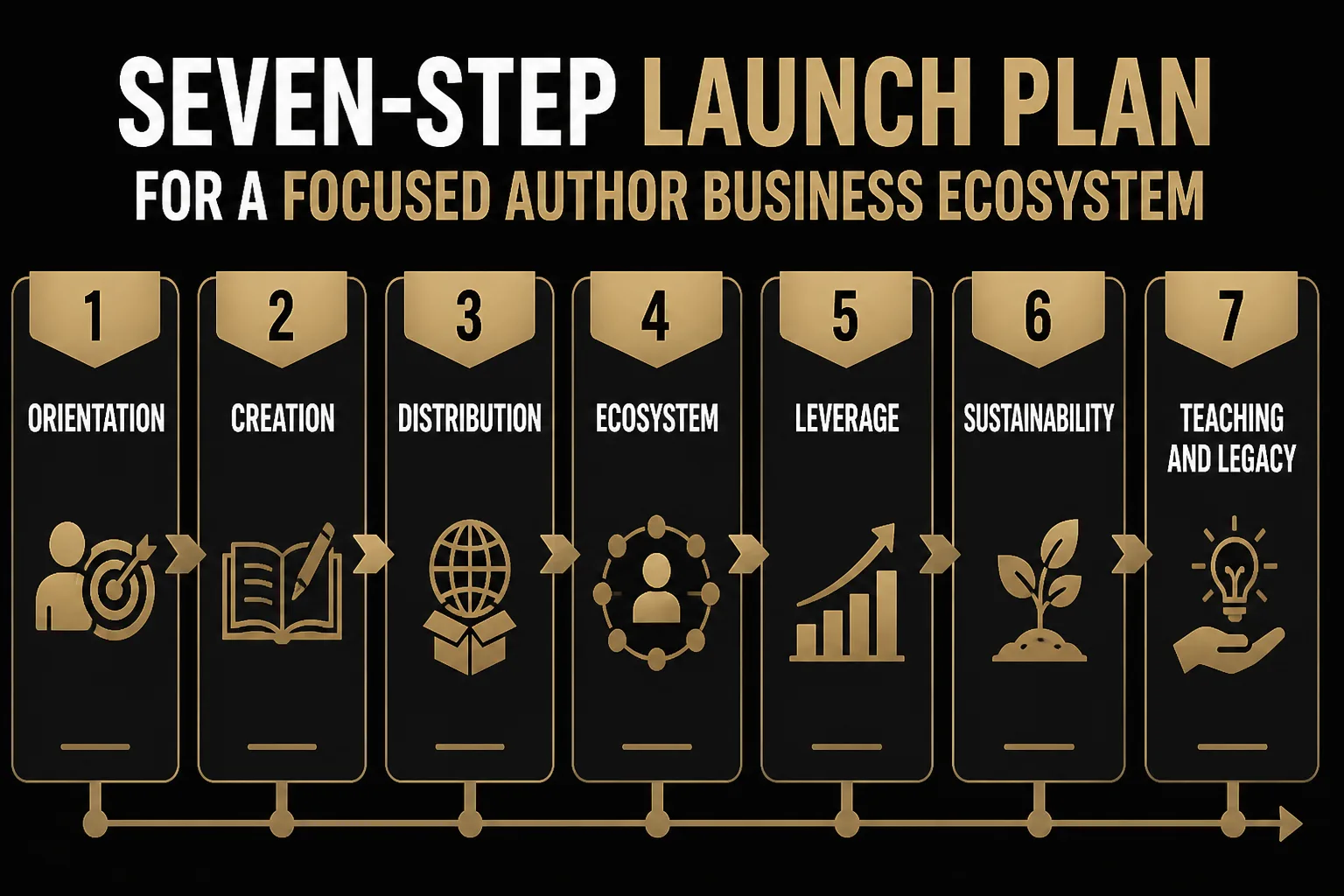
You need an operating plan that turns your book into a working business, not another list of possible products. Start with one clear reader, one useful promise, and one offer that gives you evidence before you expand.
Your first version should stay narrow enough to manage and specific enough to measure. Bradley Johnson Productions can help you connect book development, Amazon SEO, rankings, pricing, marketing, and long-term publishing strategy, although you still need to make the final choices about your time, audience, and capacity.
Define the business promise before adding products
By the end of your first planning week, identify your reader, problem, category, and promise. Write one sentence that tells you exactly who the book serves and what changes after reading it.
- Reader: Name the person you want to reach, such as first-time managers in small American businesses.
- Problem: State the specific difficulty your reader wants to solve, not a broad interest.
- Promise: Connect the book to a practical result your reader can understand.
- Core book: By the end of your second week, check whether your chapters, cover, description, and sample pages support that promise.
Before: “A guide to becoming a better leader.”
After: “Help first-time managers run clear, confident team meetings within their first 90 days.”
Choose the next offer by audience fit and commercial potential
By the end of your third week, improve your positioning and discoverability before creating something new. Review your title, subtitle, categories, keywords, cover-market fit, description, and Amazon SEO. Set a realistic ranking objective, such as appearing for a specific reader search, rather than promising a sales outcome.
- Adjacent offer: Choose one natural next step, such as a workshop, course, speaking package, reader membership, or rights test.
- Audience fit: Pick the offer that solves the next problem your current readers already express.
- Sales target: Set a price and target for a defined period, treating projections as tests rather than guarantees.
Before: “Buy my leadership course for everything you need to know.”
After: “Reserve the Team Meeting Workshop for managers who want to apply the book’s meeting system with live guidance.”
Set review dates before expanding the ecosystem
By the end of your fourth week, create simple audience segments based on meaningful differences. You might separate readers by topic interest, genre preference, buyer stage, or engagement, then record those choices in your email or customer system.
- Segment: Label each group by a useful action, such as “new managers” or “workshop prospects.”
- Review: Set a monthly date to check sales, search visibility, responses, and offer uptake.
- Decision gate: Add another stream only when your book, audience, and first offer show enough evidence to justify more work.
Answers to financial, legal, AI, and planning questions for authors
Your next decision may involve royalties, software, legal structure, or planning rather than another manuscript. You need practical answers that separate business choices from legal and tax advice, so your author ecosystem can grow without relying on assumptions.
How many books to sell to make $100,000
You calculate the sales target by dividing your income goal by your net royalty per book. Your result changes with price, format, retailer share, taxes, returns, advertising, editing, and other expenses. A paperback, ebook, audiobook, and direct sale may each produce different net amounts, so you need a format-by-format forecast rather than one universal sales number.
Whether you can sell a book written with ChatGPT
You may be able to sell ChatGPT-assisted writing, but commercial use depends on retailer terms, copyright rules, disclosure expectations, originality, privacy, and infringement risks. You need to revise the manuscript yourself, remove private or unlicensed material, and confirm each retailer’s current policy. For disputed ownership, contracts, or legal exposure, seek advice from a qualified attorney.
Whether a self-published author should have an LLC
You don’t automatically need an LLC, because the right choice depends on liability exposure, state fees, tax treatment, banking, contracts, and expected revenue. You should compare the administrative cost with the protection and separation an LLC may provide. This is general legal and tax information, not professional advice, so you should consult an attorney or tax professional before forming one.
What a sustainable business example looks like
A sustainable business example is a nonfiction author who sells one core book, offers a related course, and separates readers by topic interest or buying stage. You might see book buyers receive practical follow-up lessons, while workshop prospects receive course invitations. The author measures sales, email responses, and course enrollment before adding another offer or audience segment.
How to create an author business plan
You can create an author business plan on one page by defining your reader, core book, promise, sales channels, net-income goal, marketing activities, costs, and review dates. Add one measurable offer connected to the book, then assign each task to a month or quarter. You should revise the plan when sales, reader responses, or expenses reveal better evidence.
Start with the business page that makes every publishing decision easier
Your next publishing decision can feel larger than it is. You may be weighing another book, a new retailer, a course, or an advertising campaign without one page showing how each choice supports your readers and income.
You don’t need a complicated company, funnel, or product suite to create a steadier author business. You need one operating page that turns your assumptions into decisions you can measure and revise.
Write the five-line business model
Start today with a plain document. Write these five lines for your current author business, whether you are preparing your first launch or repairing a fragile catalog.
- Reader and promise: Name the specific audience you serve and the useful change your work promises them.
- Core book: Identify the one book that best proves that promise and deserves your next marketing effort.
- Next offer: Choose one reinforcing offer, such as a workbook, consultation, workshop, or related book.
- Pricing assumption: Record the price you believe readers will accept and the reason behind that belief.
- Channels and target: List where readers can find you, then set one income measure and one audience measure for the first review.
Keep the page visible when you review cover copy, keywords, pricing, advertising, or a new manuscript. If a decision doesn’t support the reader, book, offer, or target, you have a reason to pause.
Choose the first measurable experiment
Pick one small test connected to your core book. You might offer a $19 workbook to existing nonfiction readers, test a revised Amazon subtitle, or invite fiction readers to join a genre-specific email sequence.
Write the starting assumption and the result that would change your mind. You are not trying to prove constant income. You are learning which action earns attention, sales, replies, or qualified subscribers without scattering your time.
Review before adding another revenue stream
Schedule a review date before you launch the experiment. At that point, check your sales, audience response, costs, and workload. Keep, revise, or stop the offer based on what your records show.
- Define the reader: Write the audience and promise on your business page today.
- Audit the catalog: Record each current book, retailer, sales channel, and recent result.
- Choose one offer: Select the next product or service that naturally supports the core book.
- Set measures: Add one income target and one audience target you can check without guesswork.
- Schedule review: Choose a date to assess the experiment before adding another revenue stream.
Sustainability isn’t a promise of constant income. It is the practice of making deliberate, measurable decisions that reduce your dependence on one uncertain channel. Start with the page, then let evidence earn the next decision.
If you want a faster way to build that page, Bradley Johnson Productions provides guidance on book development, marketing, audience segmentation, Amazon SEO, rankings, pricing, and long-term publishing strategy for independent authors building profitable, sustainable book businesses.