
You’re staring at a manuscript that includes research, real places, or personal insight, yet its category still feels unclear. The same problem appears when you sort a recommendation list or choose Amazon metadata for a new release. Your book may feel realistic without being nonfiction, and factual material can still support a fictional story. Sorting out fiction versus nonfiction starts with the promise you make to readers.
Most authors don’t have a genre-label problem. They have a reader-promise problem. Grammarly describes fiction as using invented characters, settings, and plots, while nonfiction presents factual information and real events. Decide what readers are being asked to believe before you choose cover language, positioning, or keywords.
That choice matters because your category shapes the audience you attract and the book business you build. Bradley Johnson Productions treats it as part of a sustainable publishing strategy, not just a bookstore label.
The four-book comparison ahead shows where the boundary becomes less obvious, what each category promises, and which approach best fits your goals. You’ll leave with a practical test: identify what your reader must believe and what they expect to receive.
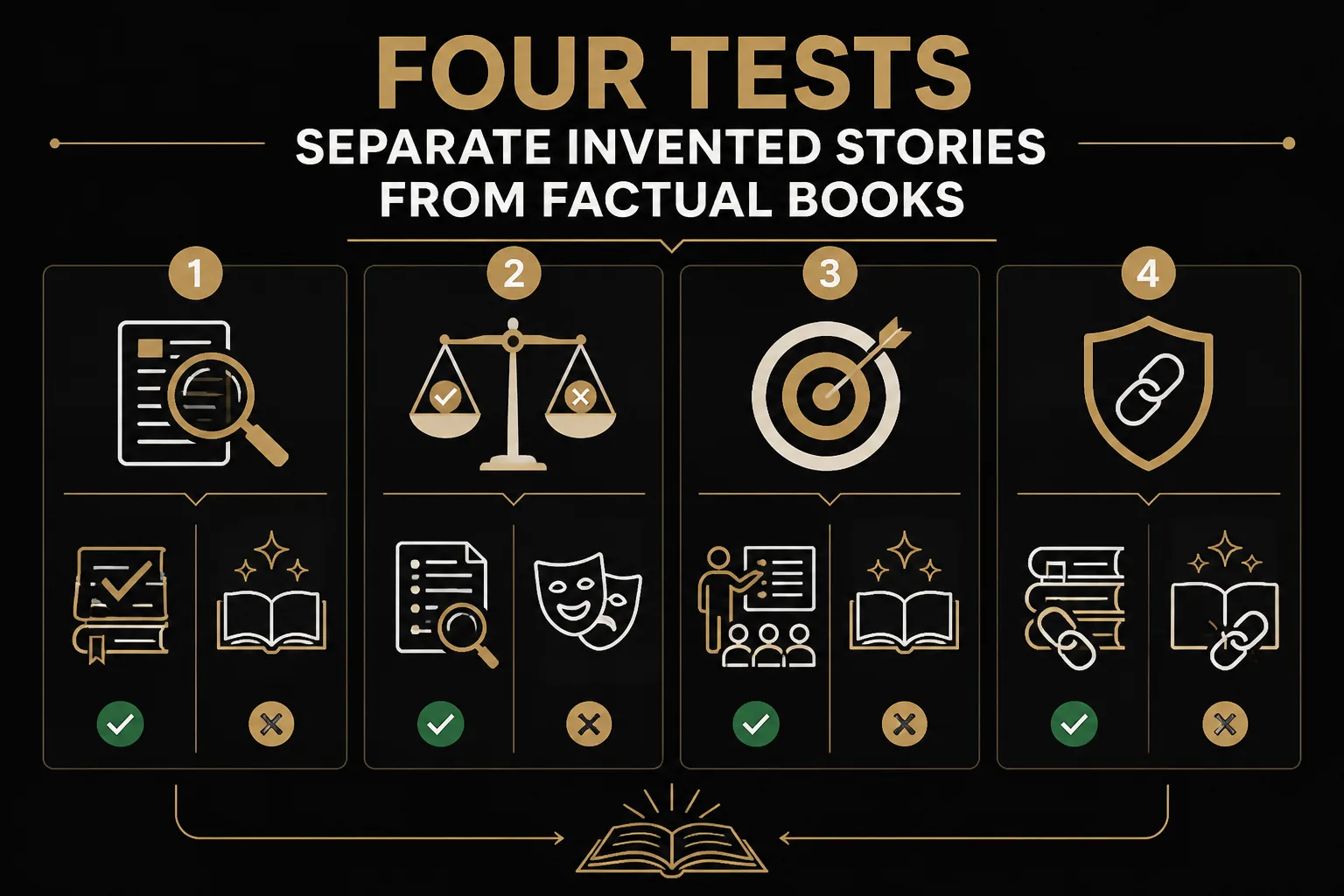
The Four Tests Used to Compare Fiction and Nonfiction Books
Realistic detail, research, and personal insight can make a manuscript’s category feel uncertain. A repeatable test helps you decide before packaging, metadata, and marketing make the decision expensive.
This comparison uses four books to show the boundary clearly. You can apply the same method to your manuscript and build a profitable author ecosystem around the promise your readers expect.
What makes a novel a novel
A novel combines invented narrative elements with a sustained plot arc. Grammarly explains that fiction usually follows a plot from beginning to end, while nonfiction often lets readers move between sections, charts, headings, and indexes. These are tendencies, not fixed rules.
- Events: Mark whether the central events are invented or documentable.
- Promise: State what your reader expects to feel, learn, or achieve.
- Delivery: Identify whether plot and scene or evidence and explanation do most of the work.
- Positioning: Turn the result into a category, packaging, and audience decision.
Invented events, documented claims, and the reader contract
Start with the manuscript’s foundation. A classic novel and realistic fiction invent their central events. Narrative nonfiction and practical nonfiction make claims that readers expect you to support.
The reader contract follows from that distinction. Fiction promises an engaging story world, while nonfiction promises understanding, evidence, guidance, or access to real experience.
Narrative form, evidence, audience promise, and author-business lesson
Judge each book on story structure, evidence, audience promise, and the business lesson for an independent author. Simple definitions leave out how category affects development and sustainable publishing strategy.
Practical rule: Choose the category that matches what your reader must believe and expects to receive.
The Great Gatsby
The Great Gatsby makes the distinction clear. Its characters, scenes, conflicts, and plot are invented, yet the novel offers sharp observations about wealth, status, desire, and society.
Fiction means an invented narrative designed to entertain, move you, or explore ideas through storytelling. Grammarly explains that fiction primarily serves those purposes through story. It isn’t false information presented as fact.

What fiction books mean
You see the invented world first. Then you interpret what that world reveals about your own.
What works
- Emotional experience: You feel social ambition and loss through constructed characters.
- Thematic flexibility: You can explore difficult ideas without offering documentary proof.
- Memorable meaning: You understand society through scenes, symbols, and conflict.
What fails
- Factual certainty: You cannot treat the novel as a verified record of American society.
- Unclear positioning: You may disappoint readers if your book promises a practical solution instead of an experience.
Best use case
Use this model when positioning a novel by genre, emotional promise, and reader expectation. Weak copy says, “A story about rich people.” Strong copy promises “A tense Jazz Age novel about desire, status, and the cost of chasing an imagined future.”
Best for
- Fiction authors: You want to build meaning through invented situations.
- Genre positioning: You need readers to understand the experience they will receive.
- Author businesses: You are building a catalog around consistent reader expectations.
Trade-off
You gain interpretive freedom, but you can’t use the novel as documentary evidence. Bradley Johnson Productions can help connect that promise to a sustainable author ecosystem, although literary fiction may require more precise audience segmentation than commercial genres.
Use it if you want readers to interpret a constructed story, not verify a factual solution.
The Martian
Realistic science and research don’t make a novel nonfiction. The Martian shows why. Mark Watney, the Mars crisis, and the plot are invented, while the technical problems and scientific constraints create credibility.
Screenshot: An imagined astronaut solves a real-feeling engineering crisis on Mars. You experience a survival story, not a documented astronaut account.
Use this model if you write science fiction, thrillers, or survival stories. Real historical settings, accurate science, and extensive research don’t change the category when the central events are invented. Grammarly explains that invented characters or plot points place a story in fiction, even when it uses real settings.
Best use case
Position your book as realistic fiction, then use research as a trust-building feature in your description and marketing. You give readers technical tension without promising factual reporting.
Best for
- Credibility: You want researched details to make an invented world feel possible.
- Problem-solving: You want readers to learn through a character’s choices.
- Metadata clarity: You need science-fiction or thriller positioning that signals the experience honestly.
What works
- Immersion: Plausible constraints make your imagined danger feel immediate.
- Educational value: You show scientific thinking inside an engaging story.
What fails
- False documentation: You cannot market invented events as a true account.
Trade-off
Technical plausibility builds trust, but it isn’t factual documentation. Bradley Johnson Productions can help connect that promise to sustainable book positioning, although research-heavy fiction may require tighter audience segmentation. Use it if you want readers to enter an imagined survival story, not verify an astronaut’s actual ordeal.
The Immortal Life of Henrietta Lacks
Rebecca Skloot’s The Immortal Life of Henrietta Lacks shows how nonfiction can be as absorbing as a novel without becoming fiction. It follows a real woman, her family, and the medical history shaped by her cells.
You encounter scenes, character focus, chronology, and emotional momentum, but the truth claim remains factual. Grammarly explains that nonfiction aims to inform, educate, document, or persuade. That distinction helps you build narrative nonfiction without presenting invention as evidence.
Screenshot: A reader sees a human story about Henrietta Lacks, her family, medical research, and the consequences of institutions making decisions about real people.
Best use case
Use this model when your book must make complex history understandable through documented human experience. Bradley Johnson Productions can help connect that approach to a sustainable author ecosystem, although source management and sensitivity review require careful work beyond marketing strategy.
Best for
- Accessibility: You can make medical, legal, or historical material easier to follow.
- Emotional engagement: You can show how institutions affect real families and communities.
- Responsible storytelling: You can organize evidence around people without abandoning factual accountability.
What works
- Human focus: You give readers a person to follow through difficult material.
- Narrative momentum: You can use scenes and chronology to sustain attention.
- Context: You connect documented events to wider medical and social consequences.
What fails
- Compression: You may simplify timelines or competing perspectives too sharply.
- Interpretation: You risk presenting inference as established fact.
- Novelistic confusion: You may cause readers to mistake dramatic presentation for invented content.
Trade-off: You can shape presentation, but claims about real people, medical history, and institutions require evidence, permissions where relevant, and responsible treatment. Sensitivity reading may also expose harm or ambiguity your research notes miss.
Use it if you want nonfiction that feels dramatic while remaining answerable to documented truth. Category follows your truth claim, not how vivid your prose feels.
Atomic Habits
Atomic Habits differs from a novel such as The Martian because you read it for useful claims, explanations, and actions, not an invented plot. Its expected reward is behavioral change.
Grammarly identifies 7 common nonfiction formats, including self-help, memoir, history, and reference guides. Atomic Habits shows how practical nonfiction can become the foundation for a focused author business.
Screenshot-style promise: “Build better habits through small, repeatable changes.”
Best use case
Study this model when your book promises a measurable transformation. A clear method helps you shape Amazon SEO, pricing, and audience segments around reader intent rather than isolated tactics.
Best for
- Practical frameworks: You give readers steps they can repeat.
- Audience segments: You can distinguish readers focused on health, productivity, habits, or professional performance.
- Author ecosystems: You can extend one promise into a workbook, email sequence, course, or speaking offer.
What works
- Clarity: You understand what change the book offers.
- Action: You can connect each idea to a behavior.
- Positioning: You can build sustainable marketing around a defined reader outcome.
What fails
- Overpromising: You imply universal results from a method that may not suit every reader.
- Thin support: You present advice without enough explanation, evidence, or practical context.
Trade-off
Weak positioning: “Simple habits for a better life.” Strong positioning: “A 30-day habit system for remote managers who want consistent weekly planning.” Bradley Johnson Productions can help connect that promise to pricing, Amazon SEO, and long-term planning, though each offer still requires its own development. A marketing mix for independent authors fits the same workflow.
Use it if you can answer this question: what measurable change should your reader pursue after finishing your book?
The Comparison Shows Four Distinct Reader Promises
The difference between fiction and nonfiction becomes clearer when every book faces the same tests. The table compares intended reader, primary strength, limitation, and a broad U.S. price band by common edition, so you can judge the promise rather than the format alone.
Retail prices change by format, retailer, special edition, and promotion. Bradley Johnson Productions helps independent authors connect that promise to category, keywords, cover direction, and launch positioning.
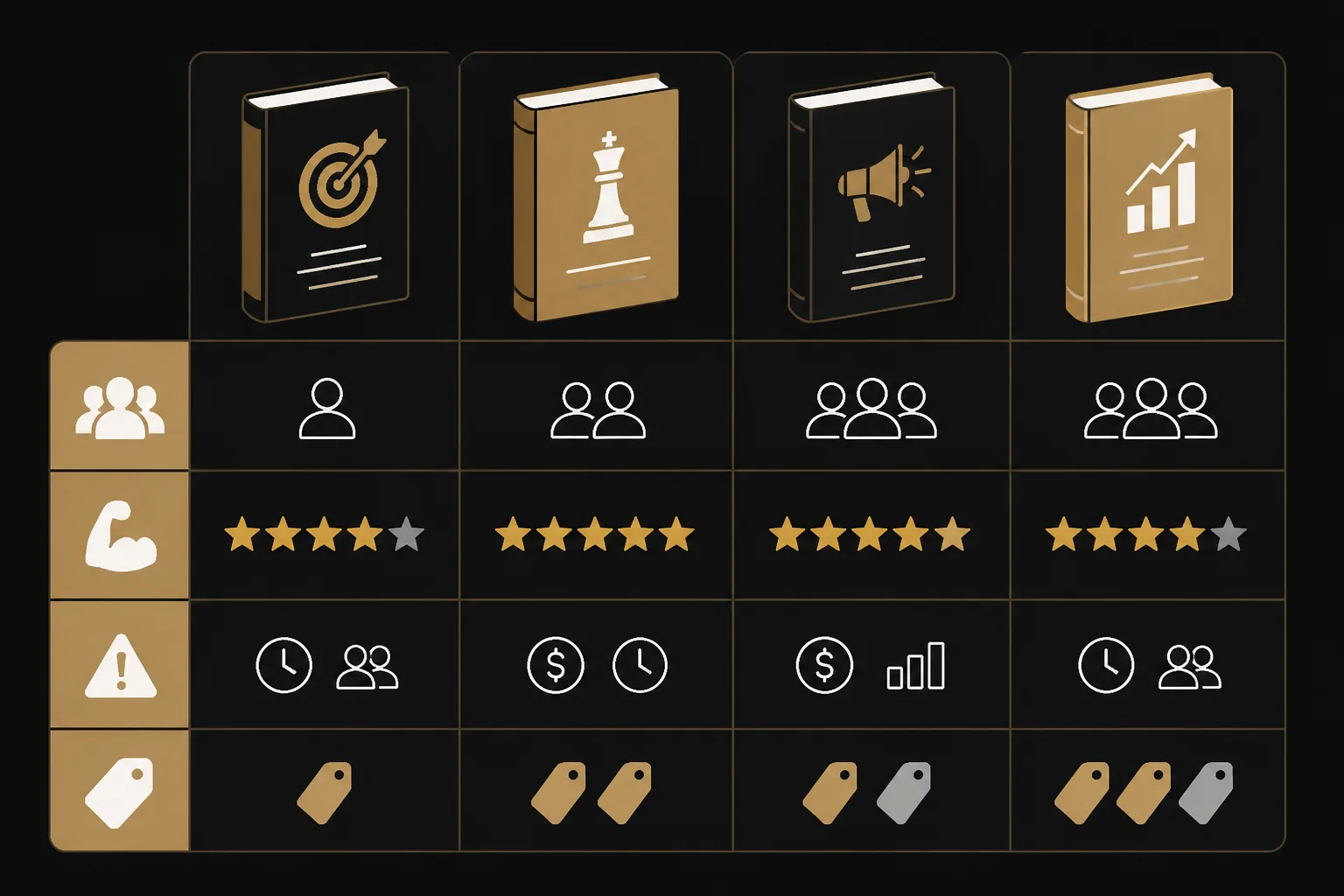
Fiction and nonfiction books compared on one set of criteria
| tool | best for | strength | limitation | price band |
|---|---|---|---|---|
| The Great Gatsby | Readers seeking literary fiction and social themes | Invented story creates emotional and thematic meaning | Not a factual account or step-by-step solution | Typically $8-$18 paperback; higher for annotated editions |
| The Martian | Readers seeking realistic science fiction and survival | Invented plot gains credibility through technical constraints | Scientific plausibility does not make events factual | Typically $10-$18 paperback; higher for special editions |
| The Immortal Life of Henrietta Lacks | Readers seeking narrative history, medicine, and ethics | Documented events delivered with narrative momentum | Real subjects require careful sourcing and treatment | Typically $12-$20 paperback; higher for hardcover editions |
| Atomic Habits | Readers seeking behavior-change guidance | Practical framework translates ideas into actions | Methods should not be presented as universal guarantees | Typically $15-$25 paperback; higher for hardcover editions |
| Sapiens | Readers seeking a broad account of human history | Large-scale explanatory framework | Interpretive synthesis can simplify contested history | Typically $15-$30 paperback; higher for illustrated editions |
| Educated | Readers seeking memoir and personal transformation | First-person life story creates emotional immediacy | Memory and perspective shape the account | Typically $12-$20 paperback; higher for hardcover editions |
| The Body Keeps the Score | Readers seeking trauma education and recovery context | Connects research, clinical examples, and explanations | Sensitive subject matter requires careful reading and framing | Typically $15-$30 paperback; higher for hardcover editions |
What the five nonfiction examples reveal about reader intent
These five nonfiction examples show that readers may seek documented narrative, practical transformation, history, memoir, or education. Compare your proposed promise with adjacent books before choosing your category, keywords, cover direction, and launch positioning.
The Immortal Life of Henrietta Lacks as nonfiction
The Immortal Life of Henrietta Lacks gives you documented events with narrative momentum, making it a strong model for readers who want history, medicine, and ethics together.
Atomic Habits as nonfiction
Atomic Habits gives you a practical behavior-change framework, making its reader promise action rather than an invented plot.
Sapiens as nonfiction
Sapiens gives you a broad explanatory account of human history, though its synthesis may simplify disputed interpretations.
Educated as nonfiction
Educated gives you a first-person account of transformation, with memory and perspective shaping the reader’s understanding.
The Body Keeps the Score as nonfiction
The Body Keeps the Score gives you research, clinical examples, and recovery context, while its sensitive subject requires careful framing.
Choose the Category That Matches the Publishing Business You Want to Build
Neither category is universally better. The better move is the one that matches your book’s promise with the publishing business you want to build.
You can use fiction to create an invented emotional journey and build genre readership. You can use nonfiction to deliver understanding, evidence, or a practical result. Accurate labeling protects your readers’ trust and improves Amazon SEO because shoppers search by intent.
| situation | better move |
|---|---|
| The core promise is an invented emotional, dramatic, or imaginative experience | Choose fiction and position around genre, mood, character, and story expectations |
| The reader needs documented people, events, evidence, or historical understanding | Choose nonfiction and plan sourcing, structure, and factual accountability |
| The reader expects a method, explanation, or measurable practical result | Choose practical nonfiction and define the transformation clearly |
| The manuscript uses research but its central characters and events are invented | Choose fiction and describe the research as a credibility feature, not proof of fact |
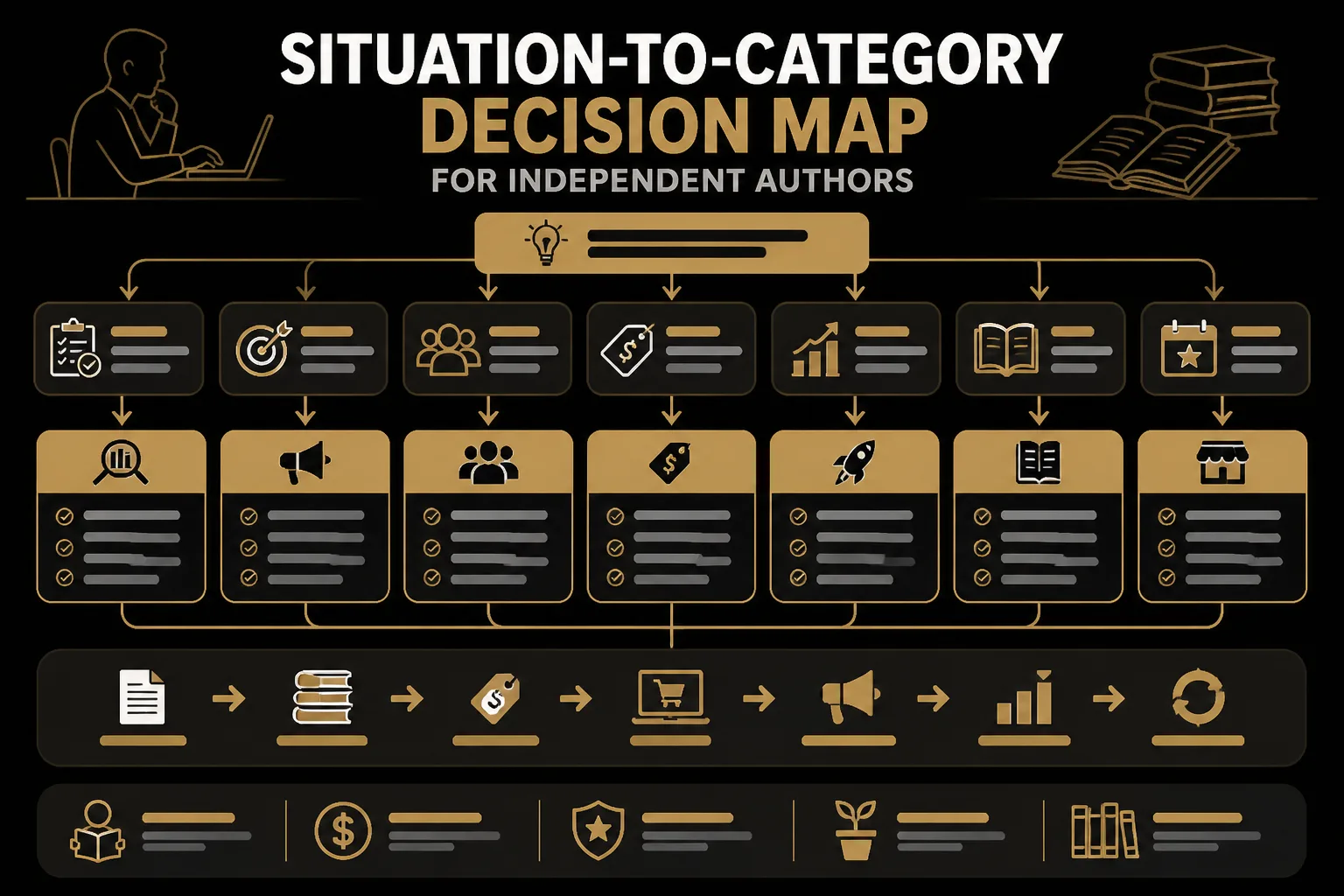
When fiction or nonfiction is the better choice
Fiction is the better choice when you want series read-through, genre communities, and an invented experience. Nonfiction is the better choice when you want authority, related services, or a teachable method. Bradley Johnson Productions can help connect that choice to audience segments and pricing, though its guidance cannot replace careful legal or subject-matter review.
When fiction is the better move
Choose fiction when your central characters and events are invented, even when research gives the story credibility. Your audience segmentation should follow genre and mood, while sequel, series, and community opportunities shape your long-term ecosystem.
When nonfiction is the better move
Choose nonfiction when readers need documented lives, investigations, evidence, or practical change. Your reviews will often reflect usefulness and trust, while companion books, courses, consulting, or speaking may support a broader author business.
When the idea sits between categories
Write your promise in one sentence, then identify which central claims are factual. Weak: “A powerful story about leadership.” Strong: “A practical guide to helping first-time managers run better weekly meetings.” Compare your proposed packaging with successful adjacent titles before committing.
Five Answers Readers Still Ask About Fiction and Nonfiction
Popularity lists and classification labels can be too vague for a publishing decision. These answers provide context without pretending that one ranking or framework fits every reader.
The number-one book of all time
There is no single number-one book of all time because you may measure sales, influence, critical reputation, or cultural reach. A book that leads one list may not lead another. For your positioning, study the standard used by each ranking before treating its winner as universal.
The most famous nonfiction book
The most famous nonfiction book depends on whether you mean global recognition, commercial success, or lasting influence. You may hear different answers across eras and markets, from memoirs to religious works and major historical studies. Check the audience and measure before using fame as a comparable publishing goal.
The four types of fiction
The four types of fiction depend on the framework you use. Genre, literary form, length, and narrative mode can each produce different groupings. You may see fantasy, science fiction, mystery, thriller, romance, horror, and historical fiction treated as common genres, according to Grammarly.
If you are sorting your manuscript, this guide to different styles of writing fits the same positioning workflow.
The Big 3 of fiction
The Big 3 of fiction isn’t a universal industry standard. You may see the phrase refer to three genres, authors, series, or influential works within a particular community. Check who uses the label and what they are measuring before applying it to your book’s categories.
Ten examples of fiction
You can use these ten examples across recognizable fiction categories: The Great Gatsby, The Martian, Pride and Prejudice, Beloved, 1984, The Hobbit, Dune, Gone Girl, The Road, and The Handmaid’s Tale. Your category choice should follow the reader promise, not a famous title alone.
Turn the Distinction Into Your Next Publishing Decision
You may understand your book’s category but still lack a publishing decision. A label matters only when it shapes your manuscript, audience, metadata, pricing, and long-term author business.
Start with the promise you make to readers. Category follows the experience you intend to deliver, not the research, setting, or personal inspiration behind the manuscript.
The Four-Step Category Decision
Write these decisions down before you expand or revise your manuscript.
- Write the promise: State whether readers receive an invented experience, documented understanding, or practical result.
- Label each claim: Mark every central claim as invented, documented, interpretive, or instructional.
- Choose the category: Select fiction or nonfiction according to what readers are asked to believe.
- Test the position: Compare category labels, covers, subtitles, keywords, prices, and review language across comparable books.
Weak: “A powerful story about changing your life.” Strong: “A practical guide to building a seven-minute morning routine without relying on motivation.”
Start With a One-Page Book Brief
Make a one-page brief before you draft further. Bradley Johnson Productions can connect that choice to book development, audience segmentation, Amazon SEO, rankings, pricing, and a sustainable author ecosystem.
- Draft the brief: Define exactly what your reader will receive.
- Promise: One clear reader outcome or experience.
- Evidence: The claims and sources supporting the book.
- Position: Category, audience, comparable titles, and likely price.
If you want a faster way to turn category clarity into a publishing plan, Bradley Johnson Productions helps independent authors with book development, audience segmentation, Amazon SEO, rankings, pricing, and long-term strategy. The author strategy blog offers practical guidance for your next decision.