
Most non-fiction authors write a great book, then watch it disappear. The problem isn’t the book. It’s the plan. Marketing a non-fiction book is a different game from fiction , readers are searching for solutions, not stories, which means you can reach them with precision if you know where to look. These five steps show you exactly how.
Step 1: Define Your Author Brand and Audience
Before you post a single thing or spend a dollar on ads, you need to know two things: who you’re writing for and what you stand for as an author. These aren’t soft, feel-good questions. They’re the foundation everything else sits on.
Start with your reader. Be specific. “People interested in health” is not an audience. “Burned-out professionals in their 40s who want to fix their sleep without medication” is. The tighter your reader definition, the easier every downstream decision becomes , from your book cover to your ad targeting.

Next, define your brand message. As a non-fiction author, you’re not just selling a book. You’re selling your expertise. Readers of non-fiction often look up the author after finishing a book to find more content on the same topic. That means your name, your website, and your social presence all need to say the same thing clearly.
A strong author brand has three parts: a clear niche (what you write about), a clear promise (what the reader gets), and a consistent voice (how you sound across every channel). Get these aligned before you build anything else.
The author brand building steps at Bradley Johnson Productions walk through exactly this process , starting with audience clarity and your core message before touching any tools or platforms. That order matters. Authors who skip this step spend months building the wrong audience on the wrong platform.
One usable exercise: write a one-sentence positioning statement. Fill in this frame , “I help [specific reader] do [specific outcome] through [your unique approach].” If you can’t fill it in cleanly, your brand isn’t defined yet. Keep working on it before you move forward.
When your brand is clear, your content almost writes itself. You know which topics to cover, which platforms your readers use, and what tone they respond to. That clarity is what separates authors who build real audiences from those who stay invisible.
Creating a solid book proposal is also essential; see the Non-Fiction Author Book Proposal Template for a step‑by‑step guide.
Step 2: Build an Author Website That Converts
Your author website is your home base. It’s the one place online you fully control, and for non-fiction authors it does more work than it does for fiction writers. Readers want to verify your credentials, explore your other writing, and sign up to hear from you again.
At minimum, your site needs five things: a professional bio that shows your credentials, a book page with a clear description and buy links, a blog or articles section where you publish content on your topic, a media page for press and podcast inquiries, and an email opt-in with a lead magnet.
The lead magnet is the piece most authors skip or do poorly. A lead magnet is a free resource you offer in exchange for an email address. For non-fiction, the best lead magnets are directly tied to your book’s topic , a bonus chapter, a companion worksheet, a resource checklist, or a short video series. Generic freebies like “join my newsletter” don’t convert well. Specific ones do.
Your blog section deserves real attention. Publishing articles on your book’s subject matter does two things at once: it builds SEO so new readers find you through Google searches, and it proves your expertise to readers who land on your site and want to know if you’re the real thing. According to Wikipedia’s overview of search engine optimization, content relevance and topical authority are core signals search engines use to rank pages , which means a consistent blog on your niche topic compounds in value over time.
Aim for a domain that’s your name or your book’s title. Keep the design clean. Fast load times matter more than fancy visuals. And make sure your email opt-in appears in at least three places: the header, the blog sidebar, and after each article.
Plan your launch timeline with the realistic book launch timeline guide to ensure you have all site elements ready before you start driving traffic.
Once the site is live, you have a destination for every other marketing channel to point toward. Ads, social posts, podcast appearances, and press coverage all work better when they send people somewhere specific and well-built.
Step 3: Use Paid Advertising Channels
Paid advertising gets a bad reputation among indie authors because most people try it before they’re ready. Run ads too early, without a clear audience or a converting book page, and you’ll burn money with nothing to show. But done at the right time, paid ads are one of the most efficient ways to reach new readers at scale.
The research across 108 non-fiction book marketing services shows that only 9% of available services fall under the “paid” category, while 38% focus on organic tactics alone. That gap is significant. Most advice authors receive is organic-only, which leaves a real opportunity for authors willing to add a paid channel to the mix.
Here’s a quick comparison of the main paid channels for non-fiction authors:
Amazon Ads is the most direct channel for non-fiction. Readers searching Amazon for books on your topic are already in buying mode. You can target by keyword or by comparable authors in your category. Start with a small daily budget, monitor results for five to seven days, and cut what isn’t converting. The three-phase nonfiction marketing framework at Bradley Johnson Productions recommends a $15, $25/day budget during launch week, then dropping to a maintenance spend of $3, $10/day once you’ve identified which targets convert.
Facebook Ads work differently. You’re interrupting someone’s feed rather than catching them mid-search. That means your ad creative and copy need to stop the scroll and speak directly to your reader’s problem. The advantage is reach , you can put your book in front of a precisely defined audience that may never search Amazon on their own.
Book promotion services, which distribute your discounted book to their subscriber lists, can generate a short spike in downloads and reviews. They work best as a launch tactic or when you want to push a price promotion. The cost data across the market is scattered , median spend sits around $35, but a handful of high-ticket services pull the average up to over $4,000. Most indie authors don’t need the expensive end of that range.
The authors who get the most from paid advertising combine it with organic tactics rather than treating it as a standalone fix. That hybrid approach is exactly what Bradley Johnson Productions teaches in its $500 one-time coaching intensive , the only program in this space that explicitly covers both paid and organic growth in a single structured package.
Step 4: Grow Organic Reach with Social & Reviews
Organic reach takes longer than paid, but it compounds. A review posted today still influences a buyer two years from now. A YouTube video on your book’s topic keeps driving traffic long after you publish it. That’s the power of building organic visibility , it works while you sleep.
Reviews are the single most important organic asset for a non-fiction book. They build trust with cold readers and improve your book’s visibility in Amazon’s algorithm. The goal before launch is to recruit 15, 20 advance readers who commit to posting honest reviews on or around launch day. After launch, keep asking. Every email you send to your list is an opportunity to remind readers who’ve finished the book that a short review makes a real difference.
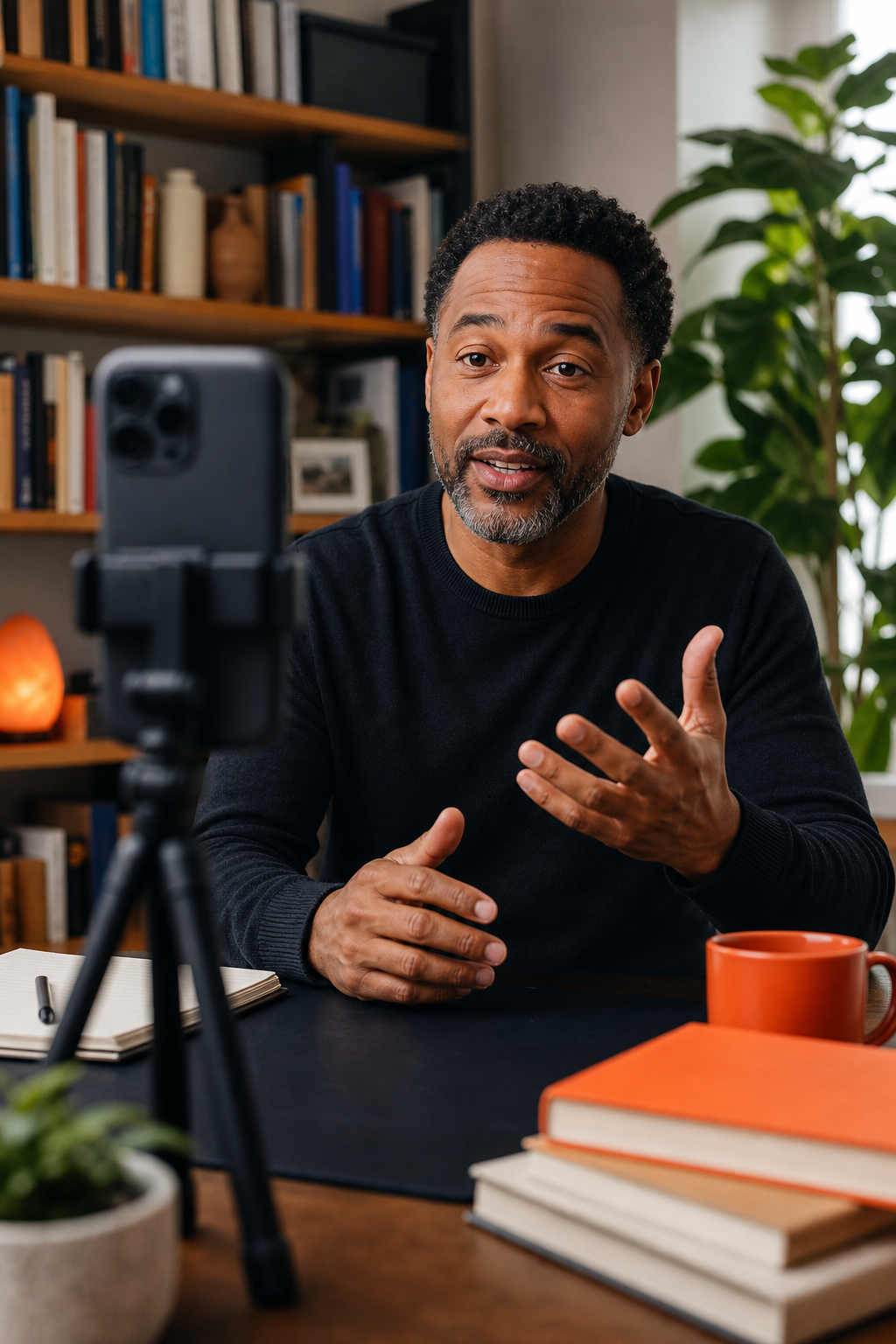
For social media, the research shows that Instagram, YouTube, and X each account for 4% or less of primary platform usage among book marketing services , which means the market is fragmented, and there’s no single dominant channel. The right platform for you depends on where your readers actually spend time.
Business and leadership book authors tend to find LinkedIn most effective. Wellness and lifestyle writers often do well on Instagram. YouTube works for authors who can teach on camera , and it has a compounding effect because videos rank in both YouTube search and Google. Pick one platform, show up consistently for 90 days, then evaluate before adding a second.
Your content strategy on any platform should follow a simple ratio: roughly 80% of what you post should be genuinely useful to your reader, with 20% being direct promotion of your book. Teach from your expertise. Answer common questions your reader types into Google. Share the research or stories that didn’t make it into the book. That kind of content builds authority and earns followers who actually want to buy.
Podcast appearances are one of the most underused organic tactics for non-fiction authors. A well-placed interview on a podcast in your niche can drive hundreds of targeted listeners to your Amazon page in a single day. Pitch six to ten podcasts at least four to six weeks before your launch, since most shows book weeks out. When you’re on, mention a specific bonus or resource tied to your book so listeners have a reason to click through immediately.
Respected review platforms also matter for long-term discoverability. Kirkus Reviews, for example, is one platform that libraries and booksellers actively check when evaluating indie titles , earning a strong review there opens doors that social media alone can’t.
Step 5: Nurture Your Email List and Launch
Email is the highest-ROI channel in book marketing, and it’s the one most authors either neglect or set up too late. Social media algorithms decide who sees your posts. Email goes directly to the reader. You own that relationship in a way you never own a social following.
Start building your list before the book is finished. Your lead magnet , a free chapter, a companion resource, or a short checklist , gives people a reason to sign up now rather than waiting until launch day. Every subscriber who joins early is a warm potential buyer and a potential reviewer when the book drops.
For the email platform itself, MailerLite and ConvertKit are both solid options that non-fiction authors use widely. Both are straightforward to set up and handle automation well. The key feature you need is a welcome sequence: a series of three to five emails that introduces you, delivers your lead magnet, shares your best content, and mentions your book naturally. This sequence runs automatically for every new subscriber, so your list is always being warmed up without extra effort from you.
The pre-order strategy guide at Bradley Johnson Productions recommends sending an announcement email the day your pre-order goes live, then following up with value-driven emails every seven to ten days. Each email should say something new , a story behind a chapter, a key idea from the book, or a behind-the-scenes look at the writing process. Don’t just repeat “still available to pre-order” in every message.
During launch week, your email list does the heavy lifting. Send your full list on launch day. Follow up with readers who opened but didn’t click. Ask your advance readers to post their reviews. A launch week email sequence of five to seven messages, spread over ten to fourteen days, keeps momentum going without feeling like spam if each email delivers real value.
After launch, your email list becomes your long-term marketing engine. Every new subscriber who joins post-launch is a warm potential buyer. A simple automated sequence converts them into readers without requiring you to manually follow up with each person. That’s the infrastructure that keeps selling your book months after the launch excitement fades.
Understanding how your author brand connects to your email strategy is also worth thinking through carefully. Just as brand identity design shapes how a business is perceived across every touchpoint, your author brand shapes how readers experience every email, social post, and book page they encounter , consistency across those touchpoints builds the trust that converts subscribers into buyers.
When budgeting for your launch, consult the Best Author Book Launch Pricing Strategies guide to set realistic spend limits and maximize ROI.
FAQ
How do I market a non-fiction book with no audience?
Start with your email list and one social platform before launch day. Offer a free lead magnet tied to your book’s topic to collect subscribers. Then pitch five to ten podcasts in your niche , podcast appearances put you in front of established audiences immediately. You don’t need a large existing following to launch successfully; you need a warm list of even 200, 300 targeted readers and a handful of advance reviewers ready to post on day one.
How much should I spend on book marketing?
Budget depends on your goals, but most indie non-fiction authors can run a solid launch on $300, $700. A $500 coaching program like the one at Bradley Johnson Productions covers both organic and paid strategy in a single package, which is more efficient than piecing together multiple single-channel services. Avoid the trap of either spending nothing or getting lured into high-ticket PR packages that cost $5,000, $60,000 without clear deliverables.
What social media platform works best for non-fiction authors?
It depends on your topic. LinkedIn works well for business, leadership, and professional development books. Instagram suits wellness, lifestyle, and personal growth titles. YouTube is strong for authors who can teach on camera and want long-term search traffic. Pick the platform where your specific reader already spends time, commit to it for 90 days, and measure results before expanding to a second channel.
When should I start marketing my non-fiction book?
Start at least 90 days before your release date, ideally 180 days out. The pre-launch phase is when you build your email list, recruit advance readers, pitch podcasts, and create the content that warms your audience. Launching cold , with no list, no reviews, and no pre-built audience , is the most common reason non-fiction books underperform, regardless of their quality.
Do I need an author website to market my book?
Yes. An author website is especially important for non-fiction because readers want to verify your credentials and find more of your work. Your site gives you a place to collect email addresses, host your blog content, link to media coverage, and give press contacts a way to reach you. Social profiles alone aren’t enough , you don’t control them, and they can’t do everything a well-built author site can.
Conclusion
The authors who sell books consistently aren’t the ones with the biggest budgets , they’re the ones with a clear brand, a growing email list, and a mix of organic and paid tactics working together. If you want a structured path through all of it, Bradley Johnson Productions offers a $500 one-time coaching intensive that covers both sides of the equation. Start with Step 1 today: write your one-sentence positioning statement and get clear on exactly who you’re writing for.