
A book proposal is not a summary of your book. It’s a business case for why your book should exist, why readers will buy it, and why you’re the right person to write it. Most non-fiction authors can sell a publisher on their idea before writing a single chapter, and a strong proposal is how that happens. Here’s exactly how to build one from scratch.
Step 1: Define Your Book Concept & Hook
Your first job is to answer one question clearly: what does this book do for the reader? Not what it’s about. What it does.
Start with a one-to-three sentence summary. Think of it as your answer when someone at a party asks what your book is about. You want to sound like a marketer, not a professor. A weak answer: “It’s about project management, but a bit different.” A strong answer names the specific problem, the specific reader, and the specific result.
Then write the pitch. This is where you explain your book’s promise and what makes it different from everything already on the shelf. According to publishing expert Jane Friedman, the biggest mistake authors make is focusing on what their book is about rather than why it matters right now to a specific reader. The question is never “what’s in the book” , it’s “why will someone pay money for this instead of just Googling it?”
Next, list three tangible things a reader will be able to do after finishing your book. Not vague outcomes like “feel more confident.” Specific ones. “Identify their first 500 email subscribers.” “Write a chapter outline in under two hours.” Concrete results build credibility fast.
Finally, write one paragraph on why now. Every proposal needs a sense of urgency or relevance. Even evergreen topics need a hook to the current moment. If you’re writing about personal finance, what’s happening in the economy that makes your angle timely? To keep your timeline realistic, see realistic book launch timeline.
Step 2: Create the Title Page and Front‑Matter
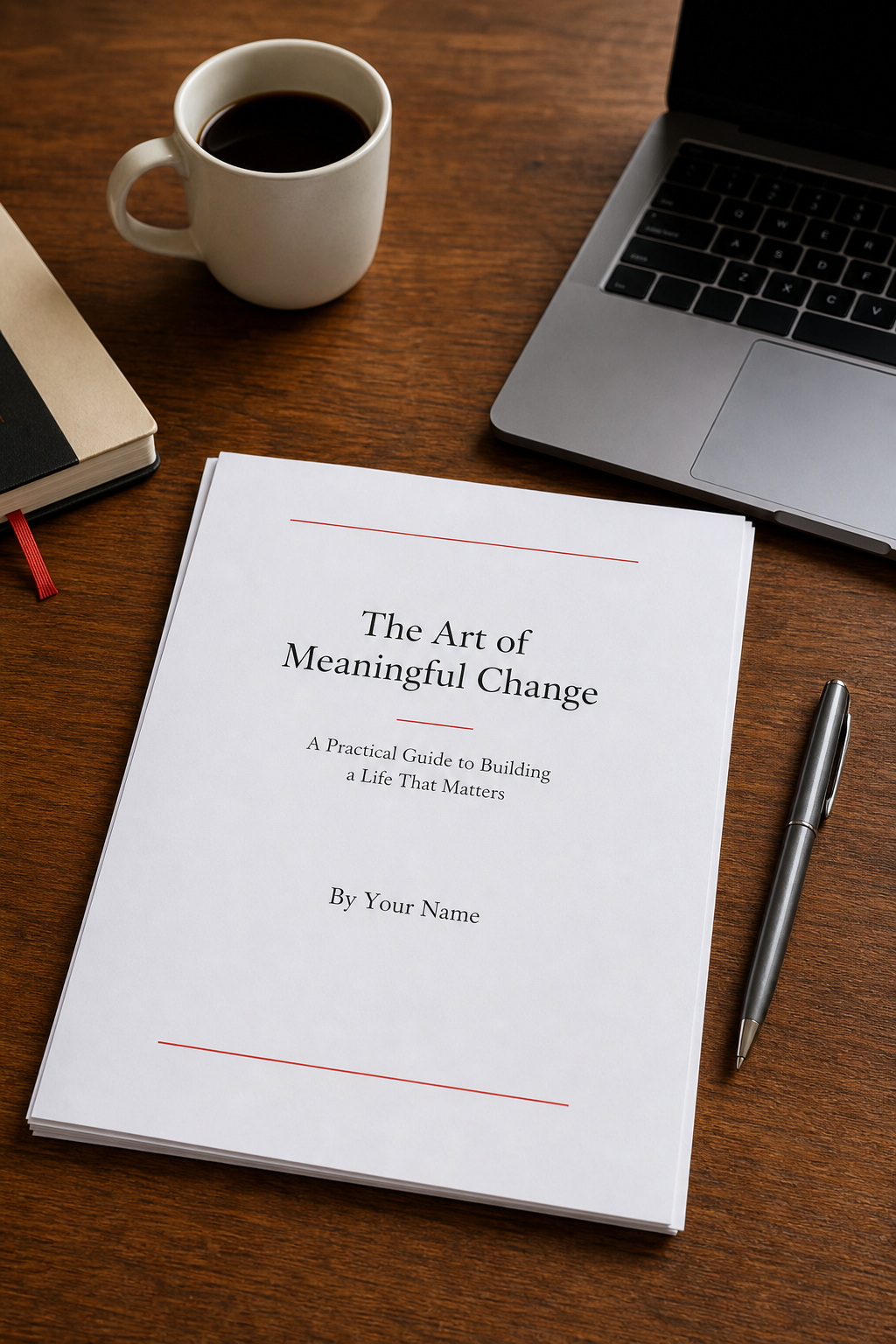
The title page is the first thing an agent or acquisitions editor sees. Keep it clean and professional.
Your title page should include your book’s working title and subtitle, your full name, your contact information (email and website), your agent’s contact information if you have one, and a word count estimate for the finished manuscript. That last detail matters more than most authors realize. It tells the publisher how long the book will be, which affects production costs, pricing, and shelf placement. For a broader view of how this fits into a self-publishing business plan, consider the catalog depth and revenue streams.
Format the proposal in standard manuscript style: double-spaced, 12-point serif font, one-inch margins. Page numbers in the header or footer. Your name and the book title on each page. This is not the place to get creative with design. Agents read dozens of proposals a week. A clean, readable document signals professionalism before they read a single word.
After the title page comes the overview. This is a two-to-four page section that does the heavy lifting for your entire proposal. It answers why this book, why you, why now, and who will buy it. Think of it as the inside flap copy of your book, but expanded. A strong overview tells the agent everything they need to know to pitch the book to a publisher internally.
Many first-time authors skip or rush the overview. That’s a mistake. If an agent reaches the bottom of page three without understanding why you’re the right person to write this book, the proposal is likely done. Your platform and credibility belong here, not buried in the author bio section.
Step 3: Research Market & Competition (Table Included)
This section is where many authors get nervous. They either claim there’s no competition (bad) or list books that have nothing to do with theirs (also bad). Here’s how to do it right.
Publishers want to see two things: proof that a market exists, and proof that your book offers something those existing books don’t. Saying there’s no competition is the fastest way to kill a proposal. No competition means no proven market. No market means no sales. And no sales means no deal.
Find three to five comparable titles. They should be traditionally published, released within the last five years, and genuinely similar to your book in terms of audience need. Look for books that respond to the same reader problem yours does. Then, for each title, write a short paragraph explaining what it covers, what your book shares with it, and where your book goes further or takes a different angle.
After the comp titles, write a separate audience section. Name your core reader. Be specific. “Adults who want to improve” is not a target audience. “First-generation college graduates in their 30s handling career transitions” is. The narrower your audience definition, the more credible your market case becomes. Using reader surveys can help you validate that definition.
Step 4: Write Sample Chapter & Synopsis (Video)
This section is where you prove you can actually write the book you’re proposing.
Include an annotated table of contents first. This is not just a list of chapter titles. Each chapter gets a short paragraph (two to four sentences) explaining what it covers, what the reader will learn, and how it connects to the book’s central argument. Many publishers ask for exactly this in their submission guidelines: a table of contents with a summary of each chapter, plus an estimate of total word count and how much of the manuscript is already drafted.
Then include one or two full sample chapters. Not the introduction. Choose chapters from the middle of the book that show your voice, your structure, and your ability to deliver on the book’s promise. The sample is your audition. Make it your best work.
The video below walks through what publishers and agents look for in the sample material section, including common mistakes authors make when choosing which chapters to submit.
One thing most proposal guides don’t mention: include a brief note on how much of the manuscript is already written. If you have three chapters drafted, say so. If the book is complete, say that too. Publishers factor manuscript completion into their timeline decisions, and it signals that you’re serious about finishing.
Keep your chapter summaries honest. Don’t oversell what a chapter will do. If chapter four is a case study chapter, say that. If chapter seven is a usable worksheet section, name it. Agents and editors have seen every version of inflated chapter promises. Clarity wins.
Step 5: Map Your Author Platform & Marketing Plan

Here’s the truth that most proposal guides bury: the marketing section is what gets you a deal. Everything else in the proposal matters, but this section is the one publishers actually run through a spreadsheet.
As one creator on YouTube put it, the marketing plan in a serious proposal can run twelve pages out of forty. That’s not an accident. Publishers want to know how many copies you can move in year one, and they’re looking for specific, measurable signals. Email list size. Speaking engagements. Podcast audience. Video views. Social following on one or two focused platforms.
Your platform section should list your current assets clearly. A well‑executed pre‑order campaign can boost early sales and signal demand to publishers. Don’t round up. If you have email subscribers, write the exact number. If you speak at three to four events per year with audiences of 200 to 300 people, say that. Specific numbers build trust. Vague claims like “large social following” do the opposite.
Then write your marketing plan. This is not a wish list. It’s a plan with specific tactics tied to specific channels. Where will you pitch the book for reviews? What podcasts will you target for interviews? Do you have existing relationships with organizations, newsletters, or communities that reach your target reader? If you’re building toward a traditional deal, learning how to market a nonfiction book well before you submit gives you a real advantage, because your platform numbers will be higher by the time you pitch.
Budget matters here too. Most proposals skip it entirely. If you plan to spend money on ads, a publicist, or a PR campaign, say so and give a rough figure. Publishers notice when an author is willing to invest in their own book’s success. It signals commitment, and it changes the risk calculation on their side. For guidance on pricing tactics, see our book launch pricing strategies.
One KPI worth building before you pitch: a genuine email list. Publishers weight this heavily because an email list is direct, owned reach. A well‑engaged email list often carries more weight than a large social following that doesn’t generate clicks.
Step 6: Assemble & Polish the Full Proposal
Once you have all the sections drafted, the assembly pass is where the proposal either comes together or falls apart.
A complete non-fiction book proposal typically runs ten to twenty-five pages double-spaced, not including sample chapters. With chapters included, fifty pages is not unusual for a complex project. Don’t aim for a specific page count. Aim for completeness. Every section should earn its place.
Here’s the standard order for a finished proposal:
- Title page with contact info and word count estimate
- Overview (concept, hook, audience, why now)
- About the author (credentials, platform, photo)
- Market and competition analysis
- Marketing and promotion plan
- Annotated table of contents
- Sample chapters (one or two full chapters)
Before you send anything, read the proposal aloud. Every section. If a sentence sounds like a press release, rewrite it. If a paragraph repeats a point you already made two pages earlier, cut it. Agents read fast. Redundancy signals that you haven’t edited carefully.
Tailor the proposal to each submission. Most agents and publishers post submission guidelines on their websites. Follow them exactly. Some want the overview first. Some want the author bio up front. Some want a query letter before the full proposal. Ignoring these instructions is a fast way to get rejected before anyone reads your idea.
If you’re unsure whether your proposal is ready, the team at Bradley Johnson Productions works with non-fiction authors on exactly this kind of preparation, helping writers sharpen their concept, build their platform, and put together a proposal that reflects the book they actually want to write. Understanding the full author book proposal writing cost upfront also helps you plan whether to hire help or go it alone.
One last thing: free proposal templates are widely available. Research across five templates found that the majority are simple Word documents, and the only paid option in that sample costs less than five dollars. The format itself is not the hard part. The hard part is filling it with specific, credible, compelling answers. A template gives you the frame. You have to build what goes inside it.
Frequently Asked Questions
How long should a non-fiction book proposal be?
Most proposals run ten to twenty-five pages double-spaced, not counting sample chapters. With one or two full sample chapters included, the total can reach fifty pages for complex projects. Don’t pad to hit a page count. Every section should add something specific. Thin sections hurt more than short ones.
Do I need a complete manuscript before writing a book proposal?
No. Non-fiction authors often sell a book on proposal alone, before the manuscript is finished. That’s one of the main advantages of writing non-fiction. You do need at least one or two polished sample chapters, plus a detailed annotated table of contents, so the publisher can assess your writing and your plan for the book.
What’s the most important section of a book proposal?
The marketing and platform section. Publishers use it to estimate how many copies you can sell. They want specific numbers: email list size, speaking frequency, social reach, media relationships. A strong concept with a weak platform rarely gets a deal. Build your platform before you pitch, or be honest about where you are and show a clear growth plan.
Can I submit the same proposal to multiple agents at once?
Yes, simultaneous submissions are standard and expected in most cases. Check each agent’s submission guidelines first, since a small number request exclusives. If an agent offers representation, notify the others promptly. Tailoring each submission to the agent’s stated interests and guidelines increases your chances significantly more than a generic mass send.
What’s the difference between a book proposal and a query letter?
A query letter is a one-page pitch you send first to gauge interest. It covers your concept, your credentials, and your target market in a few short paragraphs. A book proposal is the full document you send after an agent or publisher requests more. The query gets you in the door. The proposal closes the deal.
Do self-publishing authors need a book proposal?
Not for publishing purposes. If you’re going fully independent, you don’t need a formal proposal to publish. That said, writing one is still worth doing. The process forces you to define your audience, research your competition, and build a marketing plan before you write, which makes the book better. Many authors at Bradley Johnson Productions use proposal‑style planning even when they have no intention of pitching traditional publishers.
Conclusion
A book proposal is the most usable thing you can write before your book exists. It clarifies your concept, forces you to research your market, and makes you build a real marketing plan. Start with Step 1 today: write a three-sentence summary of your book that sounds like a pitch, not a description. Once that’s sharp, the rest follows. For a deeper look at planning your writing career around a book like this, the guide to setting realistic writing goals at Bradley Johnson Productions is a useful next read.