
Most nonfiction authors assume every self-publishing platform hands them a 70% royalty and built-in print-on-demand. The reality is far more fragmented: royalty rates range from 10% all the way to 100%, and fewer than a third of major platforms actually offer true print-on-demand. Here are the seven best options for nonfiction writers right now, plus the coaching layer that ties it all together.
1. Bradley Johnson Productions (Our Top Pick) , Coaching & Platform Guidance
Bradley Johnson Productions is the first stop for any nonfiction author who wants to publish strategically, not just technically. The platform teaches writers how to grow their readership through organic and paid methods, write books readers actually love, and build a creative business that funds real freedom.
What sets it apart from every other option on this list is the coaching layer. Most platforms hand you a dashboard and leave you to figure out positioning, pricing, and marketing alone. Bradley Johnson Productions shows you the system behind the decisions, from choosing the right distribution stack to building the audience that makes your launch matter.
The Independent Lifestyle Self-Publishing (ILSP) framework is especially well suited to nonfiction authors who want their writing to generate influence and long-term income, not just a one-time sale. You can read more about how it works on the Why ILSP page at Bradley Johnson Productions.
If you’re deciding between platforms, the guidance here helps you avoid the most expensive mistake in self-publishing: choosing a distribution setup that looks simple but quietly limits your royalties, your reader relationships, and your ability to pivot later. No other option on this list does that.
2. Amazon KDP , Massive Reach & Easy Print-on-Demand
Amazon KDP is where most nonfiction authors start, and for good reason. It gives you access to the world’s largest book marketplace with zero upfront cost. Upload your manuscript, set a price, and your book is live within 24 to 72 hours.

Amazon KDP reports that ebook royalties are typically 70% for titles priced in the $2.99–$9.99 range and 35% outside that range. Print royalties are calculated as 60% of the list price minus printing costs. For a standard 200-page black-and-white paperback, authors retain a portion of the sale after printing expenses.
Print-on-demand is built in. No inventory, no upfront print run, no boxes in your garage. That matters especially for nonfiction authors who speak at events or run workshops and want physical copies available without the overhead.
The honest caveat: Amazon owns the customer relationship. You never see your buyer’s email address, which limits how you can market future books to the same audience. And bookstores generally won’t stock Amazon-printed books because the trade discount structure doesn’t work for them. KDP is a strong foundation, but serious nonfiction authors almost always layer other platforms on top. If you want to understand how KDP ads fit into your overall cost structure, the guide on how Amazon KDP ads cost can be controlled for indie writers breaks down what to expect.
3. IngramSpark , Storefront & Library Distribution
IngramSpark is part of a major distribution network that supplies books to many physical bookstores and libraries in the United States. Publishing through IngramSpark puts your book in the Ingram catalog, which is what store buyers and librarians actually use to place orders.

That distinction matters. Amazon KDP sells books to consumers. IngramSpark distributes to the trade. If you’re a consultant, coach, or thought leader who needs your book on shelves at conference venues, in airport bookstores, or available through public library systems, IngramSpark is the piece KDP can’t replace.
Setup fees apply, typically $49 per print title and $25 for ebook (though IngramSpark runs promotions that waive these periodically). Royalties run lower than KDP once you factor in the wholesale discount you set for retailers, usually 55%. That discount is what makes bookstores willing to order and return unsold copies.
The learning curve is steeper than KDP. IngramSpark expects you to arrive with a properly formatted file, your own ISBN, and a clear sense of your distribution settings. Most professional nonfiction authors run a split strategy: KDP for Amazon and ebook sales, IngramSpark for everything else. IngramSpark reaches a wide network of retailers and libraries worldwide, giving its titles broad distribution.
4. Draft2Digital , Simple Ebook Distribution & Formatting
Draft2Digital (D2D) is an ebook aggregator. Instead of setting up separate accounts on Apple Books, Kobo, Barnes & Noble, and a dozen library platforms, you upload once and D2D distributes everywhere. They take 10% of what you earn after the retailer’s cut, with no upfront charge.
D2D also owns Smashwords, which it acquired in 2022, consolidating most of the non‑Amazon ebook distribution market under one roof. Its universal book link feature gives each title a single URL that routes readers to whichever retailer they prefer, which is a useful marketing tool for nonfiction authors running paid ads or social campaigns.
Print distribution is available through D2D, but it runs through IngramSpark under the hood. So if you need wide print distribution, you may eventually want your own IngramSpark account for more direct control over pricing and discount settings.
D2D won’t let you enroll in Kindle Unlimited since that requires Amazon exclusivity. For most nonfiction authors, that’s fine. Your book is a credential and a marketing asset, and you want it everywhere a potential reader might look, not locked to one ecosystem.
5. BookBaby , Done-For-You Publishing Service
BookBaby is a different kind of option. It’s not a DIY platform. It’s a full-service publishing package that handles editing, cover design, formatting, and distribution for authors who want to hand off the production side entirely.
The royalty structure is straightforward: BookBaby keeps nothing from your retail sales. You receive 100% of net proceeds from retailers after the retailer takes their cut. That sounds appealing, but the upfront package costs are significant. You’re paying for the service on the front end rather than sharing ongoing revenue.
For nonfiction authors who have a clear book concept, a finished or near-finished manuscript, and a budget for production, BookBaby removes a lot of friction. You’re not learning formatting software or hunting for a freelance cover designer. The tradeoff is cost and some loss of control over exactly how the finished product looks.
It’s worth noting that BookBaby is not the right fit for authors who want to iterate quickly, test different covers, or update content regularly. Changes to a BookBaby title go back through their production queue. If you’re publishing a business book that may need annual updates, a self-managed platform gives you more flexibility.
6. Lulu , Specialty Formats & Global Reach
Lulu has been in the print-on-demand space longer than most platforms on this list. Its real strength is format flexibility. Spiral binding, calendars, photo books, workbooks with custom interiors , these are formats KDP handles poorly or not at all.
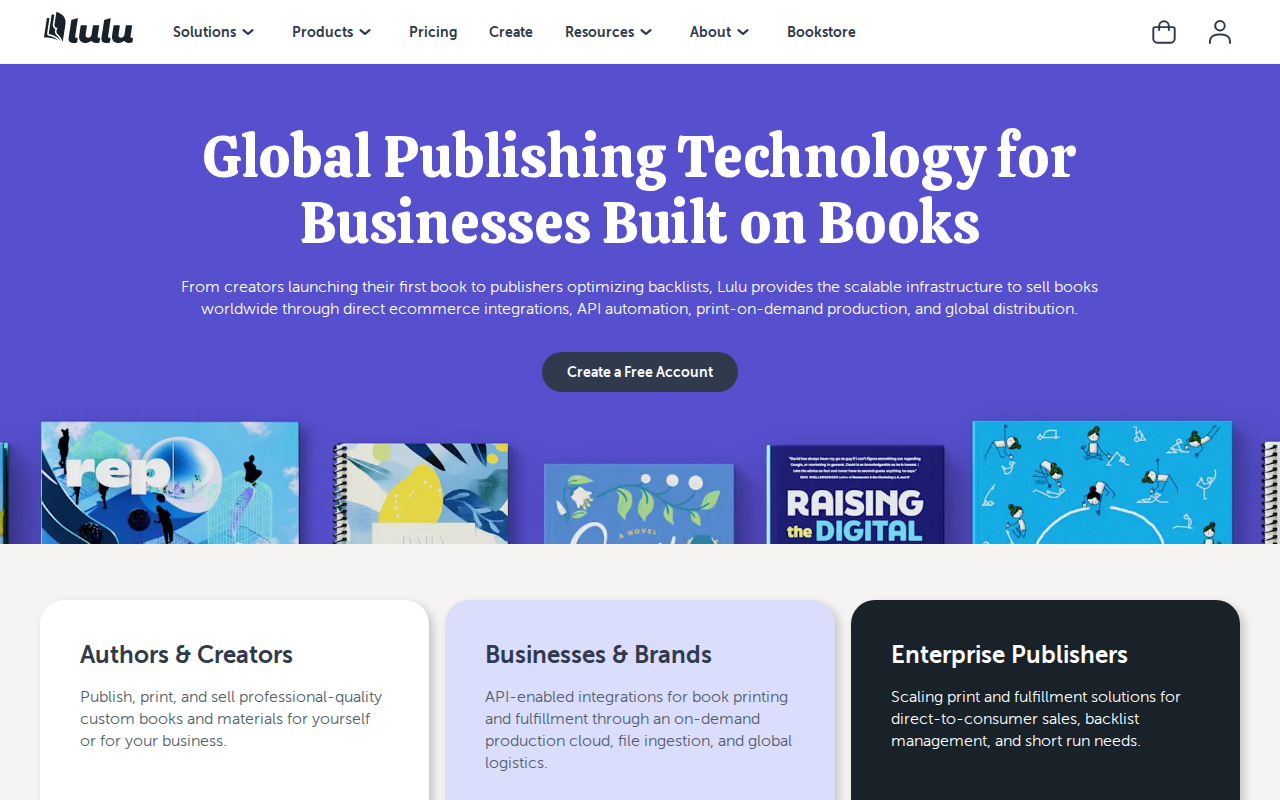
For nonfiction authors who sell workbooks, planners, or course companion materials, Lulu’s direct storefront and Shopify integration are genuinely useful. You can fulfill orders from your own website without managing inventory, and Lulu’s color printing quality tends to run higher than KDP’s standard offering.
The distribution footprint is smaller than KDP or IngramSpark for standard trade books. Per-unit print costs are also higher. Lulu makes the most sense as a specialty tool in a larger platform stack, not as a primary distribution channel for a straightforward nonfiction paperback. Authors selling direct to their audience through a course or coaching program often find Lulu’s direct fulfillment model worth the higher unit cost because they keep more margin on each sale.
Global distribution through Lulu reaches Amazon and other retailers, but the catalog reach doesn’t match IngramSpark’s trade network. If bookstore placement matters to you, pair Lulu for specialty formats with IngramSpark for standard trade distribution. For authors thinking about how to repurpose a book into multiple physical formats, the book repurposing strategy guide at Bradley Johnson Productions covers how to turn one manuscript into multiple revenue-generating formats.
7. Kobo Writing Life , International Ebook Market
Kobo Writing Life is the direct publishing portal for Rakuten Kobo, and it’s most valuable for nonfiction authors with an international audience. Kobo is dominant in Canada, Australia, the UK, and several European markets where Amazon’s share is smaller than it is in the US.
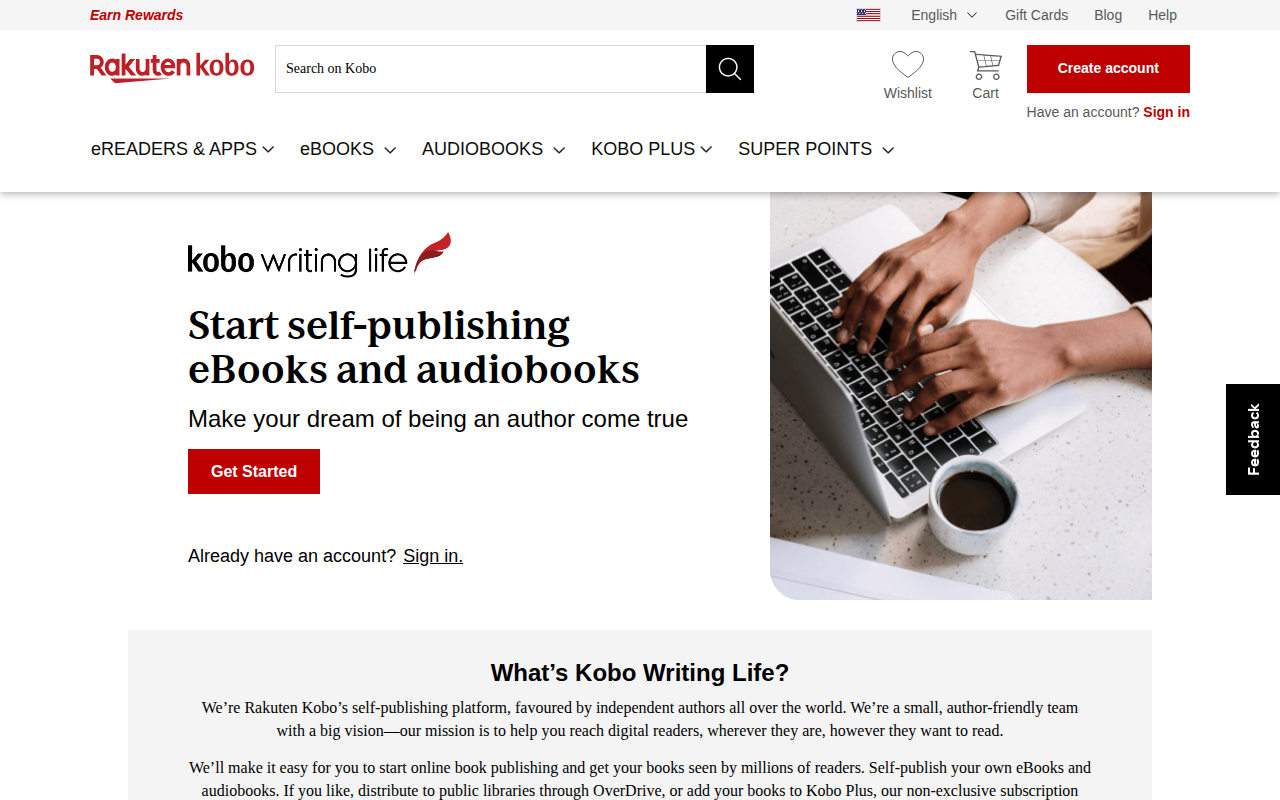
Publishing directly through Kobo Writing Life gives you access to Kobo Plus, their subscription reading service, which can generate per-read royalties similar to how Kindle Unlimited works on Amazon. That’s an additional income stream that D2D can also unlock, but going direct gives you more control over pricing promotions and visibility on the Kobo store.
Kobo Writing Life is ebook only. There’s no print option through Kobo directly. For most nonfiction authors, it works best as one channel in a wide distribution strategy alongside KDP for Amazon and D2D for other ebook retailers. The royalty rate through Kobo Writing Life runs at 70% for titles priced above the platform’s minimum, which is competitive with major platforms.
Comparison Table: Features & Royalties at a Glance
This table shows the core decision factors across the platforms above. Use it to match your publishing goals to the right distribution setup, not to pick a single winner. Most nonfiction authors need two or three of these working together.
One number worth keeping in mind: across the major platforms, royalty rates cluster around 70% for ebooks, but the range is wide. Draft2Digital’s 10% platform cut stacks on top of retailer fees, while BookBaby passes through 100% of net proceeds after the retailer takes their share. The platforms that look most generous up front sometimes have the narrowest distribution reach. For a deeper look at how royalties actually calculate across different price points, the best royalty calculators for self-published nonfiction authors resource at Bradley Johnson Productions walks through the math in detail.
Our comprehensive Best Royalty Calculators guide walks you through the math step by step.
Payout timing also varies more than most authors expect. Amazon KDP pays 60 days after month-end. IngramSpark pays at 90 days. Direct sales platforms pay daily. That cash flow gap matters when you’re running paid ads or investing in a launch. For authors thinking about how to handle payments from multiple channels, the guide on best payment platforms for selling books and courses covers how to set up a clean payment infrastructure across different sales channels.
Explore additional tactics in our Self‑Publishing resource hub to fine‑tune your launch strategy.
When it comes to author branding, the visual identity you build around your book matters as much as where you publish it. A well-designed author brand creates consistency across your Amazon page, your IngramSpark catalog entry, and your direct sales storefront. If you’re building that identity from scratch, understanding what brand identity design services include and how to choose the right designer can save you from expensive revisions later.
How to Choose the Right Platform Stack
The right setup depends on what you need your book to do. A few questions sharpen the decision quickly.
- Do you need bookstore or library placement? If yes, IngramSpark is non-negotiable. Add it alongside KDP, not instead of it.
- Are you going wide or Amazon-exclusive? Wide distribution almost always makes more sense for nonfiction. Your book is a credential. You want it findable everywhere.
- Do you sell workbooks, planners, or course materials? Lulu handles specialty formats that KDP won’t touch well.
- Do you have an existing audience you can drive to a direct sales channel? A direct storefront pays the highest effective royalty and gives you the customer email address. Worth adding once you have traffic to send it.
- Do you want someone to handle production entirely? BookBaby is the clearest done-for-you option, but budget for the upfront cost.
To automate your outreach, check out our Non‑Fiction Author Email Sequence Templates, which provide ready‑made copy for nurturing readers.
Most nonfiction authors end up running KDP for Amazon discovery, IngramSpark for trade and library reach, and either D2D or Kobo Writing Life for wide ebook coverage. That’s the professional baseline. The coaching and strategy layer from Bradley Johnson Productions helps you build on top of that baseline in a way that actually grows your readership over time.
FAQ
Which self publishing platform pays the highest royalties for nonfiction authors?
Amazon KDP pays 70% on ebooks priced between $2.99 and $9.99, which is the standard benchmark. BookBaby passes through 100% of net proceeds after the retailer takes their cut, but charges upfront production fees. For print, KDP pays 60% of list price minus printing costs. The platform with the highest headline royalty isn’t always the one that puts the most money in your pocket once distribution fees and retailer cuts are factored in.
Do I need to use more than one platform?
Yes, and most serious nonfiction authors do. A common professional setup uses KDP for Amazon, IngramSpark for bookstore and library distribution, and Draft2Digital or Kobo Writing Life for wide ebook reach. Each platform covers a different part of the market. The key is avoiding duplicate distribution to the same retailer, which can create conflicting listings and pricing problems.
If you’re looking for expert assistance, our curated list of Non‑Fiction Book Marketing Consultants can help you design and execute effective campaigns.
What is print-on-demand and which platforms actually offer it?
Print-on-demand means a physical copy is printed only when a reader orders one. No inventory, no upfront print run. Amazon KDP, IngramSpark, Lulu, and BookBaby all offer genuine POD. Draft2Digital offers it through IngramSpark under the hood. Kobo Writing Life does not offer print at all. Fewer than a third of the platforms commonly listed for self-publishing actually include true built-in POD.
Can I publish on Amazon KDP and IngramSpark at the same time?
Yes, but you need to be careful about distribution settings. If you publish the same ISBN to both, Amazon may default to selling your KDP edition and flag the IngramSpark edition as a duplicate. Many authors use KDP for ebooks and Amazon-only paperbacks, then use IngramSpark for wide print distribution with a separate ISBN. Setting up the split correctly from the start saves significant headaches later.
Is self-publishing a good option for nonfiction authors in 2026?
Self-publishing is often the better strategic choice for nonfiction authors today. Self-published authors keep 35% to 70% of revenue compared to 7% to 15% in traditional publishing, and a book can go from finished manuscript to publication in 60 to 90 days rather than 12 to 24 months. You also retain audio rights, foreign rights, and full control over pricing and positioning. The tradeoff is that you fund production and marketing yourself.
What is the best platform for nonfiction authors who need audiobook distribution?
Audiobook distribution is a separate decision from ebook and print publishing. Platforms like Amazon KDP and IngramSpark don’t handle audiobooks directly. For nonfiction authors who want to add an audio version, there are dedicated platforms worth evaluating. The guide on the best platforms to publish audiobook versions of nonfiction books at Bradley Johnson Productions covers the top options with royalty rates and distribution reach compared side by side.
Conclusion
The platforms above cover every major distribution need a nonfiction author has. Start with Amazon KDP as your foundation, add IngramSpark if bookstore or library placement matters, and layer in Draft2Digital or Kobo Writing Life for wide ebook reach. If you want a system that ties the whole thing together with real strategy behind it, Bradley Johnson Productions is the place to start. Check out the indie nonfiction book distribution comparison guide to map out your full channel stack before you publish.