
So, how did Shakespeare become an author? It’s a question many ponder, given the sheer volume and brilliance of his work. While we don’t have every single detail of his life, the story that emerges is one of a clever man from a modest background who rose through the ranks of the London theatre scene. He wasn’t just a writer; he was an actor, a businessman, and a shareholder, all of which played a part in his journey to becoming the Bard we know today.
Key Takeaways
- Shakespeare started out in Stratford-upon-Avon and likely received a solid grammar school education, which provided a good base for his future writing.
- He became involved in the London theatre world as an actor and then a playwright, joining a prominent company called the Lord Chamberlain’s Men.
- His name began appearing on published works, and contemporaries recognized his talent, even earning royal patronage.
- Shakespeare was also a shrewd businessman, investing in real estate and the Globe Theatre, which provided financial stability and allowed him to focus more on writing.
- Despite some skepticism over the centuries due to limited biographical details, strong evidence supports Shakespeare as the author of his plays and poems, including contemporary accounts and his name on published works.
The Genesis of a Playwright: Early Life and Education
Modest Beginnings in Stratford-upon-Avon
William Shakespeare was born in Stratford-upon-Avon, a market town in Warwickshire, England. His father, John Shakespeare, was a glove-maker and a man of some standing in the community, serving as an alderman and even bailiff. His mother, Mary Arden, came from a more prominent landowning family. William was the third of eight children, though not all of them survived to adulthood. The family lived a comfortable, though not extravagant, life. It’s from these solid, middle-class roots in a bustling provincial town that the world’s most famous playwright emerged.
The Foundation of Grammar School Education
While no official records of Shakespeare’s attendance exist, it’s widely accepted that he likely received his education at the King’s New School in Stratford. This was a grammar school, a common type of educational institution during the Elizabethan era. The curriculum was pretty standard across these schools: a rigorous study of Latin grammar, focusing on classical authors. Students would have learned to read, write, and speak Latin, and likely studied works by Roman playwrights and poets. This intensive grounding in classical literature and language would have been the bedrock of his future writing.
- Latin Grammar: The core of the curriculum.
- Classical Authors: Reading and analyzing works from ancient Rome.
- Rhetoric and Composition: Learning the art of persuasive language.
- Religious Instruction: Understanding biblical texts and doctrine.
The education provided by grammar schools, though not university-level, offered a strong foundation in language and literature that was essential for anyone aiming for a life of letters or public service. It was a practical education, designed to equip students with the skills needed for various professions.
The "Lost Years": A Period of Speculation
After his schooling, there’s a significant gap in our knowledge about Shakespeare’s life, often referred to as the "lost years." This period, roughly from the mid-1580s to the early 1590s, is when he would have been in his late teens and early twenties. We don’t know for sure what he was doing. Some theories suggest he might have been working as a schoolmaster, perhaps even traveling, or maybe he was already trying his hand at writing or acting in a more local capacity before heading to London. It’s a mysterious time, and the lack of concrete evidence leaves a lot of room for educated guesses and romantic speculation.
Ascending in the London Theatre Scene
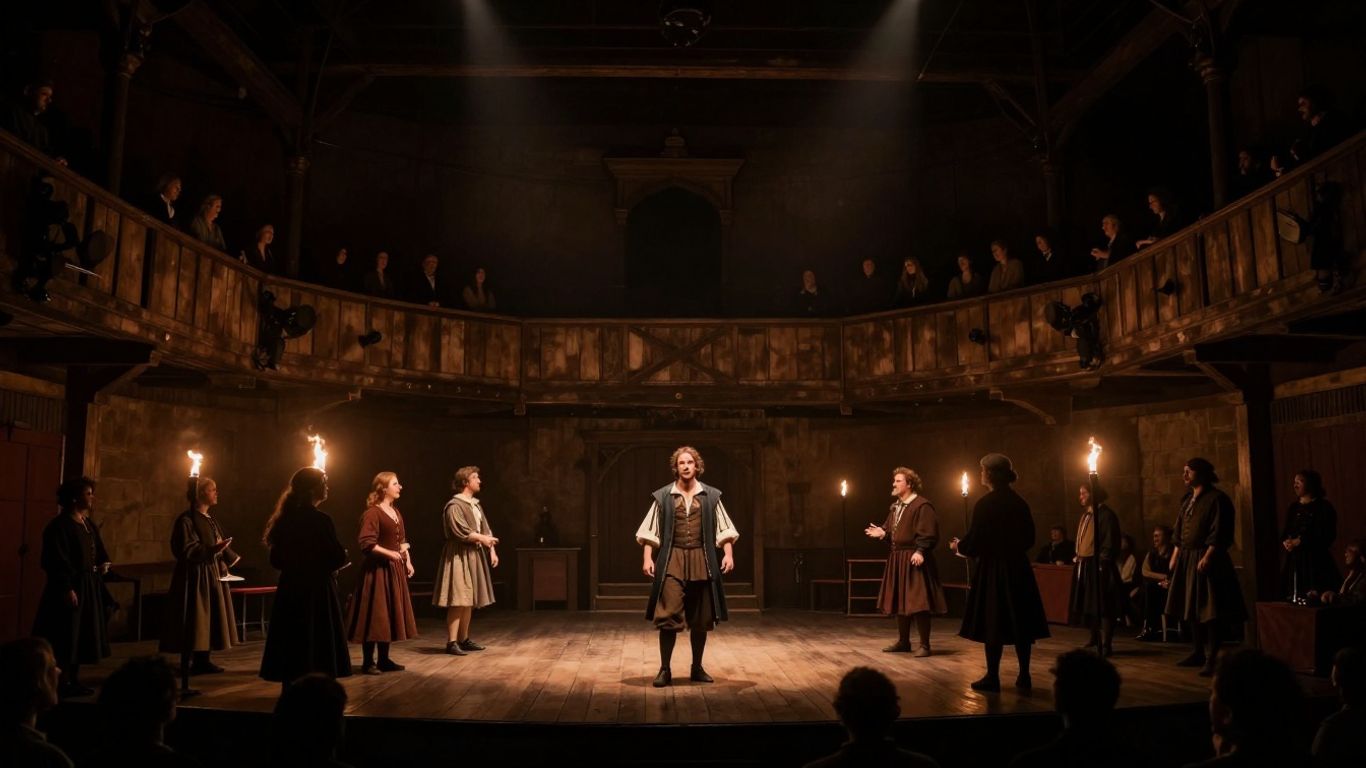
So, how did Will Shakespeare go from a grammar school kid in Stratford to the biggest name in London theatre? It wasn’t overnight, that’s for sure. After those mysterious "lost years," he showed up in London, likely in the late 1580s or early 1590s. He wasn’t just writing; he was also acting. We know this because a fellow playwright, Robert Greene, grumbled about him in 1592, calling him an "upstart crow" and a "jack of all trades." Ouch.
Emergence as an Actor and Playwright
When Shakespeare arrived in London, the theatre scene was buzzing. It was a competitive place, full of actors and writers trying to make a name for themselves. Shakespeare managed to get his foot in the door, not just as a writer but also as a performer. It’s hard to say exactly which plays he wrote first or for which acting troupes, as records from that time are a bit fuzzy. Some of his early works, like Titus Andronicus, were apparently performed by multiple companies before he really settled down.
Joining the Lord Chamberlain’s Men
Things really started to click for Shakespeare when he joined the Lord Chamberlain’s Men. This was a big deal. This company became his professional home for the rest of his writing career. They were a top-tier group, and Shakespeare wasn’t just a writer for them; he was also a shareholder, meaning he had a stake in the company’s success. This was smart business.
Early Works and Critical Reception
His early plays covered a range of styles. We’re talking about histories like the Henry VI plays, tragedies like the rather gruesome Titus Andronicus, and comedies like The Taming of the Shrew. The plague hit London hard in the early 1590s, shutting down theatres for a couple of years. During this downtime, Shakespeare apparently turned to writing poetry. Once the theatres reopened, his company, the Lord Chamberlain’s Men, found a new home at The Theatre in Shoreditch. Later, they’d move on to build their own place, the famous Globe Theatre, on the south bank of the Thames. This move to a purpose-built theatre marked a significant step in establishing a stable platform for his work.
| Play Type | Examples |
|---|---|
| Histories | Henry VI Parts II & III |
| Tragedies | Titus Andronicus |
| Comedies | The Taming of the Shrew |
| Poetry | Written during plague closures (c. 1592-94) |
The London theatre world was a tough but exciting place. Shakespeare’s ability to act, write, and eventually become a business partner in a theatre company gave him a unique advantage. It wasn’t just about putting words on paper; it was about understanding the whole performance machine.
Establishing Authorship and Reputation
So, how did folks start to really believe that William Shakespeare was, you know, the guy? It wasn’t an overnight thing, that’s for sure. For a while, his name was just on plays, and people knew him as an actor and part of a theater company. But then, things started to shift.
First Works Published with His Name
Initially, plays were often published without an author’s name, or sometimes with a different one. It was a bit of a free-for-all. But as Shakespeare’s popularity grew, his name started appearing more consistently on the title pages of his works. This was a big deal. It meant he was getting credit, and people were starting to associate specific plays with him. Think of it like seeing your favorite band’s name on a new album cover – you know what you’re getting.
Recognition by Contemporaries
It wasn’t just the printers; other writers and thinkers of the time started to notice him. In 1598, a guy named Francis Meres, who was a writer himself, actually called Shakespeare out as being the best at both comedy and tragedy among English playwrights. That’s some serious praise from a peer! Even Ben Jonson, another big name in theater, though he sometimes grumbled about Shakespeare’s style, still called him "the Soul of the age, the applause, delight, the wonder of our stage" in the First Folio. This kind of acknowledgment from people who knew the theater world inside and out really helped cement his status.
- Francis Meres’s 1598 mention: Highlighted Shakespeare as top-tier in comedy and tragedy.
- Ben Jonson’s praise: Despite some critiques, Jonson recognized Shakespeare’s impact on the stage.
- Contemporary playwrights: Many others in the theater scene likely knew and worked with Shakespeare, implicitly acknowledging his role.
Royal Patronage and Performances
Having your plays performed for the King? That’s a pretty good stamp of approval. Records show that Shakespeare’s company, the King’s Men, performed several of his plays for King James I. This wasn’t just any old gig; it meant the company, and by extension Shakespeare, had royal favor. This kind of high-profile exposure and royal backing would have significantly boosted his reputation and likely his income too. It showed that his work was considered important enough for the highest levels of society.
The journey from a working actor and playwright to a recognized literary figure wasn’t instantaneous. It involved a gradual process of his name appearing on published works, receiving praise from fellow writers, and gaining the attention of the royal court. These steps built a solid foundation for his lasting fame.
It’s interesting to think about how this recognition built up over time. While some folks today question if he really wrote all those plays, the evidence from his own era points to a man who was increasingly celebrated. The fact that his name became so strongly linked to such powerful works, and that contemporaries acknowledged him, is a big part of why we still talk about him as the Bard. The early recognition really set the stage for his enduring legacy, even as questions about authorship continue to be discussed.
Financial Success and Literary Focus
It wasn’t just about the words on the page for Shakespeare; he was also a pretty shrewd businessman. While his plays were making waves in London, he was busy making sure his bank account was looking good too. This dual focus on creative output and financial savvy allowed him to build a stable career and dedicate more time to his writing.
Investing in Real Estate Ventures
Shakespeare didn’t just spend his earnings on fancy clothes or a bigger house in Stratford (though he did buy New Place, one of the largest homes there, in 1597, along with a good chunk of farmland). He also put his money into property in London. This wasn’t just for personal use; he bought places to rent out to others. It shows he had a good head for business, making sure his money worked for him even when he wasn’t actively on stage or penning a new script.
Transition from Acting to Writing
As Shakespeare got more established, there seems to have been a shift. While he started out as an actor, the records suggest he spent more time writing and less time performing. It’s a logical progression, really. The more successful his plays became, the more demand there was for new ones. Plus, being on stage takes a lot of energy, and perhaps he found his true calling and greater financial reward in crafting the stories themselves.
Building the Globe Theatre
One of the biggest financial moves Shakespeare made was becoming a shareholder in the Lord Chamberlain’s Men, the acting company he was part of. They pooled their resources and built their own playhouse, the famous Globe Theatre, which opened in 1599. Shakespeare owned a significant stake in this venture. Owning a piece of the theatre meant he benefited directly from ticket sales and the overall success of the venue, not just from the sale of his plays. It was a smart move that solidified his financial standing in the theatre world.
The success of his plays provided the capital for investments, and those investments, in turn, provided the security and freedom to focus more intensely on his writing. It was a cycle that benefited both his artistic output and his personal wealth.
The Question of Authorship
Skepticism Arising from Limited Biography
It’s kind of wild to think about, but even with all the plays and poems we have, there’s a surprising amount we don’t know about William Shakespeare’s actual life. Official records from Stratford-upon-Avon, like church and town documents, confirm he existed, got married, and had kids. But they don’t really mention him being a writer or an actor. This lack of direct, personal evidence is where a lot of the doubts creep in. People look at the sheer genius and depth in the plays and wonder if someone with a seemingly ordinary background could really have produced all that. It’s a gap that leaves room for questions.
Arguments for Alternative Authors
Because of these biographical gaps, some folks have proposed other candidates they think might have actually written the plays. These ideas really started picking up steam about 230 years after Shakespeare died. Some of the names you hear tossed around include Sir Francis Bacon, a famous philosopher and scientist, Christopher Marlowe, a playwright who died around the same time Shakespeare’s career was taking off, and Edward de Vere, the 17th Earl of Oxford, who was an aristocrat with a known interest in poetry and theater. The reasoning often comes down to these individuals having more documented literary connections or a background that some feel better fits the sophisticated content of the plays. It’s a whole debate with different theories, and some are quite elaborate.
Scholarly Defense of Shakespeare’s Authorship
Despite the lingering questions, the vast majority of literary historians and Shakespearean scholars stand firm on the traditional attribution. They point to a lot of evidence, like stylistic analysis of the writing itself and contemporary documents that link the works to Shakespeare. Textual and stylistic evidence strongly supports William Shakespeare’s authorship. Experts see a solid connection between the plays and what little we do know about his life, reinforcing his claim. The First Folio, published by his acting company friends, is also a major piece of evidence, presenting the plays as his. While the biographical details might be sparse, the scholarly consensus is that the evidence we do have, when put together, makes a compelling case for the man from Stratford. You can find more about the evidence supporting his authorship on pages like ef14.
The Enduring Legacy of the Bard
The First Folio: A Definitive Collection
So, after all the plays were written and performed, what happened to them? It wasn’t until seven years after Shakespeare died that his friends, John Heminges and Henry Condell, decided to gather up as many of his plays as they could find and put them into one big book. This collection, published in 1623, is known as the First Folio. It was a massive undertaking, and honestly, a bit of a gamble. They wanted to make sure his work wasn’t lost to time, and they were pretty worried that a lot of his plays might just disappear if they didn’t do something. Without their efforts, we might not have some of his most famous works at all. It’s wild to think about, right?
Contributions to the English Language
Shakespeare didn’t just write plays; he basically invented a bunch of words and phrases we still use every single day. Seriously, think about it. Words like "eyeball," "swagger," and "lonely"? Yep, he’s credited with those. And phrases like "break the ice," "wild-goose chase," or "heart of gold"? All Shakespeare. It’s like he had this incredible knack for putting words together in new ways that just stuck. He played around with language, bending rules and creating new meanings, which really helped shape modern English into what it is today. It’s pretty amazing how much one person could influence a whole language.
Critical Acclaim Through the Centuries
While Shakespeare was respected in his own time, the real, deep appreciation for his genius really took off later. Early on, some critics thought he was a bit too messy, mixing comedy and tragedy, or not following the strict rules they liked. But then, people started to see the power in his "natural genius," as they called it. Writers and thinkers from all over Europe, like Voltaire and Goethe, started championing his work. By the 1800s, he was pretty much cemented as England’s national poet, the "Bard." His reputation just kept growing, and today, his plays are studied, performed, and loved all around the globe. It’s pretty cool how his stories about human nature still connect with us, no matter when or where we live.
The way Shakespeare wrote about people – their joys, their heartbreaks, their silly mistakes – it’s just so real. Even though his plays are hundreds of years old, the characters feel like people we know. That’s why they still work on stage, and why we keep coming back to them. It’s not just about the fancy language; it’s about understanding ourselves a little better through his eyes.
So, How Did Shakespeare Become Shakespeare?
Look, figuring out exactly how William Shakespeare became the literary giant we know today isn’t as simple as following a recipe. There are gaps in his story, and sure, some folks even wonder if it was really him. But when you look at the evidence – his name on published works, his involvement with major theater companies like the King’s Men, and his smart investments that gave him time to write – a picture starts to form. He wasn’t just some lucky guy; he was a working actor, a shareholder, and a businessman who also happened to be an incredible writer. His words, his plays, and his impact on the English language are still with us, proving that whatever the debates, his legacy is pretty solid.
Frequently Asked Questions
Where did William Shakespeare grow up?
William Shakespeare was born and spent his childhood in a town called Stratford-upon-Avon in England. His father was a glove maker and a local official. It’s believed he went to the local grammar school, which taught Latin and classic stories, giving him a solid base for writing.
When did Shakespeare start writing plays?
It’s not exactly known when Shakespeare began writing, but some of his plays were already being performed in London by 1592. He was part of a popular acting group called the Lord Chamberlain’s Men, which later became the King’s Men. He was both an actor and a writer for the group.
Did Shakespeare make a lot of money from his plays?
Yes, Shakespeare became quite successful and wealthy. He was not just a writer but also a part-owner of his acting company and their famous theater, the Globe. He invested his earnings wisely in properties, which helped him become a successful businessman as well as a famous playwright.
Why do some people doubt Shakespeare wrote his own plays?
Some people question if Shakespeare wrote his own works because there aren’t many personal records from his life. They think someone from his background might not have had the education or experience to write such complex and brilliant plays. This has led some to suggest other people, like aristocrats or other writers, might have actually written them.
What do most experts believe about Shakespeare’s writing?
The vast majority of experts and scholars strongly believe that William Shakespeare wrote all the plays and poems attributed to him. They point to evidence like his name appearing on published works and records from his time that show people recognized him as the author. They also note that other writers of that era also had less information about their lives.
What is the First Folio and why is it important?
The First Folio is a collection of 36 of Shakespeare’s plays published together in a book in 1623, seven years after he died. His friends and fellow actors put it together. It’s super important because it preserved many of his plays that might have been lost forever, and it’s considered the most reliable version of his works.