
You’ve finished the manuscript, but the pages still feel out of order. You’re wondering whether the copyright page belongs before the introduction, whether your novel needs a prologue, and where acknowledgments should go. The writing may be done. The book isn’t.
Most new authors don’t have a writing problem. They have a book-architecture problem. When you ask about the “parts of a book,” you’re really asking what your reader needs first, what belongs inside the main experience, and what should come after it.
This guide maps those choices across fiction and nonfiction. Front matter, body matter, and back matter shape a usable book rather than a merely formatted file. The structure also gives you a clearer production plan.
The Three-Layer Map Behind Every Book-Part Decision
You need a structure that helps your reader, not a pile of inherited publishing terms. Each page should earn its place through purpose, position, format, and fit for your book. For help shaping the manuscript itself, use this guide to write a book from first idea to finished draft.
Reedsy divides most published books into three broad sections: front matter, body matter, and back matter. You can use that map without treating every possible page as mandatory. No book includes every available part.

The three layers: front matter, body matter, and back matter
Front matter covers the pages before the main text, body matter contains the core reading experience, and back matter follows it. Reedsy defines front matter as everything between your cover and the first pages of main text.
The physical sections of a book
These sections are usually called front matter, body matter, and back matter. Chapters, scenes, arguments, characters, and conclusions operate inside those physical layers.
The five broad parts sometimes used in publishing lists
Some expanded lists name five parts, such as the cover, front matter, body, back matter, and end material. For your production plan, the three-layer model is clearer because it groups related pages without making optional pages compulsory.
The reader job, placement, and format test
Before adding a page, ask four questions: What job does it perform? Where should it appear? Does fiction or nonfiction require it? Does it improve print or ebook production?
- Reader job: State what the page helps your reader do.
- Placement: Assign its position in print and ebook navigation.
- Genre fit: Explain its value for fiction or nonfiction.
- Business value: Connect it to your sustainable author ecosystem.
Practical rule: If you cannot name a page’s reader job, remove it or relocate it.
The basic parts of a book
Start with front matter, body matter, and back matter, then add only the pages your reader and format need. A profitable author ecosystem depends on purposeful books, not a mandatory page count.
The possible sections of a book
Longer classroom or publishing lists describe possible components, not a universal checklist. Treating them that way keeps your manuscript focused and makes your print file, ebook navigation, and future releases easier to manage.
What belongs in a manuscript and a finished edition
Separate story-level material from edition-level pages. Conflict, characters, evidence, and conclusions belong to the manuscript. A copyright page, contents page, or author note may belong to the finished edition. Front matter comes first.
Front Matter: The Pages That Prepare the Reader
Your opening sequence should answer your questions as a reader without delaying the book itself.
You place front matter between your cover and main text. Reedsy identifies common examples such as the cover, copyright page, and table of contents. You’ll usually leave these pages unnumbered, and your publishing setup may involve a publisher or contributor.
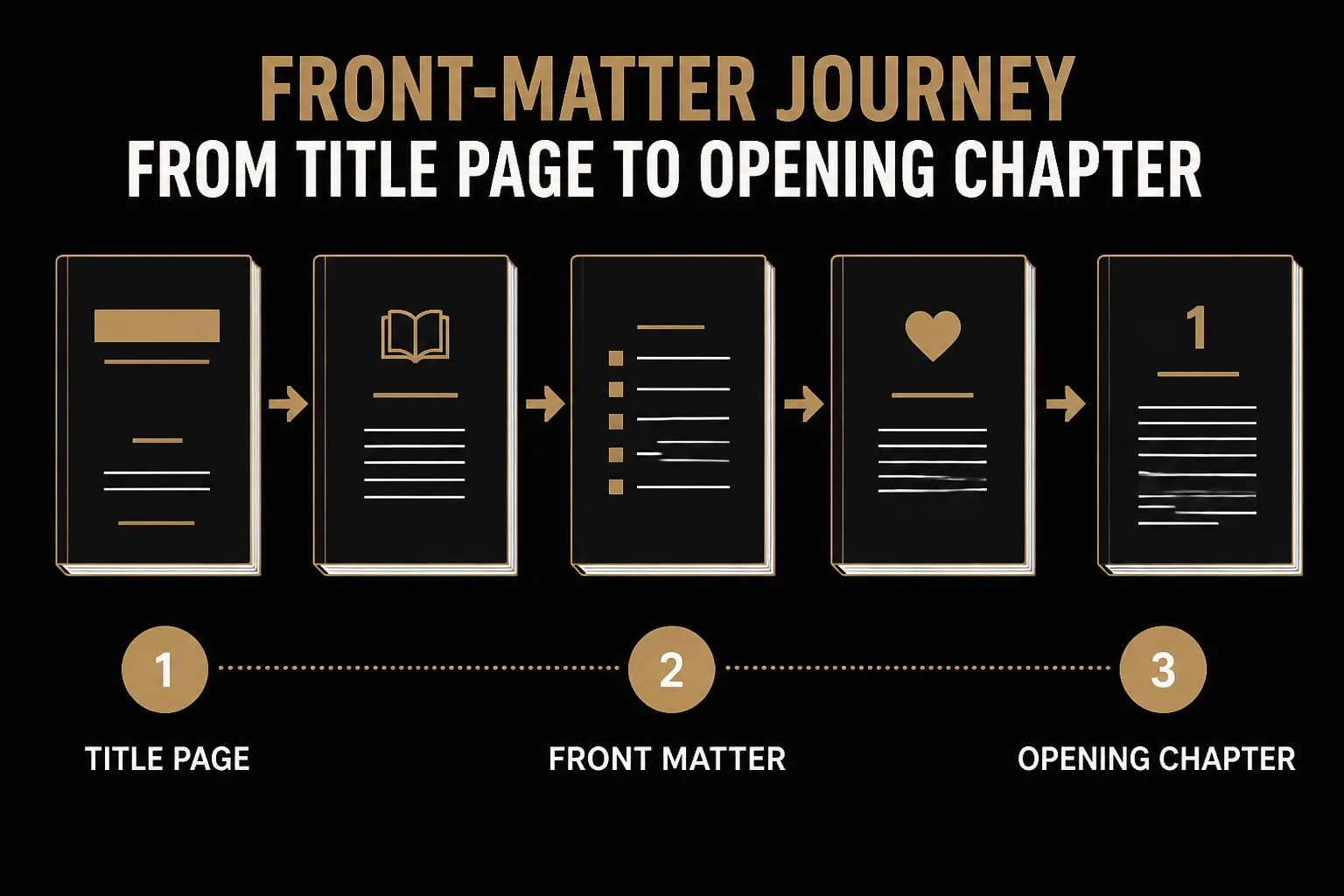
Why there is no universal 12-part template
Expanded lists combine optional front matter, body matter, and back matter. Select pages according to your reader’s needs rather than trying to reach a fixed count.
The title page
Use the title page to give your book’s title, subtitle, and author name. Keep it clean, especially in an ebook, where it becomes your first interior screen.
The copyright page
Use the copyright page to identify ownership, publication details, rights language, and edition information. Your publishing setup may add an ISBN, publisher name, website, or disclaimer.
The dedication
Use a dedication for a brief personal acknowledgment. If you write fiction, you can use it to create an emotional connection. If you write nonfiction, you may dedicate the book to a person, group, or cause.
The epigraph
Use an epigraph to place a quotation before the main text, establish mood, or introduce an idea. Verify permissions and attribution before you use copyrighted material.
The table of contents
Use the contents page to help readers understand and reach your structure. If you write nonfiction, it will usually matter more. If you write fiction, you may omit it unless your chapters, parts, or navigation benefit from one.
The preface
Use a preface to explain why you wrote the book or how it came together. It earns its place when your personal context helps readers interpret the work.
The introduction
Use an introduction to prepare readers for your book’s subject, argument, or method. If you write nonfiction, you’ll usually benefit from one. If you write fiction, you rarely need an explanatory introduction before the story.
Praise and frontispiece pages
You can use optional praise to present selected endorsements, while a frontispiece adds an image facing the title page. Give both a clear purpose rather than adding them to imitate a traditionally published edition.
What belongs before the main text
If you write fiction, a dedication, epigraph, or short prologue may establish mood. If you write nonfiction, the contents, introduction, and reader orientation usually carry more weight.
Weak: “Contents” followed by page numbers that fail to link in your ebook.
Strong: “Contents” with tested links to every chapter and section.
When front matter earns its place
Use front matter when each page reduces uncertainty, builds trust, or improves navigation. Your print pages may remain unnumbered, while your ebook must still support reliable links and clear progression.
Front matter by book type
- Fiction: Give your book a restrained opening with title, copyright, dedication, epigraph, and optional contents.
- Nonfiction: Give readers a clearer orientation sequence with contents, preface, introduction, and useful praise.
- Self-publishers: Test your print and ebook opening, and keep your edition details accurate.
Extra pages can add context, but unnecessary pages delay you as a reader. Use each opening page only when it gives your reader a clear reason to continue.
Body Matter: The Main Reading Experience
Body matter is the book’s primary reading journey. It contains the chapters or other core reading units that carry the novel’s story or the nonfiction book’s promise.
Physical parts and literary elements are not the same thing. Chapters are visible book units. Character, conflict, argument, evidence, and pacing describe what happens inside them. Keeping that boundary clear helps you create a book readers finish and remember.
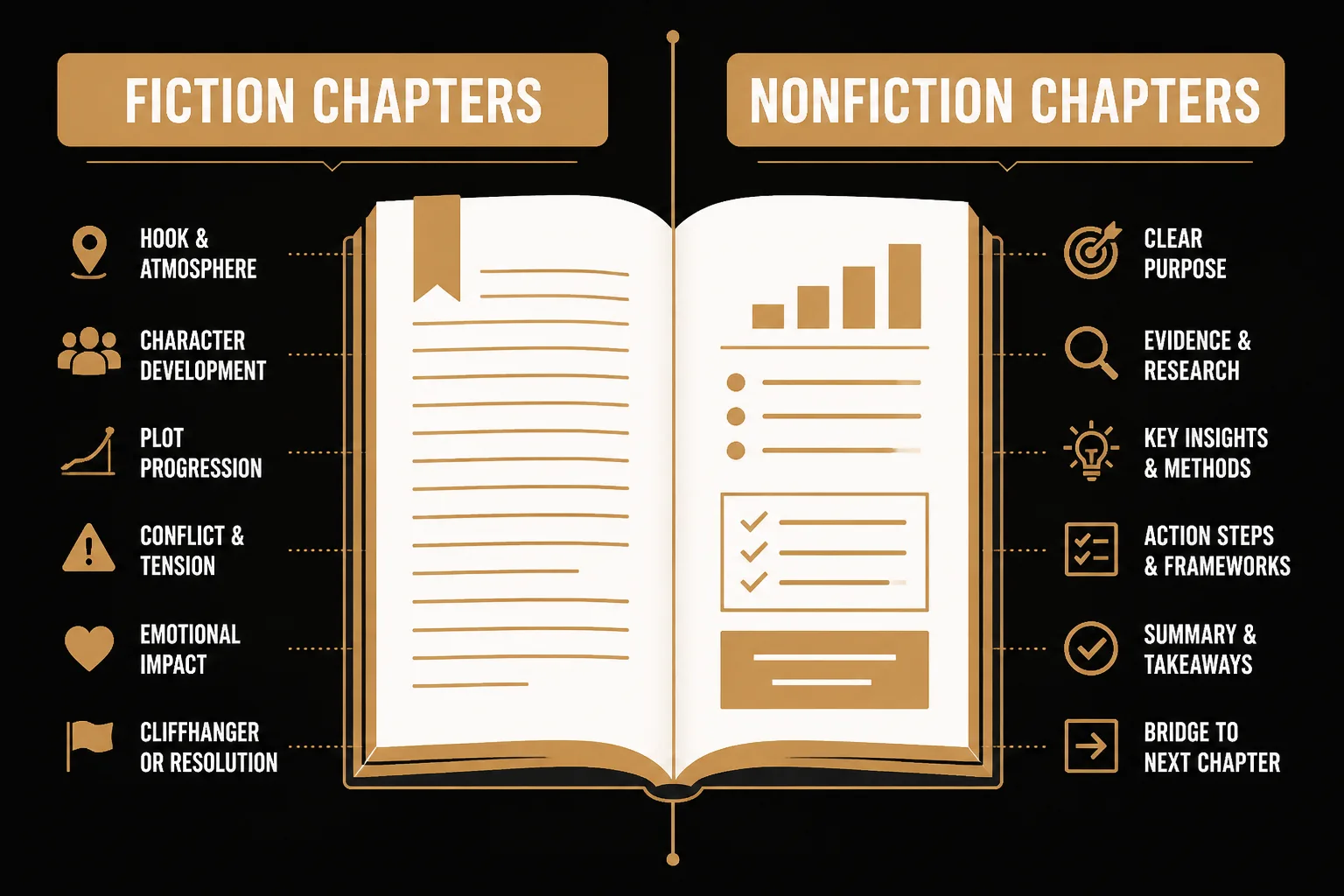
What the reader experiences as the main text
Body matter usually consists of chapters arranged in a deliberate sequence. Each chapter needs an opening, development, transition, and close, whether you are building suspense in fiction or advancing an argument in nonfiction.
A weak chapter may open with general background and end without direction. Strong: “By Friday, Maya had one interview, no savings, and a decision she could not postpone.” In nonfiction, a chapter can open with a problem, develop it through evidence and examples, then close with an action the reader can take.
Reedsy describes a table of contents as a list of your chapters. That page helps readers preview the body matter, especially in nonfiction.
The seven commonly taught elements of a novel
The seven commonly taught elements are character, setting, plot, conflict, point of view, theme, and pacing. These are story components, not seven required physical sections.
The nine commonly taught literary elements
A nine-element framework may include character, setting, plot, conflict, theme, point of view, tone, symbolism, and style. Teaching sources vary, so use the framework that best tests your manuscript.
The 12 elements sometimes used in story checklists
A 12-element checklist may expand those ideas into premise, characters, setting, narrator, plot, conflict, stakes, structure, scenes, dialogue, theme, and resolution. There is no single official count. Test whether each element improves the reading experience.
The five broad features of a novel
The five broad features are usually plot, characters, setting, conflict, and theme. Point of view and pacing still matter, but some teaching frameworks group them within structure or style.
When body matter earns its place
Use body matter to deliver the book’s central promise. A fiction chapter should move character, conflict, or discovery. A nonfiction chapter should develop a claim, support it with evidence, and lead toward useful action.
Body matter by book type
- Fiction: Test whether every scene changes a situation, reveals character, or increases pressure.
- Nonfiction: Check that each chapter advances your argument with examples, evidence, and a practical conclusion.
- Series planning: Shape your ending so readers understand what the next book or related offer can provide without feeling pressured.
A prologue earns its place when it sets the stage before the main narrative. An introduction frames a nonfiction promise, while a conclusion gathers the argument and shows what your reader should do next. An epilogue can conclude the story or add a bonus scene. An afterword or postscript belongs only when it answers a genuine reader need.
- Momentum: Each chapter creates a reason to continue.
- Sequence: Information or events arrive in the order readers need.
- Redundancy: Repeated scenes, claims, and summaries have been removed.
Every chapter should carry the reader forward, and every optional ending page should resolve a real need. That architecture supports completion, stronger reviews, and clearer positioning for your future books.
Back Matter: The Pages That Extend the Book’s Value
Back matter continues the relationship after the final chapter without turning the book into a storage area for unused material. Reedsy identifies acknowledgments and indexes as common back matter elements, though you won’t need every option in every book.
Your choices can build trust, improve discoverability, and guide readers toward your next relevant book. Too many calls to action, though, can interrupt the reading experience.
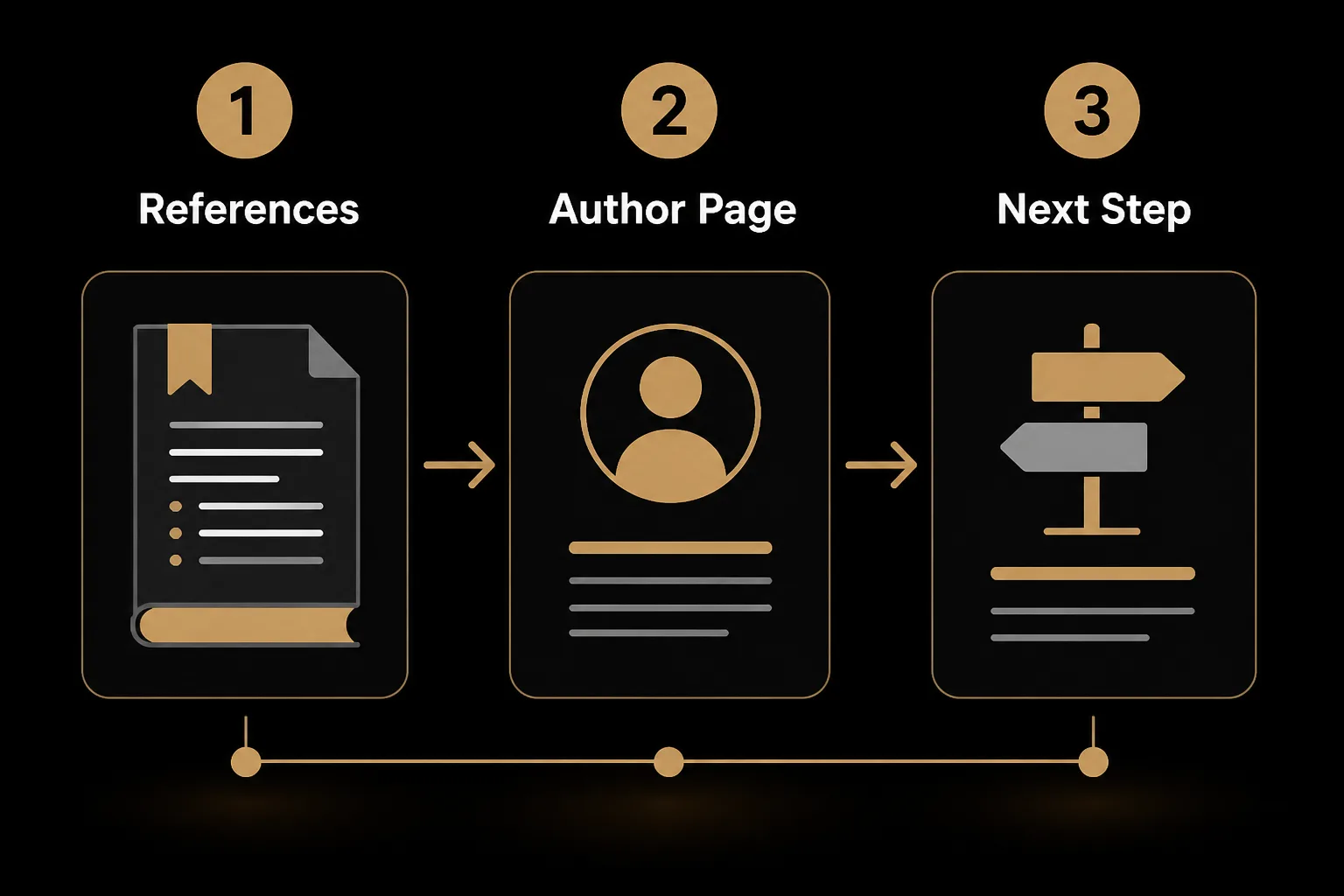
What belongs after the final chapter
You might include acknowledgments, an author page, appendices, endnotes, references or a bibliography, a glossary, an index, or reader-facing extras such as a preview or bonus chapter. Reedsy describes an index as matching key terms and pages, while a bibliography or references section serves as a source list.
A research-heavy nonfiction book may need notes, sources, a glossary, and an index. For a novel, acknowledgments, author information, and a carefully chosen preview may be enough. Use this checklist before approving the final pages:
- Trust: Sources, notes, and credentials are complete and easy for you to verify.
- Comprehension: Definitions, appendices, or explanations answer questions your reader may have.
- Discoverability: An index or preview helps your reader find useful material or another relevant book.
- Next action: One clear, restrained invitation supports your next marketing step.
When back matter earns its place
Use back matter to answer the reader’s next question, then offer one useful path forward. A weak author page says, “Visit my website for everything.” A stronger author page says, “Read The Small Business Budget next for the next step in your planning.”
Back matter by book type
- Research-led nonfiction: Building credibility through sources, notes, glossaries, and indexes.
- Series fiction: Previewing the next book without disrupting your ending.
- Growing author ecosystems: Connecting one finished read to a relevant next relationship.
Back matter costs space and attention. If your pages delay the next meaningful action, remove the clutter. A guide to planning multiple book releases fits the same workflow when your preview supports a larger series plan.
Keep a page only if it improves trust, comprehension, discoverability, or your reader’s next step.
The Parts of a Book Compared by Purpose
When you decide what belongs in your book, weigh reader orientation, core value, production time, and the job each edition must perform.
Your print book, ebook, and nonfiction lead-generation asset may need different cuts. No book needs every possible component. Reedsy notes that a copyright page may occasionally appear in back matter, so check the intended sequence rather than assuming one fixed order.
What each layer contributes
| option | best for | strength | limitation | cost |
|---|---|---|---|---|
| Front matter | Every book that needs orientation, ownership, or navigation | Builds reader trust and establishes the reading route | Too many opening pages can delay the main promise | Low to moderate production and revision time |
| Body matter | The core novel, guide, memoir, or nonfiction argument | Delivers the book’s central reading experience and value | Weak sequencing or oversized chapters can reduce momentum | High development and revision time |
| Back matter | Books needing sources, lookup tools, author context, or a next action | Extends credibility, usefulness, and discoverability | Can become cluttered or distract from the reader’s next step | Moderate to high production and revision time |
Front matter supports orientation, body matter delivers the promise, and back matter extends value or prompts the next action. Cost means your author time, editorial effort, layout complexity, and update burden, not a fixed dollar quote.
Where authors overbuild
You overbuild when every possible page survives without serving the reader. A long print opening feels heavier, while an ebook needs clear hierarchy for navigation and a lead-generation asset needs a focused next step.
How format changes the decision
Print makes page order and front-matter length visible. Ebook navigation makes headings and contents especially important. If your back matter supports promotion, this guide to book promotion services for authors fits the same workflow.
Choose the Structure That Matches Your Book’s Job
You can give every manuscript a prologue, glossary, index, and lengthy author note, but extra pages won’t fix the wrong reading experience. Your structure should match what your reader needs next: momentum, proof, lookup, implementation, or a reason to continue with your work.
Choose the smallest structure that solves that problem. Format, production effort, authority needs, and the next marketing action should shape the decision, not tradition.
| situation | better move |
|---|---|
| First novel | Prioritize chapter momentum; add a prologue or epilogue only when it performs a distinct story job |
| Research-heavy nonfiction book | Use a clear contents page, introduction, notes, references or bibliography, and an index when lookup value justifies it |
| Short practical guide | Move quickly from title and copyright information into the promise, then add only the back matter that supports implementation |
| Ebook-first launch | Favor concise front matter, linked navigation, readable chapter hierarchy, and a focused final call to action |
| Book designed to grow an author ecosystem | Add a useful author page, relevant next-book preview, or reader invitation after the value has been delivered |
For a first novel
Protect your opening momentum. A prologue sets the stage in fiction, while Reedsy describes a preface as the author’s own introduction, according to its 2025 guide. Use either only when the material cannot work inside chapter one.
For nonfiction that needs authority and navigation
Give your reader a contents page, clear introduction, notes, references, and possibly an index. You earn authority through traceable evidence, while the added production effort pays off when readers return for research or teaching.
For an ebook-first business asset
Test your contents links, headings, and final invitation on an actual device. You need clean navigation, not print conventions copied blindly, so your next marketing action remains visible without interrupting the book’s value.
For a book that leads readers into your author ecosystem
After you deliver the promised value, add one useful next step. That broader planning takes more work than adding a generic sales page.
- Choose relevance: Use a reader invitation, author page, or related-book preview that fits your audience.
- Protect trust: Keep the ending helpful, specific, and smaller than the book itself.
FAQ
What are the 12 parts of the book
A common 12-part structure includes the half-title page, title page, copyright page, dedication, epigraph, table of contents, foreword, preface, introduction, chapters, conclusion, and back matter. Not every book needs all 12. A novel may skip the contents page, while a practical guide may add acknowledgments, notes, a glossary, or an index.
What are physical sections of a book called
The physical sections of a book are usually called front matter, body matter, and back matter. Front matter prepares the reader, body matter contains the main text, and back matter supplies useful material after the ending. In a printed edition, these sections may also include distinct pages, signatures, or inserts created during production.
What are the five main parts of a book
Many books can be organized into five practical parts: front matter, an introduction, the main body, a conclusion, and back matter. The exact labels vary by genre. A memoir might open with a preface, while a nonfiction guide may use a contents page, chapters, appendices, notes, and an invitation to keep reading.
What are the basic parts of the book
The basic parts are the opening pages, the main reading material, and the closing pages. These are often grouped as front matter, body matter, and back matter. The front matter can include the title and copyright pages, the body holds the chapters, and the back matter may contain references, acknowledgments, an author note, or a related-book preview.
Turn the Parts Into Your Book’s Production Plan
Your book’s structure becomes useful when it guides production, not when it merely satisfies convention. Settle the reading journey before you format pages, choose edition settings, or plan marketing.
Build in order. That keeps your manuscript in charge and stops extra pages from disguising unfinished thinking.
1. Write the reader promise
- Reader promise: Write one sentence stating what your reader will understand, feel, or accomplish by the final page. Use that sentence to reject parts that do not serve the book’s central job.
2. Build the book outline
- Book outline: Map the body matter first. List each chapter’s purpose, sequence, and handoff to the next chapter so you can see where the manuscript still needs work.
3. Add only purposeful front matter
- Front matter: Select only the opening pages that prepare your reader for this specific book. Check that each page earns its position instead of delaying the main reading experience.
4. Design useful back matter
- Back matter: Add the next useful step, such as a related-book preview, reader invitation, or source note. Keep it relevant to your reader journey and your wider author ecosystem.
5. Check the final reader journey
- Edition check: Review print and ebook sequences separately. Check chapter titles, navigation, source treatment, calls to action, and edition-specific behavior before formatting or marketing begins.
Start with the outline. Let the manuscript determine which parts belong.
If you want a faster way to plan your publishing path, Bradley Johnson Productions provides guidance on book development, marketing, Amazon SEO, audience segmentation, and long-term author ecosystems for independent authors. The publishing guidance and author business articles support that work.