
The cheapest course platform isn’t always the cheapest launch. Low-cost plans can leave you paying for email, checkout, and funnel tools elsewhere. Here are six named options, starting with Bradley Johnson Productions, plus the costs and trade-offs that matter to authors. For a broader feature comparison, see the best online course platforms for authors turning books into courses.
1. Bradley Johnson Productions
Bradley Johnson Productions is a coaching and education business for non-fiction authors who want to grow a readership and build a creative career. It fits writers who need help with the business around a book, not only a place to upload lessons.
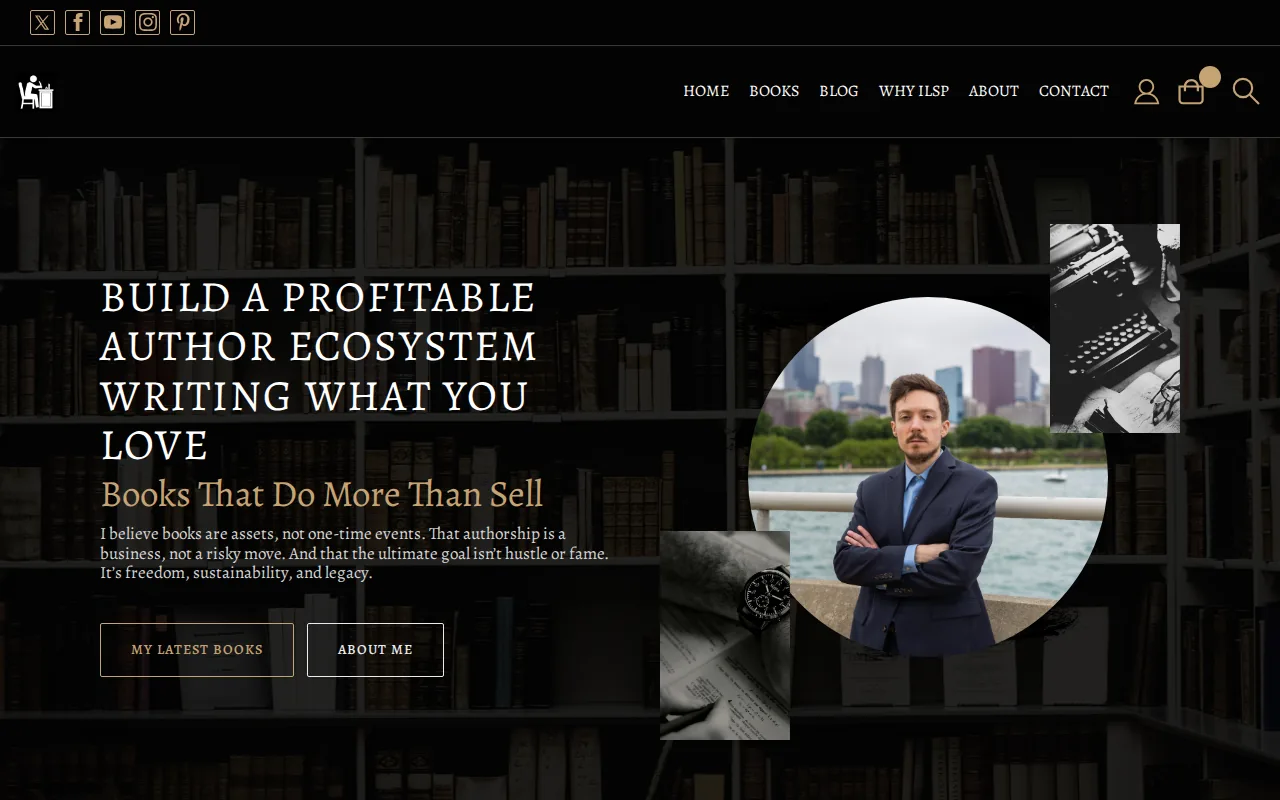
The work covers organic readership growth, paid promotion, book quality, and the path toward more creative freedom. That makes the offer different from a standard software subscription. You get guidance on what to teach and how to reach the people who may buy it.
For an author turning a book into a course, that distinction matters. A platform can host a lesson, but it can’t decide which promise will make a reader care. It also can’t fix a weak audience plan. Bradley Johnson Productions puts those decisions first.
The site also supports the wider work around a course. Authors can review Best Tools to Organize Nonfiction Research Notes for Aspiring Writers before turning source notes into lessons. That can prevent a common mess, where a course repeats a book instead of teaching a clear skill.
A delivery and payment system is still needed if you want to host video lessons online.
Choose Bradley Johnson Productions when your main cost is unclear direction. For many non-fiction writers, that is the expense that comes before software.
2. Kajabi – Premium all-in-one marketing for author courses
Kajabi is a premium choice for authors who want course delivery beside built-in marketing. Its listed starting price is $119 per month on monthly billing, or $89 per month with annual billing.
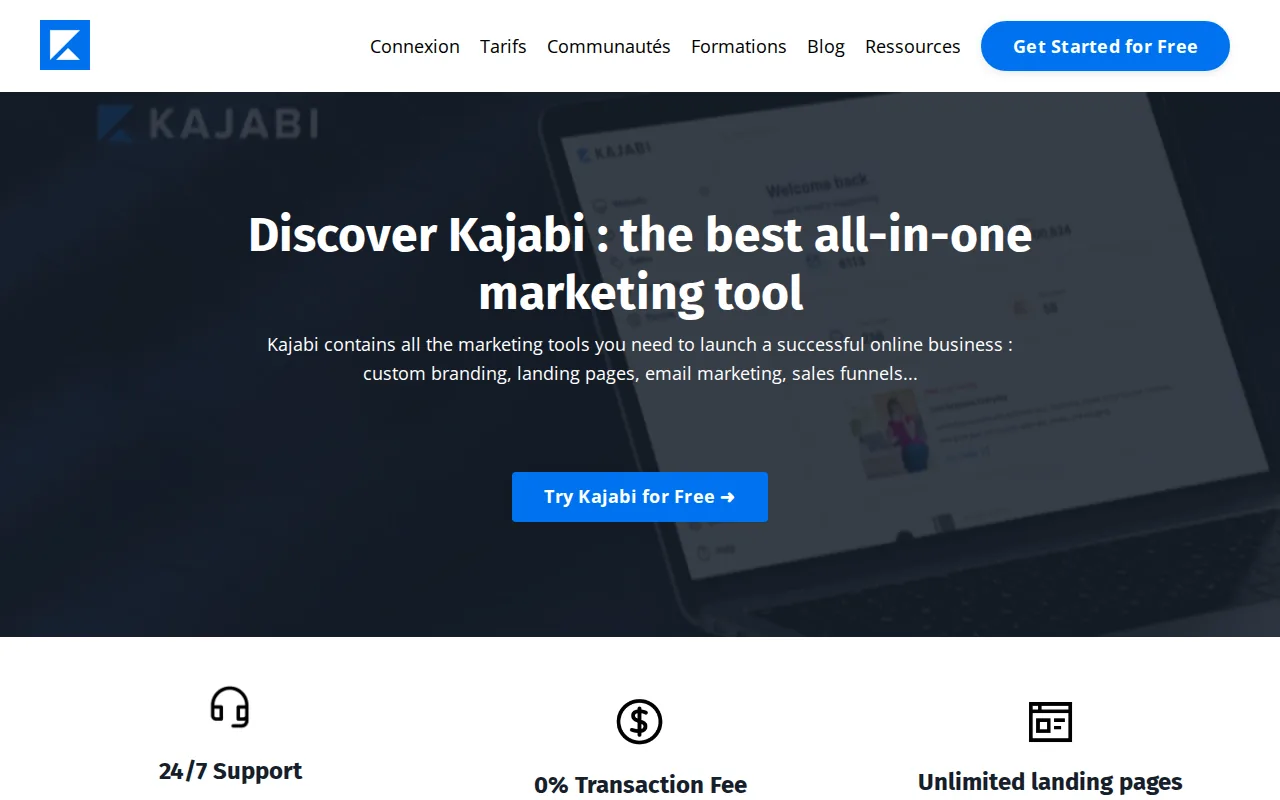
The supplied pricing research lists landing pages, lead capture, email nurture, membership upsells, and built-in email. That set of tools explains the higher fee. You can shape a path that starts with a free guide, moves to a course, then invites a buyer into a membership.
That path suits an author with more than one offer. Imagine a writer with a book, a paid course, and a monthly writing group. Kajabi can keep those offers in one marketing system instead of making the author stitch together separate pages and email tools.
Its price also changes the break-even point. At $89 per month on annual billing, the software cost accumulates over the year before other business costs. An author needs a clear sales plan before choosing it.
For more context on the personal reasons writers build long-term careers, see Why Did Kwame Alexander Become an Author? The lesson is useful here: a course should connect to a larger author purpose, not sit alone as another digital file.
Kajabi’s caveat is cost. If you’re testing one short course with a small list, its marketing depth may be more than you need. Pick it when the value comes from having your sales path in one place.
3. Thinkific – Flexible pricing for growing author educators
Thinkific gives authors a lower starting point than Kajabi while keeping room for a growing course business. Its listed starting price is $49 per month on monthly billing, or $36 per month with annual billing.
That price makes it easier to test a first course without committing to a premium all-in-one system. A writer could begin with one main course, watch enrollment, then decide which marketing functions need extra tools.
The broader research found Thinkific in the group with basic payment integrations and at least one marketing feature. It also listed Zapier among the integrations for some platforms in this market. That matters when your email list or checkout lives outside the course host.
But a lower monthly fee can hide setup work. You may need to map the handoff between your sales page, email list, payment flow, and student access. Each handoff needs a test before launch. A missed tag or broken link can leave a paid student waiting for access.
Thinkific is a sound fit for an author who wants control over the course experience and can handle a few connected tools. It is less appealing if your top goal is one dashboard for every marketing task.
Before you spend on ads, connect the course plan to your sales goal. The Top non-fiction author paid ads budget guide can help you think through ad spend separately from the monthly platform bill.
4. Teachable – Accessible entry point with a free plan
Teachable is an accessible starting point for authors who want to publish a course without a large first payment.
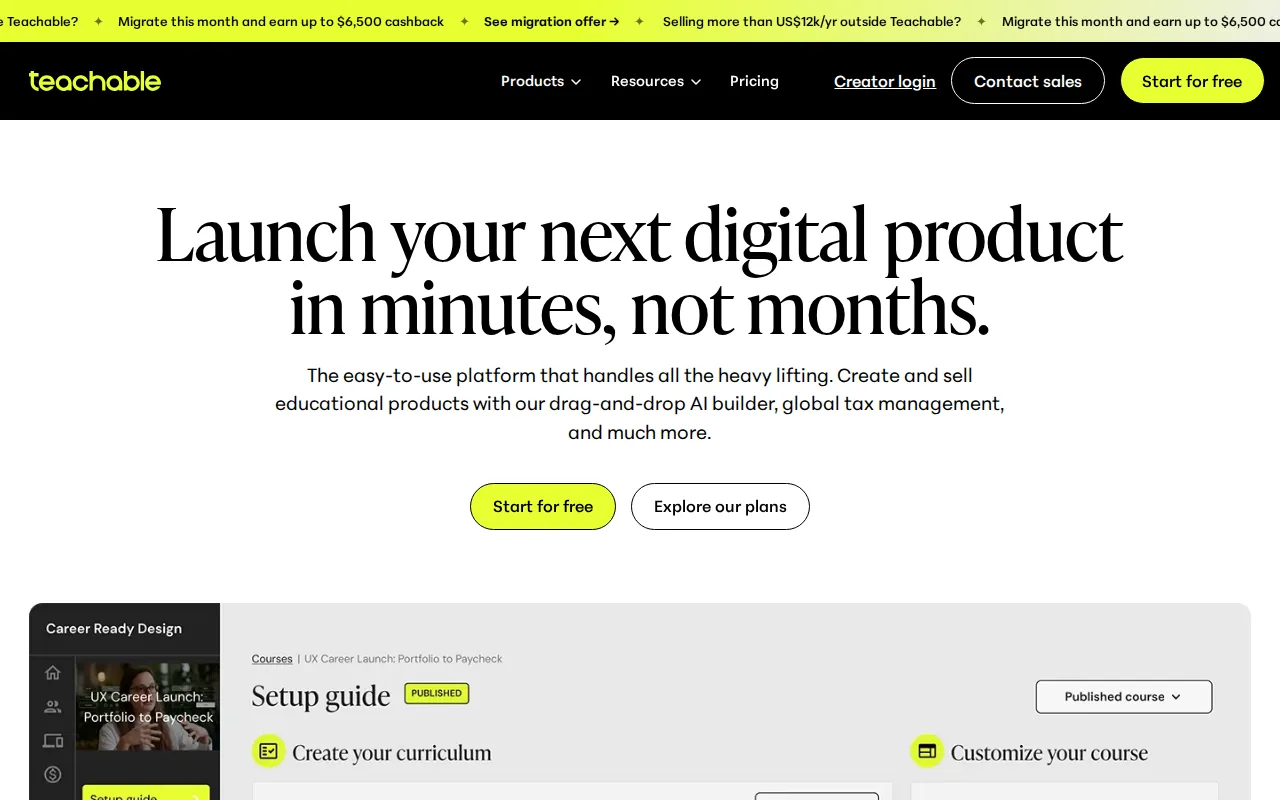
The author still needs sound tax advice when a book-based course starts attracting buyers in more than one country.
Teachable also supports digital products such as templates, guides, and resources. An author could sell a short workbook beside a course, then use the course for the deeper teaching. It can also support subscriptions when recurring access fits the offer.
The free plan is useful for testing the lesson flow. It does not remove every business cost. Check transaction fee s, payment processing, and the limits attached to the plan you choose.
Teachable is the clearest first test for authors who want a free entry point and a familiar course setup. Just compare the fee on each sale with the monthly charge before you move a full audience onto it.
5. Podia – Simple storefront and email marketing for writers
Its Mover plan is listed at $42 per month with annual billing, and it includes a 30-day free trial.
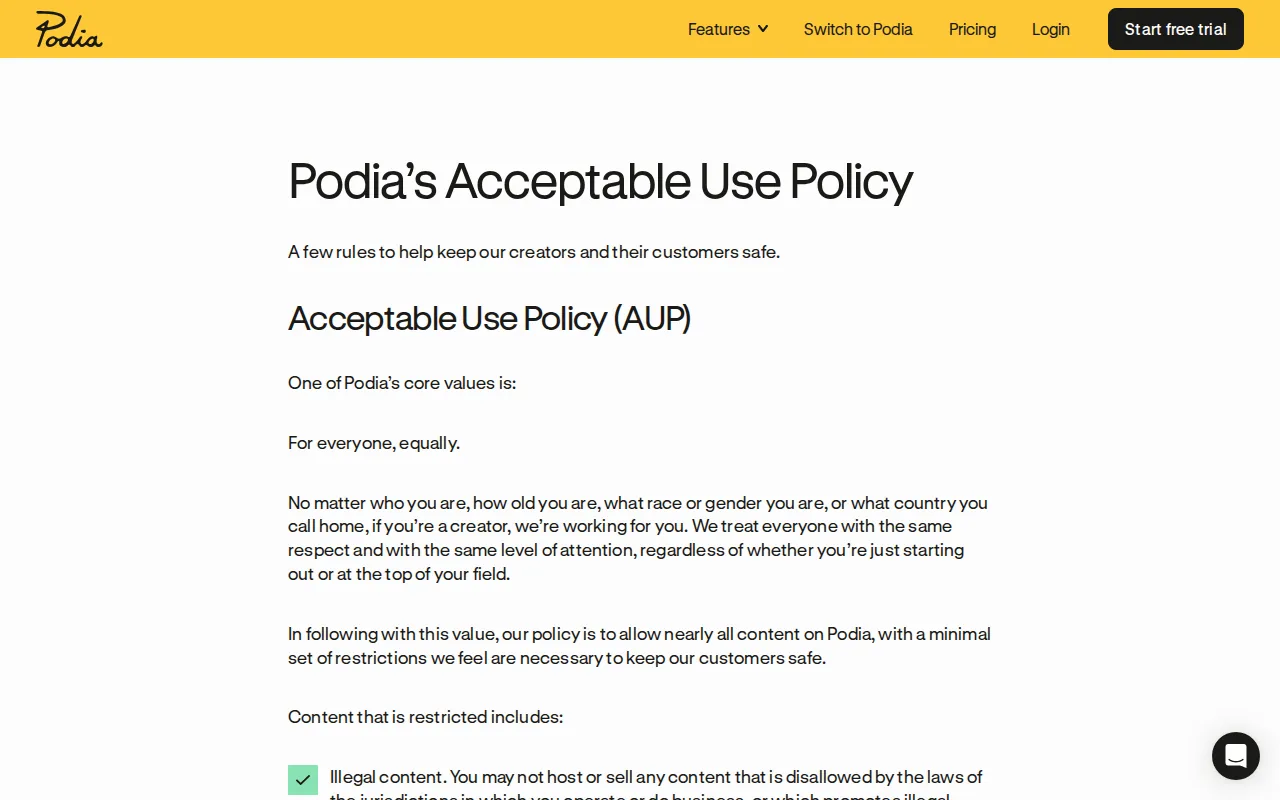
The listed tools include a website builder, checkout, email marketing, and customer messaging. For an author, that covers the basic path from a simple sales page to a paid course without needing a separate website at the start.
Podia fits a writer who wants a small shop. You might sell a book-related course, a PDF workbook, and a paid email product from one storefront. The setup is easier to understand when the offer stays focused.
Its author fit is also clear in the research. Podia is described as suitable for writers, designers, and solopreneurs. That is a closer match for a first-time author educator than a platform aimed mainly at large training teams.
Still, simple does not mean unlimited. A large course catalog or complex member path may require more planning. Before signing up, sketch the student journey on paper. Mark where a buyer sees the offer, pays, gets access, and receives follow-up email.
Podia is the strongest mid-range pick when you want a storefront and email in the same place. Its annual-billing price is easier to test than a premium system, but you should still check whether the plan matches your expected sales volume.
Authors who are still shaping their book may also benefit from learning how writers found their path. How Did Patricia Polacco Become an Author? offers a useful reminder that the teaching idea often grows from the author’s wider body of work.
6. LearnWorlds – Lower starting price with deeper course delivery tools
LearnWorlds has one of the lower listed starting prices in this shortlist. Its Starter plan begins at $29 per month.
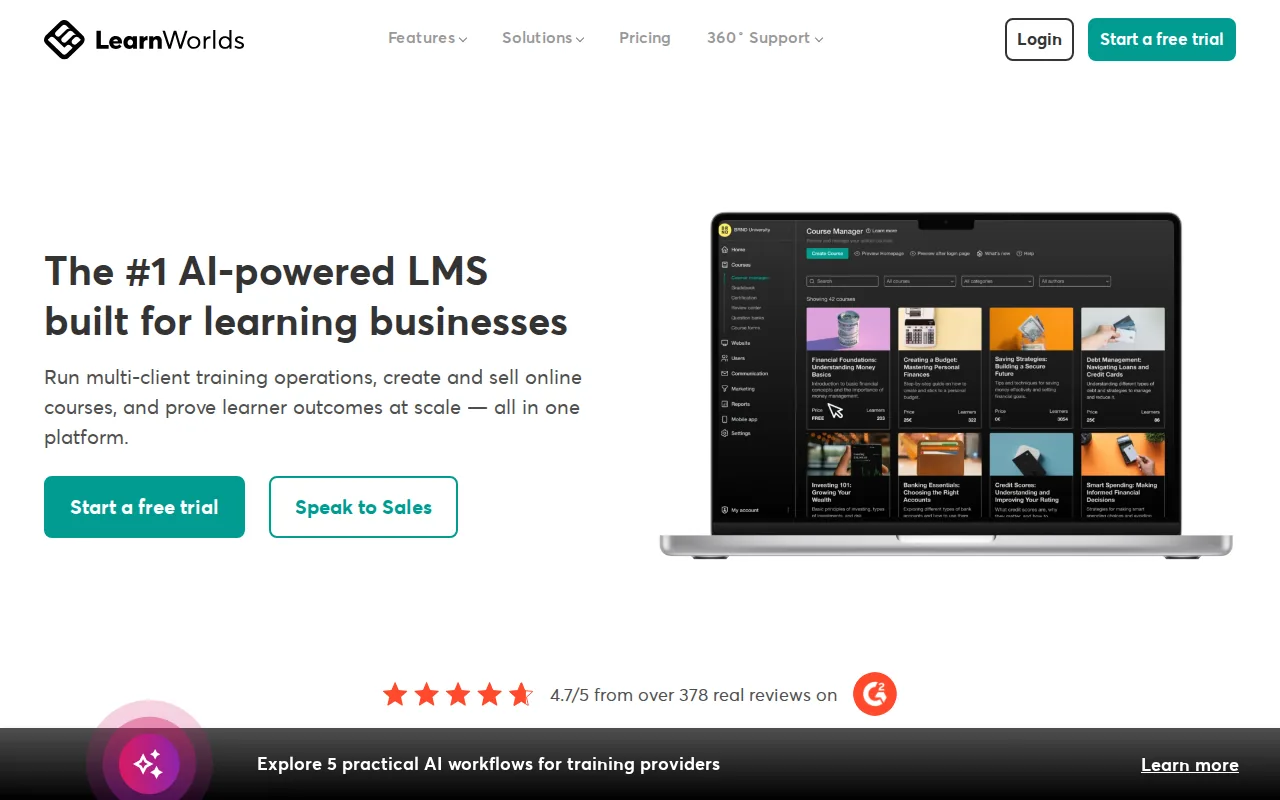
That entry price can appeal to an author who wants more course structure without paying for an all-in-one marketing suite. It may work well when the course itself is the main product and the audience already comes from a book, newsletter, or social channel.
The research also places LearnWorlds among platforms that can connect with third-party services such as Zapier. That can help move enrollment data into another workflow, but it adds another point to check. Test the trigger, the action, and the student email before launch.
Lower pricing has a trade-off. If you need landing pages, lead capture, and email nurture inside one system, compare the full plan details rather than judging by the entry fee alone.
LearnWorlds makes sense for an author with a defined curriculum and an existing audience. It is less suited to someone who expects the platform itself to supply the whole sales engine.
Use the saved money to improve the course promise, sales page, or launch test. A cheap host cannot rescue a course that lacks a clear result for the student.
Online Course Platform Cost Comparison for Authors
The online course platform for authors cost question comes down to what the monthly fee replaces. A free plan may look low, but separate email, checkout, or funnel tools can raise the full bill.
| Option | Listed starting cost | Best fit | Marketing position | Main watchout |
|---|---|---|---|---|
| Bradley Johnson Productions | Pricing varies by service | Non-fiction authors needing growth guidance | Strategy and author education | You’ll still need course delivery software |
| Kajabi | $119 monthly, or $89 annual billing | Authors with several paid offers | Built-in pages, email, lead capture, and upsells | High recurring cost |
| Thinkific | $49 monthly, or $36 annual billing | Growing author educators | Some marketing and integration support | May need connected tools |
| Teachable | $59 monthly, or $39 annual billing | Authors testing a first course | Sales tools plus payment and tax workflows | Plan limits and transaction fees |
| Podia | $42 monthly with annual billing | Writers building a small shop | Website, checkout, email, and messaging | Less suited to complex offer paths |
| LearnWorlds | Starts at $29 monthly | Authors with an audience already | More dependent on external connections | Marketing details need close review |
The wider research set contained 34 platforms. Only 20 listed a free tier, while built-in marketing tools appeared for 14. That gap explains the free-tier illusion: access may cost nothing, but a full launch can still need paid add-ons.
Payment setup deserves its own check. Each platform handles fees and limits in its own way. Compare the cost of software, payment processing, and any outside email system together, using these payment platforms for selling books and courses as a practical comparison point.
For authors who also sell physical books, distribution choices can affect the offer you build. The guide to comparing print on demand with local printing can help when a course includes a book bundle.
FAQ
What is the cheapest online course platform for authors?
The cheapest listed option in this shortlist is LearnWorlds at $29 per month, while Teachable also lists a free plan. The lowest price may not include every marketing tool you need. Add email, checkout, payment fees, and any connector before deciding which online course platform for authors cost is truly lowest.
Is Kajabi worth the cost for an author?
Kajabi can be worth the cost when an author needs landing pages, lead capture, email nurture, and upsells in one system. Its listed price starts at $119 per month monthly, or $89 with annual billing. For one small course and a new audience, the fee may be hard to justify.
Can authors sell a course for free on Teachable?
Yes, Teachable lists a free plan, so an author can test a course without a monthly subscription at the start. Check the plan’s product limits and transaction fees before launch. The online course platform for authors cost may shift once you sell paid lessons or need more advanced business tools.
Is Podia good for writers?
Podia is a strong fit for writers who want a simple storefront with email marketing. The research names writers among its best-fit users and lists a website builder, checkout, customer messaging, and email marketing. Its Mover plan is listed at $42 per month with annual billing, plus a 30-day free trial.
Do authors need built-in email marketing?
Authors don’t always need built-in email marketing, but they do need a reliable way to follow up with leads and buyers. If your list already runs elsewhere, a course host with integrations may be enough. If you’re starting from zero, built-in email can reduce the number of tools in your online course platform for authors cost.
Conclusion
Start with Bradley Johnson Productions if you need help shaping the offer and building readership around it. Choose Podia or Teachable for a lower-cost first course, Thinkific for room to grow, Kajabi for an integrated sales system, or LearnWorlds when you already have an audience. Write down your full launch cost, then test one clear course promise before paying for a larger plan.