
You have a book, a launch calendar, and a date circled for independent bookstore day. Then the practical questions arrive: should you pitch an event, offer copies for sale, or simply turn up and support the store? You don’t want to send a vague request to an already busy bookseller, yet showing up without a plan may leave your book invisible.
Most independent authors don’t have a visibility problem. They have a fit-and-follow-through problem. Independent bookstore day works best when your contribution fits the store’s existing customer experience. Stores may already be planning author talks, passports, prizes, special merchandise, and other reasons for readers to visit.
The useful question isn’t how to get free promotion. It’s whether you can offer reader value, reduce staff workload, and handle the practical details. Start by identifying a suitable store, proposing a workable experience, clarifying inventory and wholesale terms, and deciding whether the result deserves a place in your sustainable author business.
How This Independent Bookstore Day List Was Built for Self-Published Authors
You need more than a clever idea for independent bookstore day. You need a store that serves your likely readers, a useful role for your book, and terms your author business can carry.
This list uses a practical filter. It starts with eligibility and bookstore fit, moves through the reader experience and operating details, then ends with financial and relationship review.
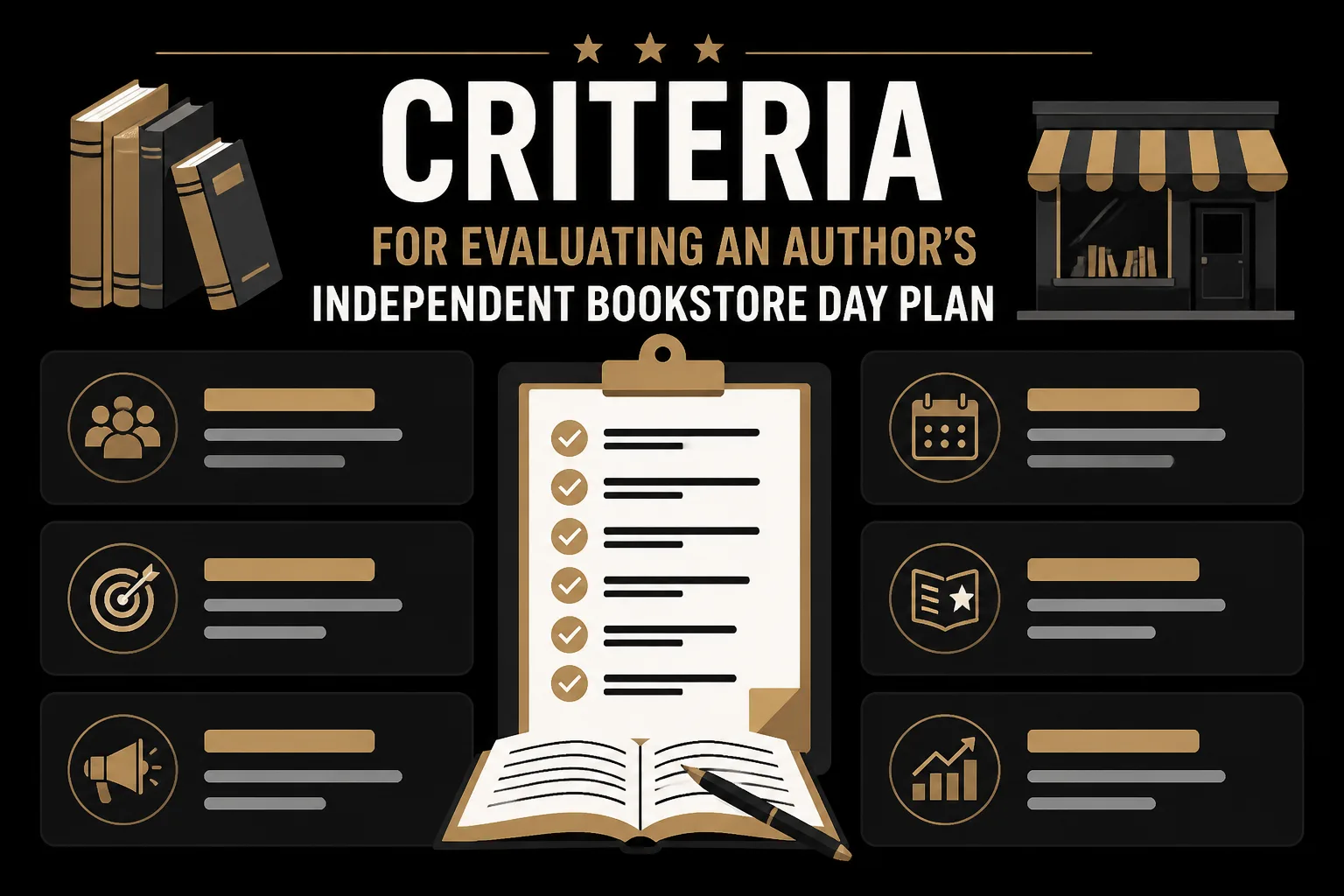
The five criteria behind every recommendation
Each option is judged against five questions. Use this checklist before contacting a store.
- Reader relevance: You can explain why the store’s customers would care about your book.
- Staff workload: You can describe the idea simply, with little extra staffing or training.
- Inventory risk: You know who supplies copies and what happens to unsold books.
- Wholesale practicality: You have workable pricing, discount, payment, and return terms.
- Transferable learning: You can capture insight that improves your wider author ecosystem.
What this list rules out
You won’t find generic social-media tactics, launch calendars, or outsourced promotion packages here. Those may support a broader marketing mix, but they don’t answer whether a bookstore experience serves readers or protects your resources.
Bradley Johnson Productions focuses on sustainable author businesses. Its guide to building a profitable author ecosystem offers broader context, although its guidance can’t replace a store’s own policies. Each recommendation supports better decisions about audience fit, inventory exposure, pricing, and repeatable partnerships.
Why the order moves from fit to measurement
The framework moves from bookstore fit to offer design, operations, and measurement. That order helps you avoid planning an attractive event before confirming that the store can host it, stock it, and explain it.
Practical rule: Choose the option that creates clear reader value with terms the bookstore can realistically support.
The lowest-cost option isn’t automatically the best. Your choice depends on reader value, bookstore readiness, and what you can learn beyond one Saturday.
1. Choose a Bookstore Fit Before You Choose an Event
A promising listing may turn out to be a chain location, an online marketplace, or a venue with no author programming. Independent Bookstore Day is a United States celebration held on a designated Saturday, so verify the current date and the store’s participation rules before proposing anything.
Google’s published information has used April 26 for the Saturday celebration and May 5 for a separate challenge deadline. That difference shows why you should check current event details rather than trust an old search result. Your best partner is independently operated, aligned with your readers, active in the community, and equipped for your proposed format.

What kind of bookstore is a realistic partner
A realistic partner has a clear owner or operating team, serves your likely readers, hosts local events, and can explain how books are ordered, displayed, and sold. Check the store’s official ownership and events pages before sending a pitch.
Barnes & Noble as an independent bookstore
No. Barnes & Noble is a national bookstore chain, so a local branch isn’t an independent bookstore, even if its staff support community events.
Book City as an independent bookstore
It depends on the specific location. “Book City” isn’t enough evidence by itself. Check that store’s ownership, buying process, event calendar, and operating model.
The oldest independent bookstore in the US
There is no single safe answer because “oldest” may mean continuously operating, independently owned, or founded under its current name. Treat the claim as a research question, not a partnership credential.
Best use case
Use this fit test before choosing a signing, talk, workshop, or stock arrangement. A strong match gives your book a relevant audience and gives the store a useful reason to participate.
Best for authors who want local reader access
- Local relevance: Your subject, setting, or expertise clearly serves the store’s community.
Best for authors with a clear bookstore audience
- Reader match: The store already sells books comparable to yours and attracts those readers.
Best for authors willing to support the store beyond the event
- Community fit: You can promote the store, respect its terms, and return for future programs.
Your trade-off is reach. A large chain may offer visibility, but an independent store may provide stronger local trust and a more personal partnership. Bradley Johnson Productions helps authors build sustainable book businesses, although its guidance can’t replace each store’s buying decision.
Use the fit test only if the store passes every check below.
- Ownership: You can identify independent ownership or operation.
- Audience: You can name at least one clear reader overlap.
- Programming: You can find recent community events.
- Capacity: You have confirmed space, staffing, inventory, and sales terms.
2. Turn One Saturday Into a Store-Friendly Author Experience
A bookstore is more likely to respond when you offer a useful customer experience rather than ask for free exposure. Your proposal might be a focused signing or short talk, a local-author conversation, a reader activity, or a store-exclusive bundle the bookseller can explain and sell.
Contact the event or buying person through the store’s official channel. Bookstores may already have events, speakers, passports, prizes, and special merchandise planned, so your idea should complement that calendar rather than compete with it.
What an author should propose to a bookstore
Send a one-page proposal naming your book’s audience, format, length, staffing needs, requested inventory, price, and the promotion you’ll personally deliver. State the store’s role clearly: host the activity, sell copies, manage checkout, approve the schedule, or curate the bundle. A short proposal lets the store accept, modify, or decline without guessing.
Best use case
Make the offer concrete with a 20-minute talk, a conversation with another local writer, a themed reader discussion, or signed copies bundled with a store-approved item. Keep the workload light and give the bookseller language for the event listing.
- Best for authors with a local or regional connection: Offer a conversation about the place, history, or community reflected in your book.
- Best for nonfiction authors who can teach a useful topic: Give readers a practical mini-session connected to your subject.
- Best for fiction authors who can create a participatory reader experience: Use a discussion prompt, character activity, or themed mystery that invites participation.
Your trade-off is control. The store may change the format, limit inventory, or say no, and you must respect that decision. A clear offer still helps you build a profitable author ecosystem because it tests the partnership, not just visibility.
- Audience: You name the readers most likely to attend.
- Format: You explain exactly what happens and how long it takes.
- Store role: You specify hosting, checkout, scheduling, or bundle duties.
- Promotion: You list the posts, email mentions, or local outreach you’ll deliver.
Use this approach if you can make the experience easy to explain, easy to staff, and useful for the store’s customers.
3. Protect the Economics With Inventory, Wholesale, and Follow-Up Rules
You can create a busy Independent Bookstore Day event and still lose money. Your books, travel, discounts, shipping, and staff time all affect the result.
Before your copies arrive, get written terms and make a conservative stock plan. Your goal isn’t a crowded table. It’s a bookstore relationship that supports a sustainable author business.
What needs to be agreed before books arrive
Get written confirmation of the retail price, wholesale price or discount, payment timing, returnability, damaged-copy responsibility, signed-copy handling, sales-tax process, shipping, and unsold-book disposition. Copies you bring for a confirmed event are different from copies a store buys for retail sale or accepts on consignment.
Weak version: “The store can sell the books and settle up later.”
Strong version: “The store confirms consignment terms, checkout ownership, signed-copy handling, payment timing, and the return process before the author supplies copies.”
| situation | better move |
|---|---|
| The store has not confirmed demand or format | Offer a low-inventory appearance or conversation and confirm the store’s role before bringing copies |
| The store wants to buy copies for retail sale | Confirm wholesale price, discount, payment timing, returnability, shipping, and unsold-stock terms in writing |
| The author proposes a store-exclusive bundle | Agree on retail pricing, bundle contents, quantity, sales ownership, and fulfillment before announcing it |
| The author is deciding how many copies to supply | Use conservative demand estimates and limit exposure until the store provides a specific order or sales plan |
| The event produces sales but no repeat opportunity | Review contribution margin, qualified contacts, sell-through, and lessons before calling it a sustainable success |
Best use case
Treat the event as a small operating test. Bradley Johnson Productions can help you connect bookstore activity to a profitable author ecosystem, but it can’t set a store’s terms or guarantee sell-through.
- Best for authors testing bookstore demand: You limit stock and record sales, costs, and qualified reader contacts.
- Best for authors managing limited cash or print inventory: You avoid tying up cash in unconfirmed copies.
- Best for authors building repeatable local partnerships: You document what worked and ask about the next suitable opportunity.
Independent bookstore counts by state
No state can be named reliably because definitions and data sources differ, so don’t use a ranking as an operating forecast.
Independent bookstore owner income
There is no standard owner income because a store’s revenue, gross margin, payroll, rent, inventory turns, debt, taxes, and distributions all change the result. One busy event can’t reveal personal earnings.
Measure contribution margin, qualified reader contacts, sell-through, follow-up invitations, and lessons transferable to your wider author ecosystem. Use the plan if you can control the stock, confirm the terms, and learn something useful even when sales disappoint.
The Independent Bookstore Day Options Compared for Authors
You may have a strong local fit without knowing how many readers will appear, buy, or return. Your safest choice depends on cash exposure, bookstore access, and how much control you need over the experience.
Independent Bookstore Day can support your author ecosystem without becoming an expensive experiment. Compare the paths by operating risk, not excitement alone.
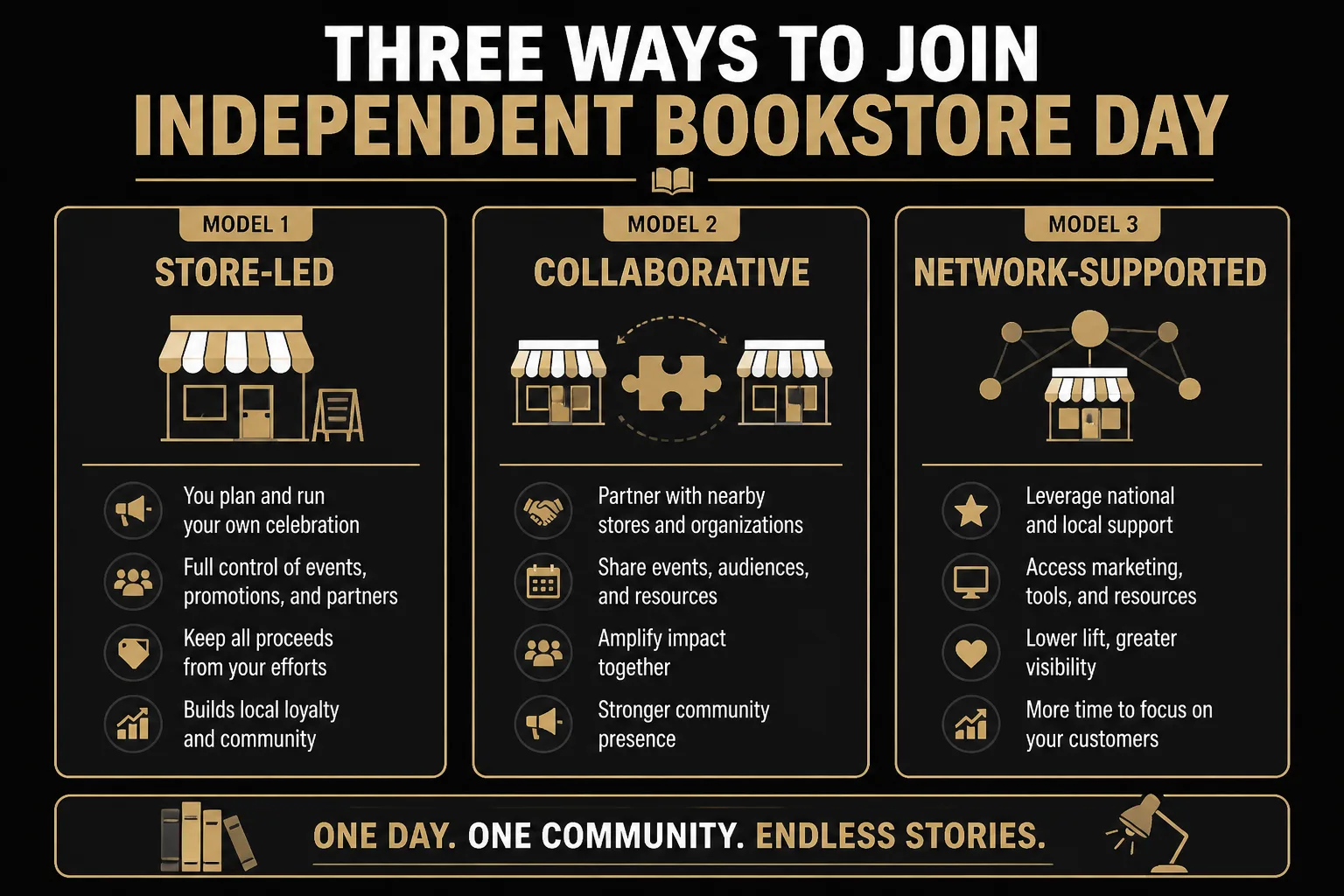
Participation models at a glance
| Option | Best for | Strength | Limitation | Cost |
|---|---|---|---|---|
| Low-risk author appearance | Authors with a strong local fit and limited demand data | Low inventory exposure and a simple way to test reader interest | The store may have limited time for promotion or may not stock many copies | Low to moderate: travel, preparation, and a small number of copies |
| Store-led event or activity | Authors whose topic or format adds value to an existing bookstore program | Uses the store’s customer knowledge, setting, and event infrastructure | The author has less control over scheduling, attendance, and presentation | Moderate: preparation, participation, and possible event materials |
| Stocked or exclusive retail arrangement | Authors with confirmed store demand and documented wholesale or bundle terms | Creates a deeper retail relationship and a clearer in-store product | Higher inventory, pricing, fulfillment, and unsold-stock risk | Moderate to high: inventory, shipping, discounts, packaging, or consignment exposure |
What the comparison reveals
A store-led event may be the best fit when the bookstore already has speakers, passports, prizes, or special merchandise planned. You contribute useful content while the bookseller controls the customer experience and inventory.
More coordination and stock can strengthen your bookstore relationship, but only when expected reader value exceeds operating exposure. The marketing mix guide for independent authors follows the same decision-making process as you judge whether the activity supports a sustainable author business.
Independent Bookstore Day Questions Authors Still Need Answered
Search results often mix bookstore trivia with decisions about your event, stock, and store fit. These answers separate general facts from the local details that affect your plan.
National Book Lovers Day in 2026
National Book Lovers Day falls on Sunday, August 9, 2026. Treat it as a recurring observance, not the same event as Independent Bookstore Day. The date may support a reading post or store collaboration, but it doesn’t determine which bookstore suits your book or whether your participation terms work.
The U.S. city with the best bookstores
There is no objectively best U.S. bookstore city. You may see New York, Seattle, Portland, or Minneapolis named in different lists because each ranking uses its own measures. For your author plans, the better city is where your target readers live and suitable independent stores already serve them.
The world’s most beautiful bookstore
The world’s most beautiful bookstore is a matter of taste and publication criteria, not a verifiable title. You may find different interiors featured because one list values historic architecture while another favors design or atmosphere. A celebrated destination can inspire your research, but it doesn’t replace assessing your local store’s audience and terms.
Barnes & Noble’s biggest competitor
Barnes & Noble has no single biggest competitor without a defined market and metric. You may be comparing national retailers, online sellers, regional chains, or independent bookstores. That distinction rarely changes your Independent Bookstore Day decision. Your local store’s reader fit, workable terms, and repeatable value matter more than a national retail comparison.
Use a Four-Step Independent Bookstore Day Test Before You Commit Your Book to a Store
You don’t need every bookstore to accept your proposal. You need one credible fit, clear terms, and a useful reason for the store to say yes.
A bookstore appearance should strengthen your publishing strategy and author ecosystem, not become an isolated vanity activity. Use this four-step test before committing time, stock, or travel costs.
-
1. Define the bookstore fit
Start with the reader: Identify a genuinely independent store whose customers plausibly want your book. Write down the store’s audience, relevant section, local connection, and one reason your appearance could help its customers.
-
2. Write the one-page offer
Make the proposal useful: Cover the reader, format, timing, inventory, and your concrete contribution. A weak message asks, “Can you promote my book?” A stronger offer says, “On Independent Bookstore Day, the author will host a 30-minute local-history conversation, bring signed copies, and promote the store to regional history readers.”
-
3. Confirm terms before committing stock
Put the economics in writing: Confirm event timing, pricing, wholesale terms, payment, returns, consignment, and responsibility for unsold stock. If the store can’t clarify the arrangement, pause before ordering books or booking travel.
-
4. Review the result and decide whether to repeat
Measure the business value: Review contribution margin, qualified reader contacts, sell-through, staff feedback, and the possibility of another useful collaboration. Bradley Johnson Productions treats this as strategy, although it can’t control attendance or a store’s final sales decisions. A no still reveals fit or operating risk.
Start with one page containing your bookstore-fit test and offer brief. Make it useful before contacting a single store. A clear no can protect your publishing budget, while a clear yes can support a sustainable author business.
If you want a faster way to do this, Bradley Johnson Productions helps independent authors with book development, marketing, pricing, and long-term publishing strategy. Its author strategy blog offers practical guidance for building profitable, sustainable book businesses and author ecosystems.