
You post a cover reveal before breakfast, share the buying links at lunch, and watch the likes arrive by evening while trying to figure out how to market a book on social media. Yet sales barely move, your email list stays quiet, and few readers start the conversations your book was written to begin. You try another platform, then another promotional idea, until marketing feels like a second job interrupting your writing.
Most authors don’t have a social media activity problem. They have a reader-path problem. A post must help the right person move from discovery to trust, then toward an action that matters, such as joining your list, buying your book, or following your next release.
When someone asks how to market a book on social media, they need more than platform suggestions or posting prompts. They need a way to choose one reader segment, select a channel, build repeatable content, direct readers to an owned destination, measure meaningful actions, and connect social activity with Bradley Johnson Productions’ sustainable author ecosystem, including positioning, Amazon SEO, pricing, and future-book planning. It takes planning, not viral promises, but it can support writing what you love without turning every writing day into a sales campaign.
The Real Cost of Treating Social Media as a Sales Board
Likes can make your book marketing look busy while your reader base stays unchanged. The keyword receives 20 monthly searches at difficulty 6, but that search signal is not the size of your market. Judge social activity by qualified readers, owned contacts, and profitable purchases.
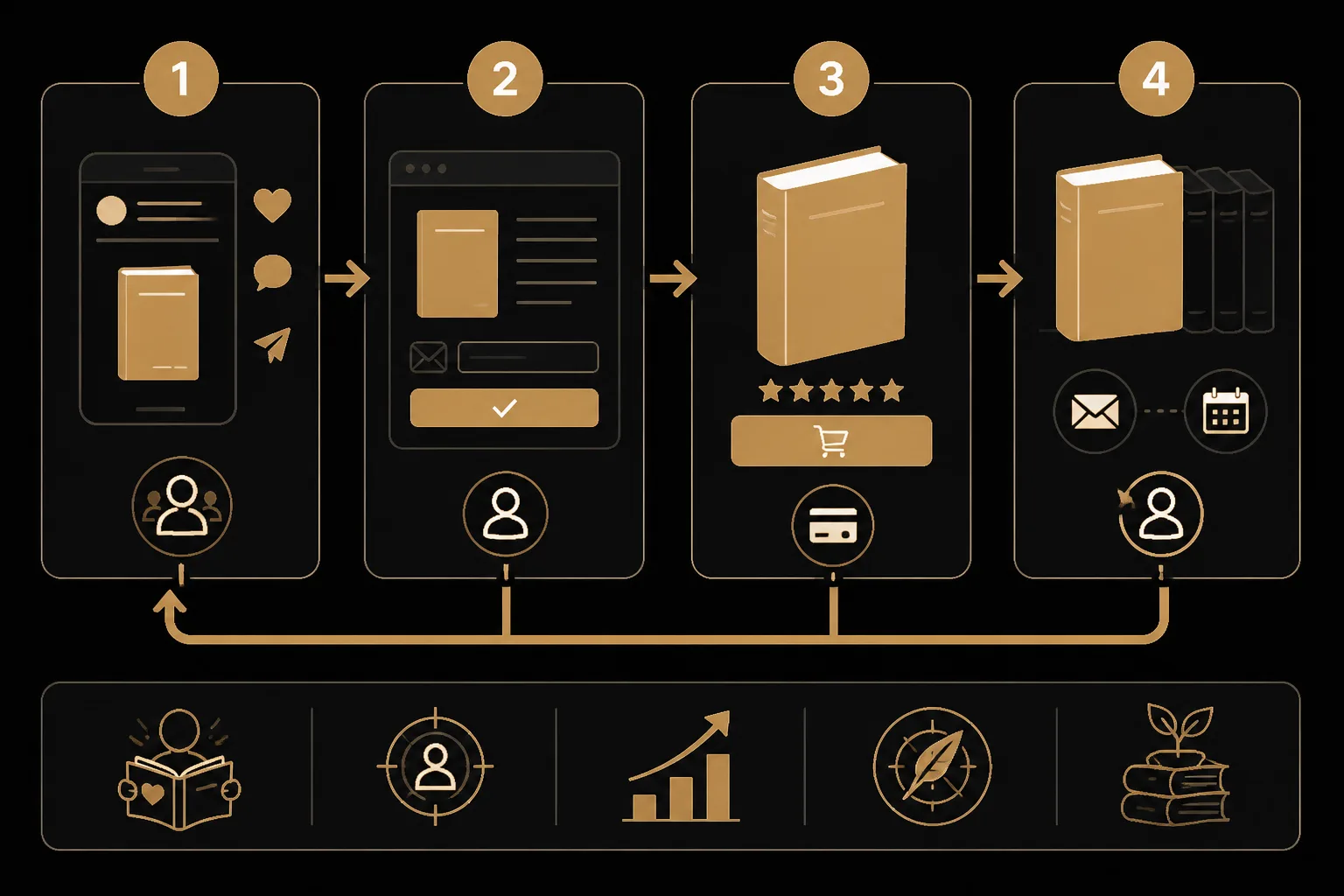
A post matters when it moves someone toward the next owned step, such as an email signup, sample chapter, direct conversation, or repeat purchase. Bradley Johnson Productions helps independent authors build a wider author ecosystem, though no marketing system can make a mismatched book, audience, or price profitable.
Owned actions matter more than engagement
If your post earns attention but sends nobody to an email list, retailer page, or useful resource, you have rented visibility rather than built an audience. A $20 paperback does not produce $20 for you. Retailer terms, printing, delivery, refunds, taxes, discounts, and format costs reduce the amount available before your actual contribution margin appears.
Bradley Johnson Productions draws a simple distinction: social engagement is an input, not a business result.
Practical rule: Track the next owned action after every post, not the applause around it.
When 3,000 book sales are a strong result
Three thousand copies can be excellent for a narrow nonfiction audience, but modest for a heavily commercial category. Your result depends on contribution per copy, launch costs, repeat purchases, and whether those readers fit your future books.
Author earnings from a $20 book
An author may receive only the remainder after retailer terms and production costs. A $20 paperback with expensive color printing, a deep launch discount, or paid promotion can leave far less than a $20 list price suggests.
Author earnings from a $25 book
A $25 book can produce more per sale, but only if your format, print cost, retailer arrangement, and audience support that price. Raising the list price does not help when it reduces conversion or requires heavier discounting.
Books that sell the most
The books selling most often sit in categories with strong reader demand, clear positioning, and intense competition. A popular category gives you a market signal, not permission to ignore your subject expertise or audience fit.
Genres with high reader demand
High-demand genres change by format, retailer, season, and reader segment, so treat them as evidence of activity rather than a guarantee. The better question is whether a defined group will buy this book, recommend it, and return for the next one.
How demand and genre shape the audience strategy
Random posting assumes every impression has equal value. A stronger system separates a narrow nonfiction buyer from a genre-fiction reader, then measures qualified reach, owned audience growth, contribution margin, and repeat purchases instead of chasing a universal sales target.
Build the Platform-and-Content System Before You Promote
Start with a system that moves a reader from a useful idea to a clear next step. A first-time management author, for example, might target new supervisors who want practical help before their first performance review.
You can then match that segment to Instagram, a reader community, a sample chapter, and an email sequence. Social attention becomes useful when it supports your wider author ecosystem, not when it ends with a like.
How do you choose platforms based on reader behavior
You can market the management book for free by choosing Instagram for visual teaching, a professional discussion community for workplace questions, and email for follow-up. Your content promise might be, “One practical management decision for your first 90 days.”
How do you turn one book idea into an Instagram content sequence
You can adapt one chapter idea across formats: an Instagram carousel explains “how to give corrective feedback,” a short video demonstrates the opening sentence, and a reader-community post asks members what makes feedback difficult.
Weak example: “My new book is available now. Buy it today.”
Better example: “Use this three-step script before your next difficult conversation. Get the free sample chapter through the link in your profile.”
How can free promotion build an owned audience
You can promote a book without buying ads by offering a useful sample chapter, checklist, or short email course. Your brand book might define new supervisors as the audience, calm practical guidance as the promise, plain language as the tone, navy and cream as visual cues, and “Get the sample chapter” as the recurring call to action.
Weak setting: Every post sends readers straight to a retailer page.
Better setting: Each helpful post leads first to a sample chapter and a five-email sequence, with the book offered after readers receive useful guidance.
How do you connect Amazon activity to the wider author ecosystem
You can post an Amazon link for free, but Amazon will not make your book discoverable merely because you shared it. Your metadata, categories, reviews, retail-page conversion, and reader response still shape visibility, so social activity must support the product page rather than replace its preparation.
How do you keep organic discovery separate from retailer visibility
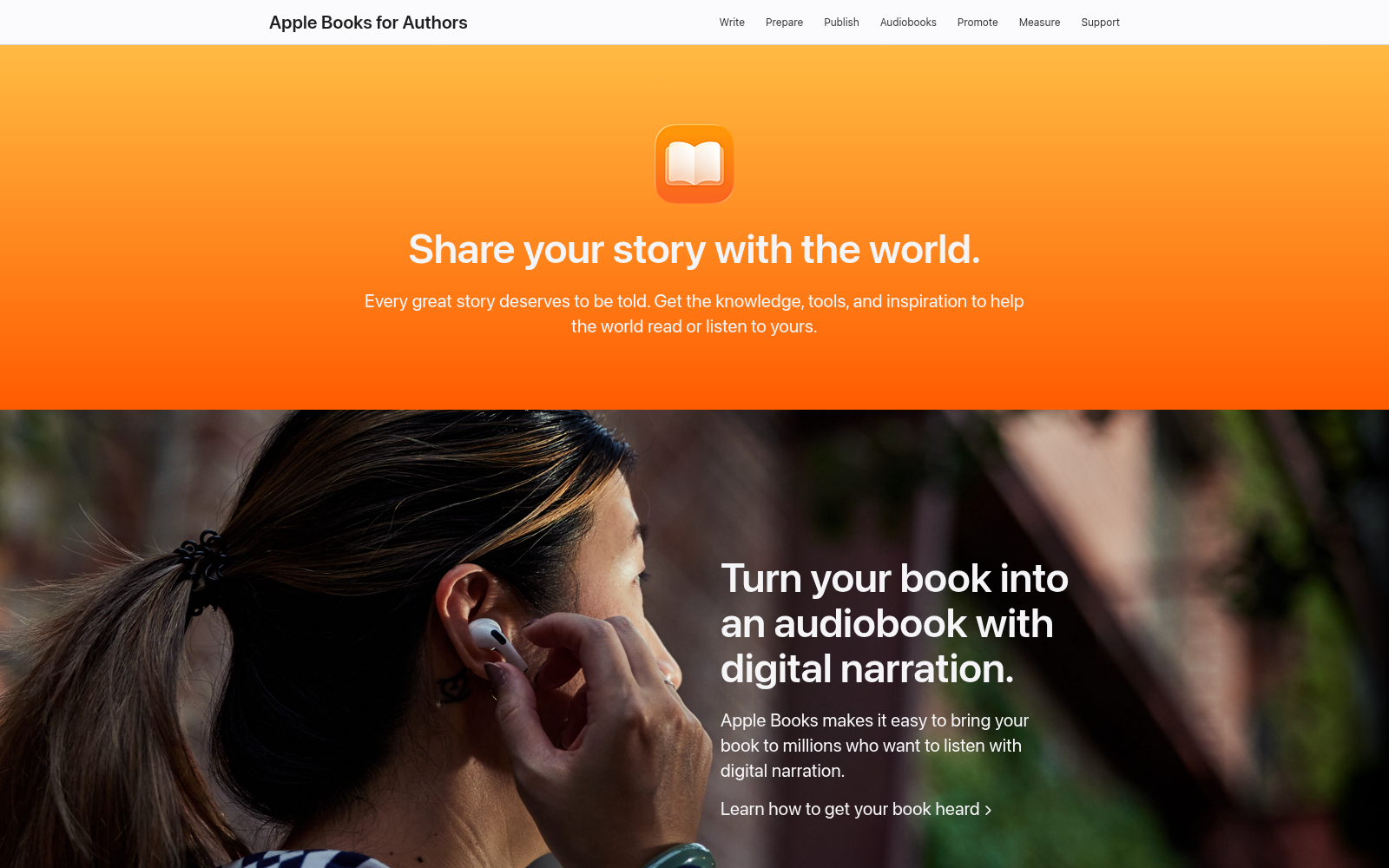
You can promote KDP books for free through social posts, reader discussions, author email, and sample content. Apple Books for Authors also provides official guidance for using social media to promote books, giving you another retailer-specific example without confusing external promotion with guaranteed discovery.
| situation | better move | why |
|---|---|---|
| A cover reveal receives likes but no measurable next step | Pair the reveal with a clear reader promise and a link to a sample chapter or email signup | It connects attention to an owned destination instead of ending at engagement |
| One sales caption is copied to every platform and audience | Adapt one useful idea to each platform’s format and the segment’s immediate question | Relevance and usefulness create stronger reasons to follow, save, reply, or buy |
| An author expects Amazon posts alone to create discovery | Improve metadata, categories, reviews, positioning, and the retail page alongside social activity | Retail visibility and conversion depend on more than external links |
| An author has no time for daily content | Create three recurring themes and repurpose one substantial idea into several formats | A repeatable system protects writing time and produces consistent signals |
How do you keep a sustainable weekly cadence
You can publish one teaching post, one reader conversation, one short video, and one email each week. Bradley Johnson Productions can help you connect that activity to audience segmentation and long-term publishing strategy, although its guidance cannot replace testing your own readers’ responses.
The Promotion Shortcuts That Quietly Weaken Author Brands
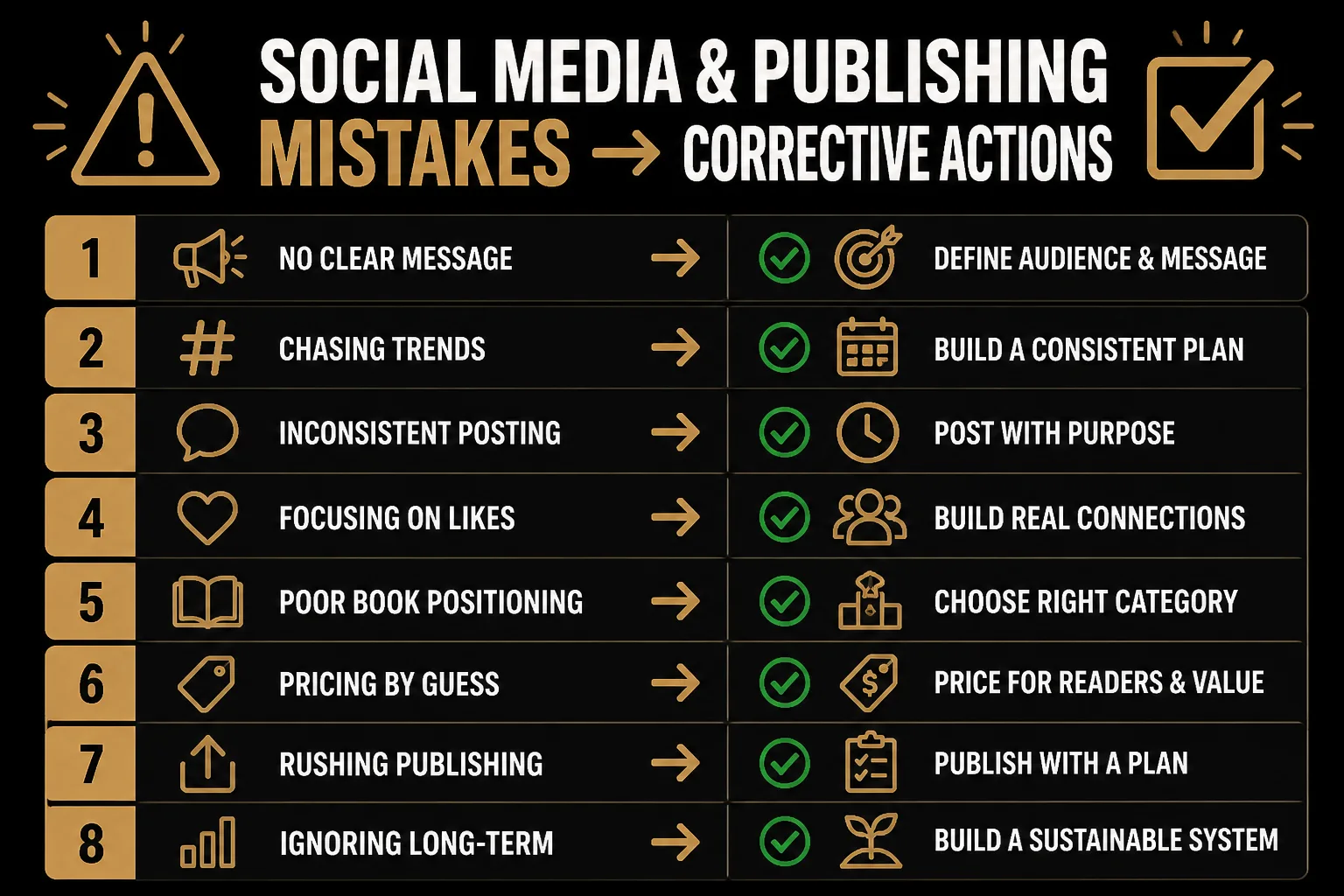
Your weekly system only works when each post earns attention honestly. If every reader sees the same pitch, or every community receives the same link, you may gain impressions while losing trust.
Use this checklist to spot weak promotion early. The repair is usually simple: narrow the promise, add useful context, and make the next step clear for your reader.
The one-link-everywhere mistake
If you send the same sales message to every audience segment, your readers see a generic pitch. A romance reader, a new manager, and a memoir reader need different reasons to care, so one message rarely fits all three.
What works: “New supervisors: The First 90 Days gives you a practical plan for difficult feedback conversations.”
What fails: “Buy my book today. It will change your life.”
- Repair: Match the promise, example, and next step to one reader segment before sharing the link.
The 50-page rule
There is no universal 50-page publishing or marketing standard that decides whether your book is worthwhile. Your audience’s expectations, the book’s promise, its format, and reader satisfaction matter more than an arbitrary page count.
- Check: Confirm that your book delivers the promised experience, whether it is a concise workbook, a short guide, or a full novel.
Selling a book written with ChatGPT
You may be able to sell AI-assisted work, but you must check rights, originality, accuracy, voice, platform policies, and applicable disclosure obligations. Unreviewed material can contain errors, borrowed phrasing, or a voice that does not sound like your author brand.
- Repair: Review every passage, verify claims, rewrite in your voice, document your process, and check the current rules where you publish.
Marketing a book on Reddit
To market a book in Reddit communities, you need genuine participation before promotion. Read each community’s rules, answer useful questions, and ask permission before sharing a link.
- Check: Your comment helps without the purchase link, and your later recommendation directly answers the discussion.
Excessive launch urgency and confusing reach with qualified reader action create the same problem. Trust returns when you narrow the promise, contribute value, and make the next step transparent.
Questions About Book Sales, Market Size, and Social Reach
You may want a clear sales target, a bestseller benchmark, or a safe answer about AI and Reddit promotion. You need context first, because a visible result rarely tells you whether your own book business is profitable.
Book sales required for $100,000
The required sales volume equals your target income divided by your net proceeds per copy. Calculate net proceeds after retailer discounts, format mix, production costs, taxes, refunds, and business expenses. A useful formula is: target income divided by net proceeds per book equals required unit sales. Your price and costs matter more than a generic income claim.
What the top three best-selling books means
There is no single stable top-three list that applies to every market. You must separate all-time global sales, a current country list, a retailer bestseller list, and a category ranking. A bestseller label may show short-term demand, but it doesn’t guarantee durable profit. Your fiction read-through or nonfiction backlist may matter more over time.
Publishing a thin book
You can publish a shorter book, but you must meet the retailer, format, category, and reader expectations that apply to your edition. A brief practical guide may satisfy readers when its promise is narrow and clear. A thin book that feels incomplete can damage reviews and trust, so test the manuscript against its intended reader’s problem.
Ways AI can help write a book
AI can help you brainstorm, organise, edit, or research questions, but you must verify every claim and preserve meaningful human judgment. Check the current rules for each retailer, disclose assistance when required, and avoid publishing unedited generic prose. Your expertise, examples, and responsibility for accuracy remain central to a credible author ecosystem.
Promoting a book on Reddit
You should promote on Reddit by contributing useful answers before sharing a relevant book. Read each community’s rules, avoid repeated links, and disclose your connection to the book when appropriate. A focused response can earn qualified attention, while direct promotion without participation may damage your account and your reputation. Build trust before asking for a sale.
Use your own price, costs, format mix, and expected read-through to model several scenarios. Bradley Johnson Productions can help you connect those assumptions to a sustainable author business, although no planning service can guarantee a bestseller outcome or fixed income.
Start With One Reader Segment and One Repeatable Page
You can spend hours posting about a book without knowing which reader you want to reach next. That makes every platform, topic, and sales result harder to judge.
A smaller system gives you clearer evidence. Start with one reader, one channel, three recurring themes, and one owned destination. Then build only when the pattern earns it.
Define the Reader and the Promise
- Name the segment: Describe one reader by problem, desire, subject, genre, and buying context. A useful definition might be “first-time managers buying practical nonfiction before their first leadership role.”
- State the promise: Write the result your book helps that reader pursue. Weak: “A book for better managers.” Strong: “A 30-day guide for new managers leading their first team.”
Choose One Channel and Three Content Themes
- Choose the channel: Select the platform where that reader already pays attention. A business author may begin on LinkedIn, while a romance author may find stronger signals on TikTok or Instagram.
- Set three themes: Publish useful teaching or entertainment, proof and process, and a low-pressure invitation. A useful post might teach one delegation script. Proof might show how a chapter changed after reader feedback. The invitation might offer a sample chapter.
- Connect each theme: Send teaching to an email list, proof to a sample chapter, and invitations to a reader magnet or launch sequence. Weak: “Buy the book for more tips.” Strong: “Get the free first chapter for five delegation scripts you can use this week.”
Create the Audience-and-Content Page First
- Review meaningful actions: Check saves, replies, qualified clicks, signups, sales, and repeat purchases before increasing posting volume.
- Make today’s page: Create one audience-and-content page for one book. Record the reader, promise, channel, three themes, destinations, and review measures.
- Reader: One specific segment and buying situation appear on the page.
- Content: Three repeatable themes have one example each.
- Destination: Every theme points to an owned reader next step.
- Review: Meaningful actions, not likes alone, have a check-in date.
Bradley Johnson Productions can extend that page into positioning, Amazon SEO, pricing, launch planning, and a broader author ecosystem across future books. Consistency means a system you can sustain, not maximum daily activity.
If you want a faster way to do this, Bradley Johnson Productions helps independent nonfiction and fiction authors build positioning, Amazon SEO, pricing, and long-term publishing strategy for sustainable book businesses. Its author marketing and publishing guidance explains the broader system.