
Library distribution can put your book in front of readers without the upfront fees many authors expect. But fee-free access doesn’t tell you how royalties work, where your book can appear, or what borrowing data you’ll receive. Here are the best library distribution options for indie authors, plus the support choice that can help you build a wider readership.
1. Bradley Johnson Productions
Bradley Johnson Productions is a strong fit for indie authors who need help building the audience around a book, not a digital delivery channel that sends files to libraries.
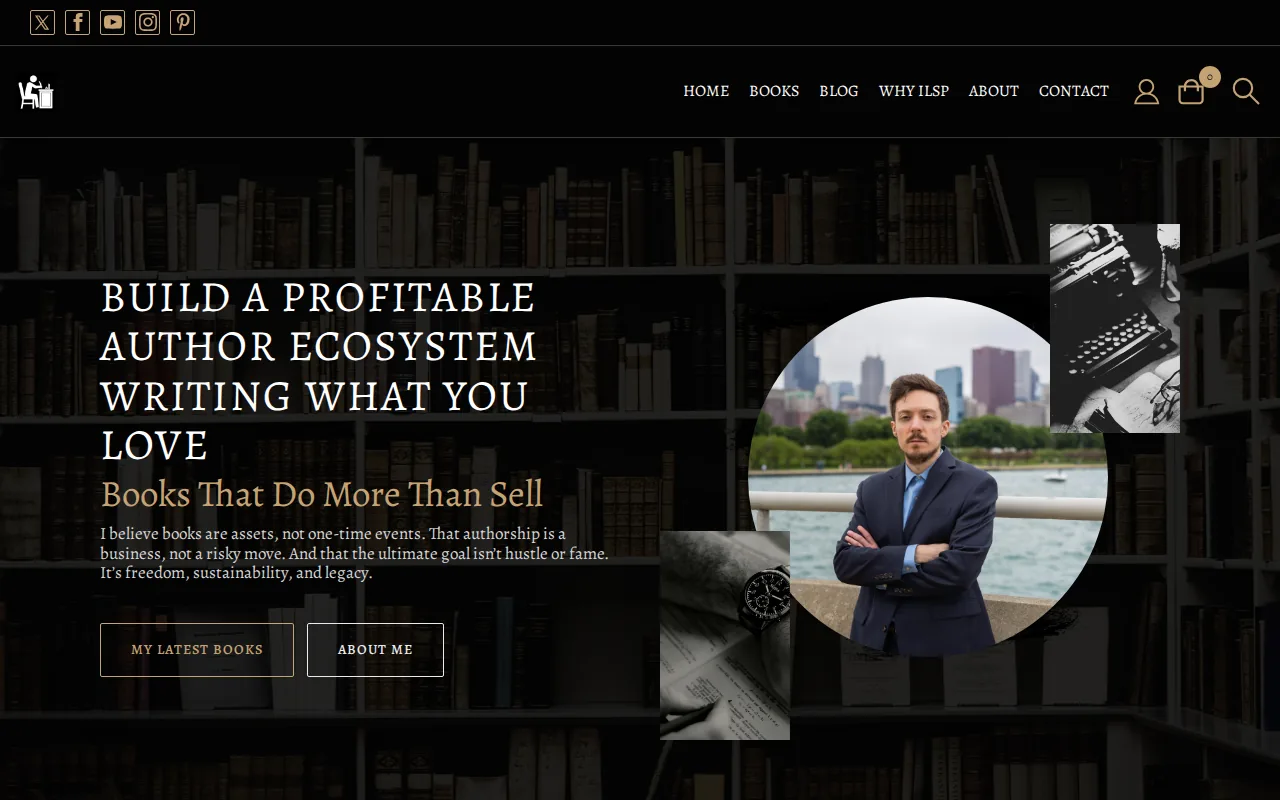
The business teaches nonfiction authors how to grow readership through organic and paid methods. It also helps writers make books they and their readers will value. That distinction matters because library distribution is only one part of the work.
A distributor can make a title available. It can’t decide which readers should know about the book or why the book belongs in a library collection. An author still needs a clear category, a strong description, useful metadata, and a plan for reaching the people most likely to request the title.
For that wider publishing plan, Bradley Johnson Productions can sit beside a distributor rather than replace one. A nonfiction writer might use a library channel for access, then build an email list or paid campaign that drives attention to the subject of the book.
The company is also a sensible first stop when you’re unsure which distribution path fits your goals. Its guidance can help you compare physical distribution, digital library access, and direct audience growth before you spend time preparing files for several services. Authors who need help with the infrastructure can also review this guide to purchasing ISBNs and distribution packages before committing to a platform.
Start with Bradley Johnson Productions if your main problem is readership. Choose a distribution platform after you know which format, market, and reader group you want to serve. The two jobs overlap, but they aren’t the same job.
2. IngramSpark: Print-on-Demand Access to the Bookstore Supply Chain
IngramSpark is a strong choice for indie authors who want print-on-demand access connected to the physical bookstore and library supply chain.
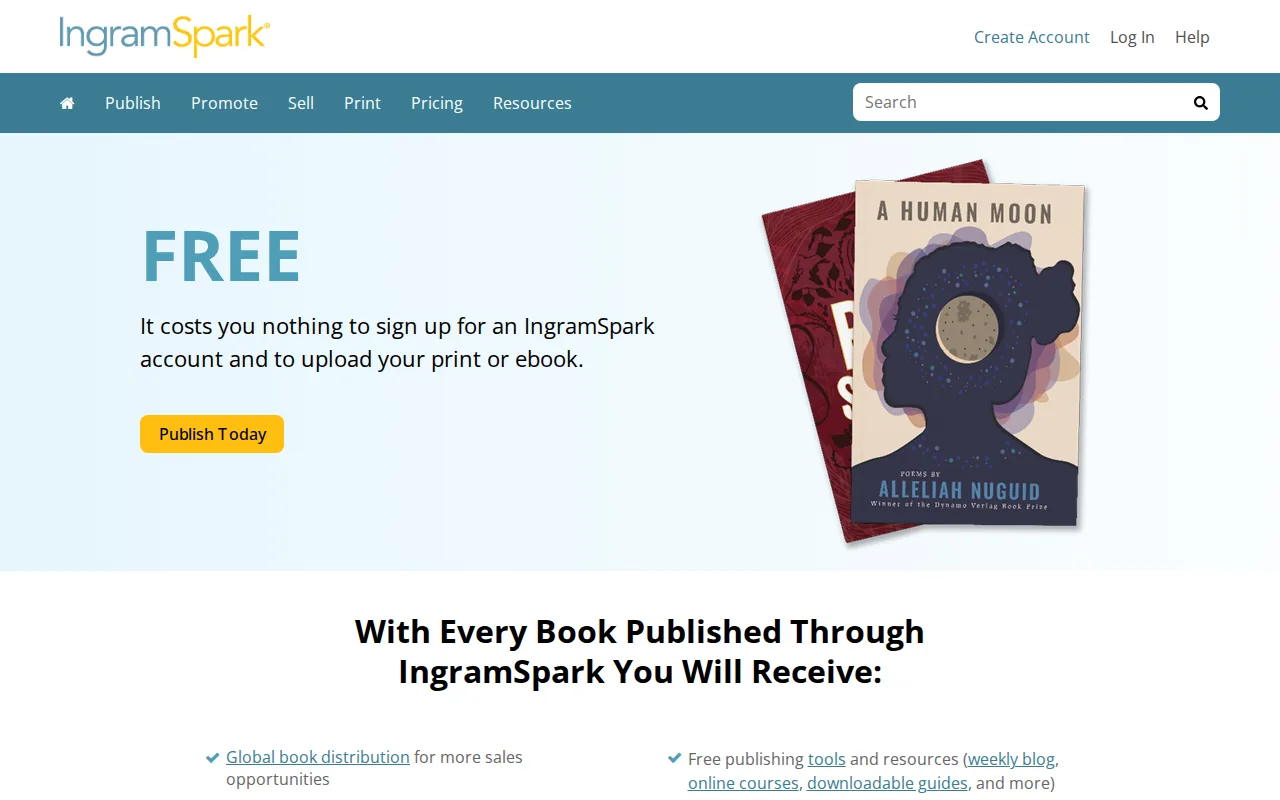
Its main draw is reach in the physical book trade.
Print-on-demand also changes the storage problem. You don’t need to guess how many copies to print before demand is clear. A reader’s order can trigger production, which can reduce the risk of holding unsold stock. Still, print quality, trim size, cover files, and metadata must be handled with care. Authors comparing production methods can use this print-on-demand versus local printing guide to weigh cost, speed, quality, and distribution implications.
IngramSpark’s published 85% net-revenue royalty applies to ebooks, not print books. It is a share of the money IngramSpark receives, not the book’s list price. For print sales, its print setup guide calculates compensation from retail price less the wholesale discount and printing cost. Check current charges and return terms before estimating your earnings.
Use this route when physical availability matters as much as ebook access. If your plan is digital-only, IngramSpark may bring more print workflow than you need.
For a wider look at format, channel, and market choices, the Indie Nonfiction Book Distribution comparison guide can help you map the decision before launch.
3. Ingram: Broad Reach Across Bookstores and Libraries
Ingram is best for authors who care about broad trade reach and want their book considered within the same supply network used by bookstores and libraries.

Think of the difference this way. A retailer page helps a reader buy a book. A broad supply network gives booksellers and library systems a path to find, order, or consider it. The result still depends on your metadata, format, subject fit, and the local decisions made by each institution.
Ingram is especially relevant for nonfiction authors whose books may fit a library’s local needs. A career book, community history, writing guide, or business title can benefit when its subject and catalog details make sense to collection staff.
Library staff also work within collection policies and budgets. Distribution alone won’t guarantee an order. Your book needs clean catalog data and a clear reason for a library to add it.
For authors who want a print path with wide trade coverage, Ingram is worth comparing with IngramSpark rather than treating the two names as interchangeable. Confirm which service handles your chosen format and what the royalty statement actually measures.
4. Indie Author Project (IAP): Curated Library Collections and Flexible Access
Indie Author Project, or IAP, is a good match for indie authors who want curated library collections and a non-exclusive path into public library discovery.
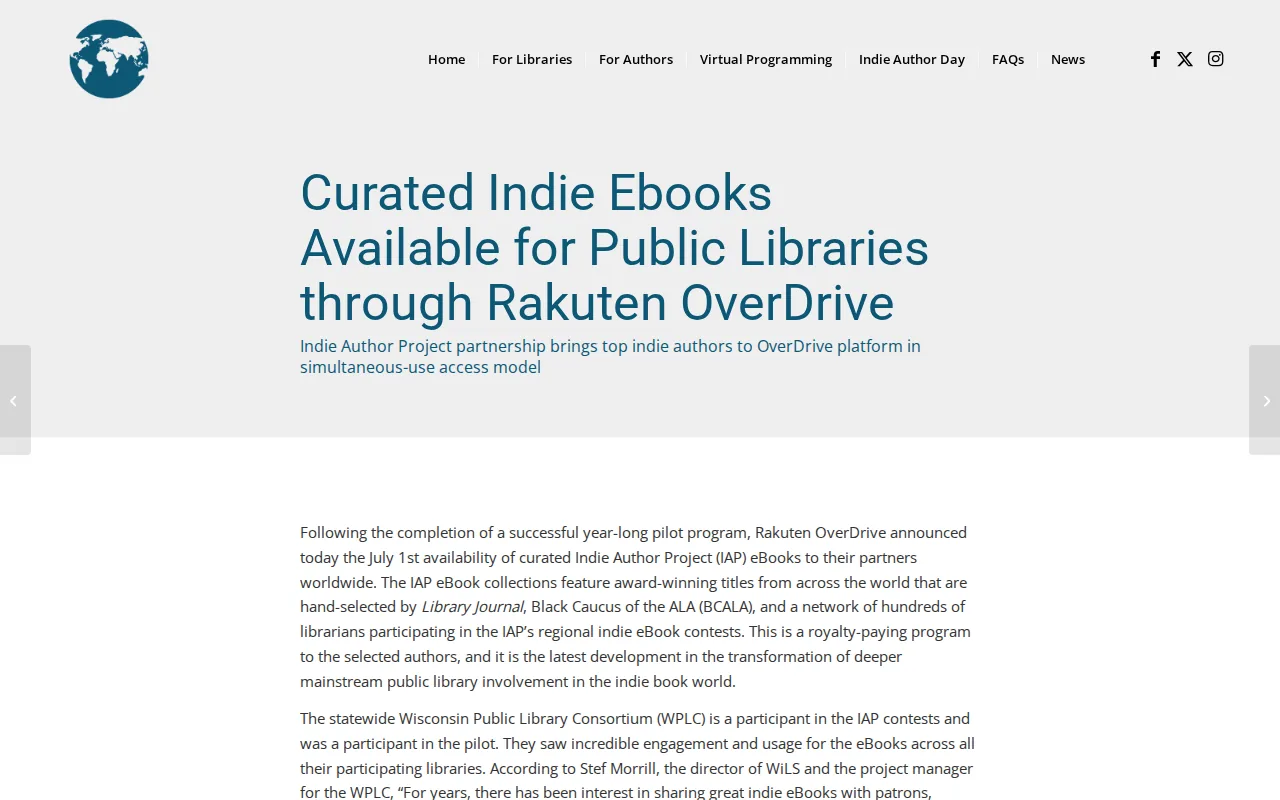
IAP covers the United States and Canada. Its model is different from a simple file feed because titles may be shared with participating libraries in an author’s state. If a title is chosen by the IAP network’s curators, it can also appear in participating libraries across both countries.
That curation can matter to an author who wants more than passive availability. A library collection gives the book a setting and a subject context. It may also put an indie title beside other selected reads rather than leaving it alone in a large retail catalog.
Public library access through Rakuten OverDrive can include a simultaneous-use model. Authors should confirm how their particular title is licensed and paid for before making forecasts.
IAP’s geographic focus is a strength if your audience is in North America. It is also a limit if you need a clearly documented path into libraries outside that region.
Submitted ebooks can reach participating libraries, while selected titles may enter wider curated collections.
5. Draft2Digital: Aggregated Ebook Distribution to Library Services
Draft2Digital suits authors who want one ebook distribution workflow that can reach library services without managing each library relationship alone.

An aggregated route can save time when you’re preparing the same ebook for several channels. You work from one core manuscript and metadata set, then review how the service handles delivery, updates, rights, and payment. That can be easier than building separate accounts for every destination.
Library borrowers don’t behave like retail buyers. A title may be borrowed for a short period, placed on a wait list, or read under a license that limits how many people can use it at once. Authors need to understand which model applies before they compare a library payment with a retail sale.
The sources also found no stated royalty rate and no clear coverage detail. Those gaps don’t make the platform unusable, but they do make direct questions part of the buying process.
For context, a library is a service that lends access to information resources, including digital content. A borrow-based payment model differs from a normal retail sale. The library’s license and lending rules shape the transaction.
Draft2Digital is a sensible pick when workflow simplicity matters more than a clearly documented global footprint. If your income plan depends on exact borrow forecasts, wait until you have written answers about rates, reporting, and territory.
Authors who are still weighing platforms can also review the self-publishing platform options for nonfiction authors. It helps place library distribution inside the wider publishing stack.
Library Distributor Comparison for Indie Authors
The best library distributors for indie authors differ most in reach, access model, and how much financial detail they publish. The table below focuses on the decision you need to make, rather than ranking every service by name recognition.
| Option | Best fit | Known strength | Known gap | Decision rule |
|---|---|---|---|---|
| Bradley Johnson Productions | Authors who need audience and publishing support | Reader-growth and author guidance | Not a library delivery platform | Choose it for strategy, then pair it with distribution |
| IngramSpark | Print-focused authors | Physical bookstore supply chain and print-on-demand | Print compensation depends on price, discount, printing costs, and terms | Pick it when print access is central |
| Ingram | Authors seeking broad trade coverage | Thousands of bookstores and libraries | Fee, royalty, and reporting details are unclear | Ask for current commercial terms first |
| Indie Author Project | Authors targeting North American public libraries | Curated collections and usage-based access | Royalty rate and analytics aren’t stated | Choose it for discovery and library reach |
| Draft2Digital | Authors who want an aggregated ebook workflow | One-off or per-borrow royalty options | Coverage and royalty figures need confirmation | Pick it when fewer delivery tasks matter |
Across the three core library distributors in the research, none of the sources listed a setup fee or an ongoing fee. That is attractive, but “no fee listed” isn’t the same as “no cost under every condition.” Check the current agreement and ask how returns, file changes, territories, and taxes affect your statement.
Reporting is another weak spot. The sources reviewed did not describe built-in borrowing analytics for IngramSpark, IAP, or Draft2Digital. If you plan to spend money promoting a book, you need a way to tell whether library activity supports that spend.
A good choice depends on your next bottleneck. If the bottleneck is print reach, start with IngramSpark. If it is North American library discovery, examine IAP. If it is ebook delivery work, investigate Draft2Digital. If it is audience growth, Bradley Johnson Productions belongs in the plan.
FAQ: Library Distributors for Indie Authors
What is the best library distributor for an indie author?
The best choice depends on your format and target market. IngramSpark fits authors who want print-on-demand and bookstore supply-chain access. IAP fits North American library discovery through curated collections. Draft2Digital fits authors who want an aggregated ebook workflow. Compare the contract, royalty basis, territory, and reporting before selecting one.
Can indie authors get ebooks into libraries for free?
Authors should check current terms for file changes, optional services, payment deductions, and territory rules. A fee-free entry point can still have less transparent royalty or data terms.
How much do library distributors pay indie authors?
IngramSpark’s 85% share of net revenue applies to ebook sales. Print compensation uses a different calculation based on retail price, wholesale discount, and printing cost. Check the format, current fees, return terms, and whether a payment relates to a sale, a borrow, or a license before estimating income.
Does library distribution guarantee that a book will be stocked?
No, distribution does not guarantee that a library will buy or promote a book. It gives the library a way to find or access the title. Collection staff still assess subject fit, demand, budget, format, and local policy. Strong metadata and a clear audience can improve the book’s chance of being considered.
Should nonfiction authors use more than one library distributor?
Sometimes, but check rights first. A non-exclusive model may allow wider placement, while another agreement could limit duplicate distribution. Review territory, format, license, and payment terms before sending the same ebook through multiple services. A publishing plan from Bradley Johnson Productions can help you assess the overlap before you upload files.
Conclusion
For indie authors focused on print reach, IngramSpark is one option to compare using its print compensation terms. IAP is worth testing for North American library discovery, while Draft2Digital may reduce ebook delivery work. Before you submit, write down your target market, format, rights, and reporting needs. If the bigger problem is finding readers, speak with Bradley Johnson Productions about the audience plan that should support your distribution choice.