
Indie authors often think the hardest part of publishing is writing. It isn’t. The real barrier is getting a professional ISBN and the right distribution deal without blowing your budget. This guide shows you exactly how to purchase ISBNs and distribution packages for indie authors, compare costs, and launch your book worldwide.
We’ll walk through five clear steps, give you real‑world examples, and end with a quick checklist you can copy‑paste.
| Name | Distribution Channels | Royalty Split | Best For | Source |
|---|---|---|---|---|
| PublishDrive | Amazon, Apple Books, Google Play, Barnes & Noble, Kobo, Everand, OverDrive, and tens of other retailers and libraries | 70%–85% | Publishing in languages other than English | reedsy.com |
| Smashwords | Amazon, Apple, Kobo, Scribd, Wattpad, Page Foundry, Playster, and dozens of smaller platforms | 90% | indie authors | neucitepress.com |
| Draft2Digital | Amazon, Apple Books, Google Play, Kobo, Scribd, and Smashwords’ network of niche partners | 90% | Authors seeking simplicity, multi-retailer diversity, and hands-off management | neucitepress.com |
| IngramSpark | physical bookstores, libraries, wholesalers, and academic institutions | — | authors prioritizing traditional credibility and bookstore shelf placement | neucitepress.com |
| Lulu | Lulu bookstore, Amazon, Barnes & Noble | 80% | creators looking to produce high‑quality photo books, full‑color comics, magazines, and calendars | beyourcover.com |
| Books.by | direct sales via your own branded storefront | 100% | authors wanting free ISBNs and direct‑to‑reader sales | books.by |
| Bowker | — | — | serious self‑publishers aiming to build a professional brand | books.by |
| ISBN Services | — | — | independent authors and publishers | isbnservices.com |
| BookBaby | — | 100% | authors who want a curated and hands‑off publishing experience | beyourcover.com |
We pulled data from 12 product pages across six domains on April 13, 2026. The method looked at price, royalty split, and retailer reach. Below you’ll see how that research feeds each step.
Ready? Let’s start with the first step.
Step 1: Determine Your ISBN Needs
Before you spend a dime, you need to know how many ISBNs you actually need. Each format , paperback, ebook, hardcover, audiobook , needs its own unique number. That rule keeps libraries and retailers from mixing up editions.
Here’s a quick way to map your project:
- Write down every format you plan to release.
- Add any future language translations.
- Include special editions (large print, boxed set, etc.).
For a typical nonfiction title, you might end up with three ISBNs: one for the paperback, one for the ebook, and one for the audiobook. If you later add a Spanish translation, that’s another ISBN.
Why does this matter? Owning your ISBNs gives you control over the publisher name that appears in catalogues. The Alliance of Independent Authors says that having your own ISBN signals professionalism and lets you switch distributors later without losing brand identity.
Pro tip: Buy a block of ten ISBNs from a reputable agency even if you only need three now. The block price per ISBN drops dramatically, and you’ll be ready for future projects.
Now, let’s talk about where to get those ISBNs.
When you’re ready to buy, make sure you’re using the official agency for your country. In the U.S. that’s Bowker, but remember our research shows Bowker charges $125 per ISBN and offers no royalty advantage. If you’re in Canada, you can get free ISBNs from Library and Archives Canada, but those come with a default publisher name that may not match your brand.
And watch out for third‑party sellers that promise cheap ISBNs. They often list themselves as the publisher, which can cause headaches down the road.
Need a quick checklist?
- List all formats you’ll launch.
- Decide if you’ll need future language editions.
- Choose a reputable national ISBN agency.
- Buy in bulk if you plan more than one title.
That’s it for the first step. Next up: picking a reliable ISBN provider.
Best Book Formatting Services for Nonfiction Authors
Step 2: Choose a Reliable ISBN Provider
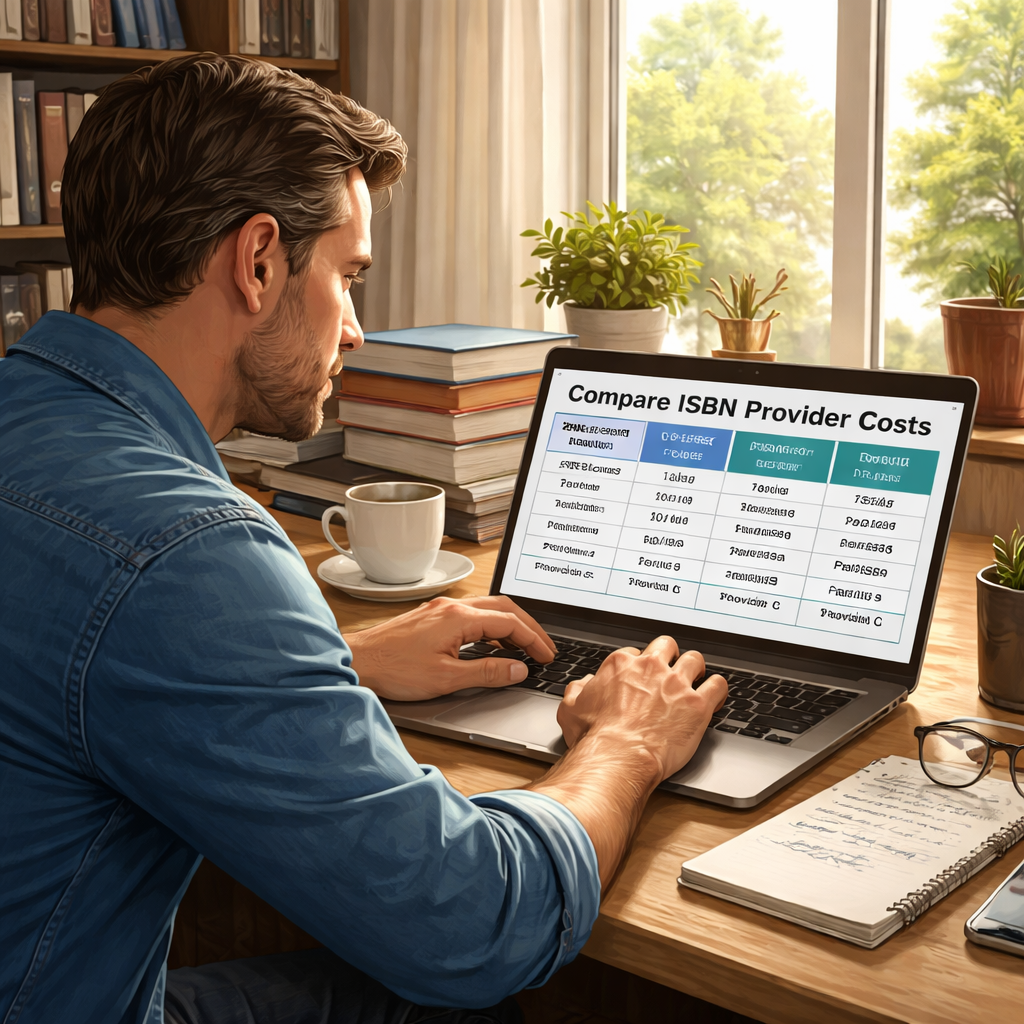
Now that you know how many ISBNs you need, you must find a provider that won’t overcharge you and will list you as the publisher of record.
Our research shows three options that actually give you 100% royalty: Books.by (free), BookBaby (paid but full royalty), and the rare case of a free national agency in Canada. All other providers either cost money or split royalties.
Here’s how to evaluate each provider:
Cost
Books.by costs nothing. You simply sign up and get a free ISBN for each title you publish through their platform. BookBaby charges a set‑up fee per ISBN but you keep 100% of your earnings.
Control
With Books.by, you own the ISBN and can use it on any retailer you like, as long as you sell through your own storefront. BookBaby’s ISBN is tied to their publishing package, so you need to stay in their ecosystem for full support.
Support
If you need help registering the ISBN with your national agency, Books.by offers step‑by‑step guides. BookBaby includes a concierge service that handles metadata for you.
Step‑by‑step to sign up with Books.by:
- Go to the Books.by website and click “Create Account.”
- Enter your author name and payment info (you won’t be charged for the ISBN).
- When you add a new title, the system automatically assigns a free ISBN.
- Download the ISBN record and upload it to your retailer dashboards.
If you prefer a more hands‑off approach, BookBaby’s package includes an ISBN plus formatting and distribution. It’s pricier, but you get a single point of contact.
Remember: Bowker’s $125 per ISBN adds up fast. For a three‑format release, you’d spend $375 just for numbers. That’s money you could spend on marketing instead.
Make a decision based on budget, desired control, and how much help you want.
Step 3: Compare Distribution Package Options
Now that you have your ISBNs, you need a distribution package that will actually get your book into readers’ hands.
Our table earlier shows that PublishDrive reaches the most retailers but caps royalties at 85%. Smashwords and Draft2Digital give you 90% royalties but cover fewer stores. IngramSpark gets you into brick‑and‑mortar shops but doesn’t list a royalty split because you pay a print‑on‑demand cost per copy.
| Platform | Retail Reach | Royalty % | Best For |
|---|---|---|---|
| PublishDrive | Very wide (Amazon, Apple, Google, Barnes & Noble, Kobo, Everand, OverDrive, many libraries) | 70%‑85% | Authors who need global reach |
| Smashwords | Medium (Amazon, Apple, Kobo, Scribd, Wattpad, plus niche sites) | 90% | Authors who want higher royalties |
| Draft2Digital | Medium‑wide (Amazon, Apple, Google, Kobo, Scribd, plus niche partners) | 90% | Simplicity and hands‑off management |
| IngramSpark | Physical bookstores, libraries, academic institutions | — | Print‑only authors seeking shelf space |
| Books.by | Direct sales via your own storefront | 100% | Authors focused on online sales |
How to pick the right package:
- List the retailers you must be on. If you need Amazon, all platforms have it.
- Decide how much royalty you’re willing to give up for reach. A 5% drop can mean dozens more stores.
- Check if you need print distribution. If yes, add IngramSpark or a POD partner.
- Consider your technical comfort. Draft2Digital’s dashboard is praised for being easy.
Example: Jane, a nonfiction writer, wanted to be on Apple Books, Kobo, and Google Play, but she also wanted a solid royalty. She chose Draft2Digital because it gave her 90% and handled metadata for all three stores with one upload.
Pros and cons quick view:
- PublishDrive , Pro: massive reach. Con: lower royalty.
- Smashwords , Pro: high royalty. Con: fewer boutique retailers.
- Draft2Digital , Pro: simple UI. Con: similar reach to Smashwords.
- IngramSpark , Pro: bookstore placement. Con: print‑on‑demand costs can be high.
- Books.by , Pro: 100% royalty and free ISBN. Con: no bookstore distribution.
When you’ve weighed these factors, you’ll know which package fits your goals.
Compare Print on Demand vs Local Printing
Step 4: Set Up Your Distribution Account
With a platform chosen, it’s time to create an account and load your metadata.
The Alliance of Independent Authors says the key is to keep the process simple. Here’s a step‑by‑step you can follow:
- Visit the platform’s sign‑up page. Use the same author name you used on your ISBN record.
- Enter your book title, subtitle, and author name exactly as they appear on the ISBN metadata.
- Upload your cover file (JPEG or PNG, 300 dpi) and interior file (PDF for print, EPUB for ebook).
- Set your price. Remember each platform has a minimum price to keep royalties above the split.
- Map your ISBN to the correct format. Double‑check that the paperback ISBN isn’t attached to the ebook file.
- Review the distribution list. Tick the retailers you want to appear on.
- Submit for review. Most platforms approve within 24‑48 hours.
While you wait, set up a simple sales page on your own website. ALLi recommends using WordPress with WooCommerce or a Shopify store. This gives you a direct sales channel that bypasses any royalty split.
Pro tip: Keep a spreadsheet with columns for ISBN, format, platform, price, and launch date. This “ISBN hygiene” sheet stops you from mixing up numbers later.
After your account is live, test the purchase flow. Buy a copy yourself (or ask a friend) to make sure the metadata shows up correctly on the retailer’s page.
Best Royalty Calculators for Self‑Published Nonfiction Authors
Step 5: Purchase ISBNs and Launch
Now comes the moment you’ve been working toward: buying your ISBNs (if you haven’t already) and hitting the launch button.
If you chose Books.by, the ISBN is free and already linked to your title. If you went with Bowker or another agency, follow these steps:
- Log in to the agency portal.
- Select “Buy ISBNs.” Choose the block size you need (usually 10).
- Enter your book title and author name exactly as you plan to display.
- Pay with a credit card or PayPal. Save the receipt for your records.
- Download the ISBN certificate. This PDF includes the barcode you’ll need for print books.
- Upload the ISBN to your distribution dashboard (see Step 4).
When your ISBNs are attached, you can schedule the launch. Here’s a launch checklist:
- Set a release date at least 30 days away.
- Prepare a launch email to your mailing list.
- Create a social media countdown (Twitter, Instagram, Facebook).
- Offer a limited‑time discount or free sample chapter.
- Ask 5‑10 friends to leave honest reviews on launch day.
- Monitor sales daily for the first week and tweak pricing if needed.
Example: Carlos, a first‑time nonfiction author, bought ten ISBNs from Books.by, set up a Draft2Digital account, and launched on June 1. He used a 20% pre‑order discount and saw 150 sales in the first three days, giving him a solid boost in Amazon’s algorithm.
After launch, keep an eye on royalty reports. If you notice a platform paying less than expected, double‑check that the correct royalty split is applied in the dashboard.
That’s the final step. You now have your ISBNs, a distribution package, and a live book.
Best Online Course Platforms for Authors Turning Books into Courses
Bonus Tip: Bulk ISBN Discounts
If you plan to write a series, buying a block of ten ISBNs can cut the per‑ISBN price by up to 40%. Most agencies offer tiered pricing: 1‑9 ISBNs at full price, 10‑49 at a reduced rate, and 50+ at the lowest rate. This saves money and keeps your numbering sequence tidy.
Additional Resources for Indie Publishing
For deeper dives, check out these curated lists:
- 10 Great Resources for Indie Authors (Authors Republic)
- ALLi’s “Opening Doors” guide for library distribution.
- Bradley Johnson Productions’ blog post on nonfiction series planning.
Each resource gives you templates, checklists, and community links you can use right away.
Conclusion
Buying ISBNs and distribution packages for indie authors doesn’t have to be a mystery. You first map out how many ISBNs you need, then pick a provider that gives you full royalty and control. Next, compare distribution platforms, set up an account, and finally purchase the numbers and launch. Use the bonus bulk‑discount tip to stretch your budget, and keep the additional resource list handy for future projects.
Take action now: list your formats, choose Books.by for a free ISBN, set up a Draft2Digital account, and schedule your launch. When you follow these steps, you’ll move from manuscript to marketplace with confidence.
If you liked this guide, join the Bradley Johnson Productions newsletter for more step‑by‑step indie publishing advice.
FAQ
Do I really need a separate ISBN for each ebook format?
Yes. An ISBN identifies a specific edition and format. If you release a Kindle version and a standard EPUB, each gets its own number. This keeps sales data clean and prevents cataloging errors in libraries and stores.
Can I use a free ISBN from Amazon and still keep my author brand?
When you use Amazon’s free ISBN, Amazon appears as the publisher of record. That can dilute your brand and limit distribution to non‑Amazon channels. If you want full control, buy your own ISBN from a provider like Books.by or your national agency.
How does royalty split affect my earnings?
Royalty split is the percentage of the sale price you keep after the platform takes its cut. For example, PublishDrive may give you 70%‑85% while Smashwords offers 90%. A higher split means more money per sale, but platforms with lower splits often have wider reach, which can lead to more overall sales.
Is IngramSpark worth the extra cost for a new author?
If you want your print book in physical bookstores or libraries, IngramSpark is the main gateway. The cost per copy is higher, but the exposure to brick‑and‑mortar buyers can boost credibility and long‑term sales. For a pure ebook launch, you can skip it and save money.
What’s the fastest way to get my book on the “Big Five” retailers?
Upload directly to Amazon KDP, Apple Books, Barnes & Noble Press, Google Play Books, and Kobo Writing Life. This gives you faster payments and direct control over pricing and metadata. You can later add an aggregator like Draft2Digital for smaller markets.
How often should I review my distribution choices?
ALLi recommends a review every two years. Check which retailers are delivering sales, look for new platforms, and assess if you’re missing out on any royalty‑friendly options. Updating your distribution list can keep your book visible and profitable.