
Getting the price right can make or break a book series. One tiny tweak can turn a modest launch into a steady income stream. In this guide you’ll walk through every decision you need to make, from knowing who will buy your books to testing prices after you launch. By the end you’ll have a complete pricing plan you can start using today.
Step 1: Analyze Your Target Audience and Genre
First, figure out who you’re writing for. Ask yourself what problem your reader wants to solve, what tone they expect, and how much they usually spend on similar titles. A nonfiction author who teaches freelancers will have a different price ceiling than a romance writer whose readers look for escapism.
Research the market by browsing the top‑selling books in your niche on leading e‑book platforms. Note the price range that appears most often. For many nonfiction categories the sweet spot sits between $4.99 and $14.99, while genre fiction often clusters around $2.99 to $6.99.
When you understand the reader’s willingness to pay, you can align your royalty goals with market expectations. The 70% royalty tier on many platforms applies to e‑books priced between $2.99 and $9.99. Anything below $2.99 drops to 35% royalty and adds a delivery fee. An e‑book royalty rate guide explains the exact break‑points.
Next, map the reader’s journey. Most series buyers start with a free or low‑cost entry point, then move up to higher‑priced later books. This “loss‑leader” tactic works because the first book removes the barrier to entry, while the rest of the series earns the bulk of the revenue.
Finally, write a short reader avatar. Include age, occupation, biggest pain point, and typical buying habits. This avatar will guide every pricing decision you make later.
Want a deeper dive on how to map a series concept? Check out How to Plan a Nonfiction Book Series Concept and Roadmap for a step‑by‑step framework.
Step 2: Evaluate Your Series Length and Release Strategy
How many books will you eventually publish? The answer shapes the pricing rhythm you can use. A three‑book arc lets you experiment with a free first title, a mid‑range second title, and a premium finale. A longer series (six or more books) opens up more room for price pulsing, newer books stay higher, older books drop lower.
Calculate the break‑even point for each format. Add up editing, cover design, formatting, and any print costs. A cost calculator guide shows how to run a simple cost calculator: list each expense, sum them, then divide by the royalty per unit to see how many copies you need to sell just to cover costs. The guide walks you through the spreadsheet.
Plan the release calendar. If you drop a new e‑book every six months, you can keep the price of the newest release at $4.99 or $5.99 while gradually lowering the older titles. This approach keeps the series visible in online retailers’ “also bought” shelves and encourages readers to stay on the hook.
Don’t forget format strategy. E‑books cost almost nothing to produce, so they can be priced lower to attract early readers. Print books have higher production costs, so they often sit at $13.95‑$17.95 for mass‑market paperbacks and $27.99 for hardcovers. Adjust your price to reflect the added value of a physical copy.
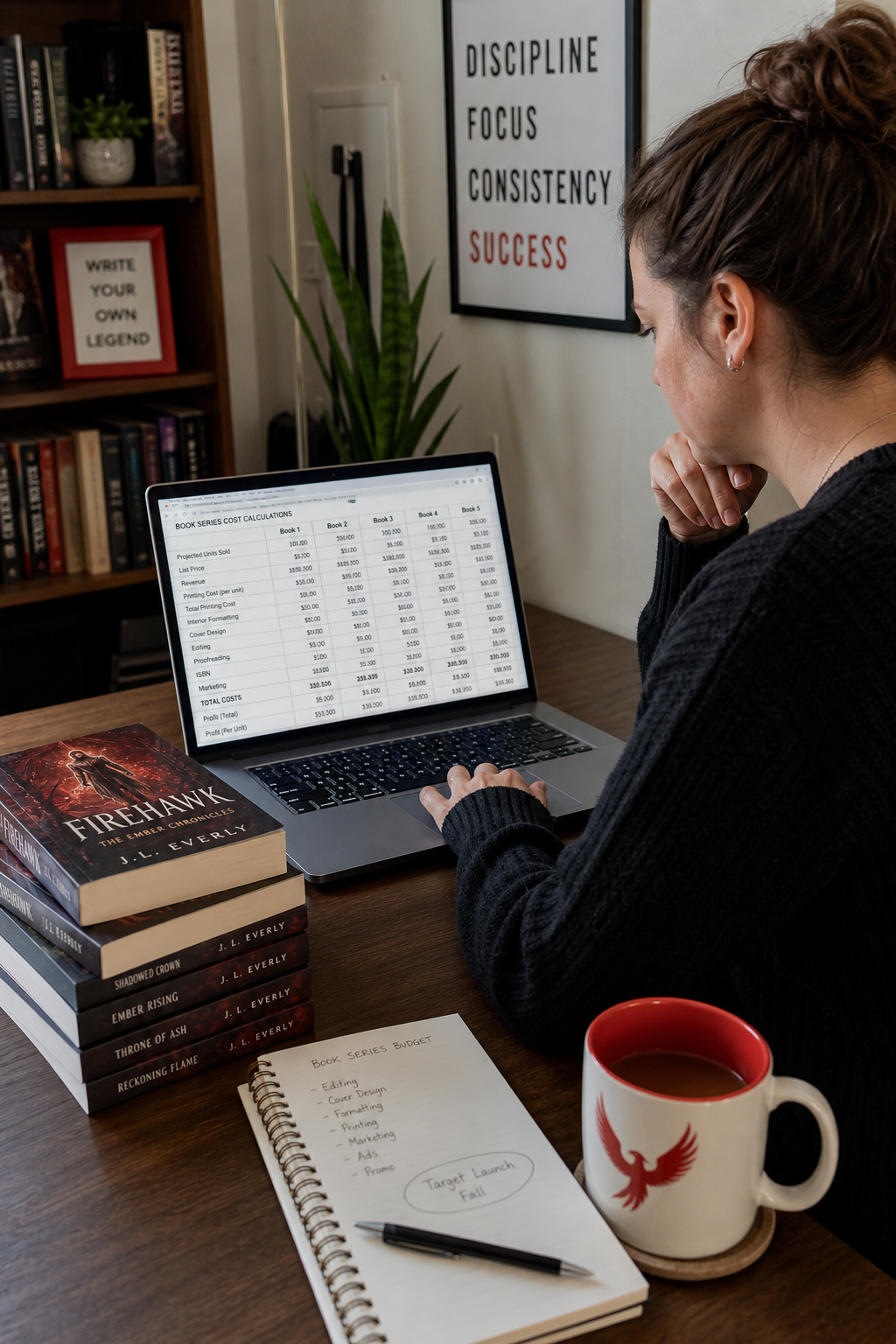
When you map out the series length, you also decide on the release cadence. A rapid rollout (one book per month) can boost algorithmic visibility but may overwhelm readers. A slower cadence (one book every three to six months) gives you time to market each title and gather sales data for price tweaks.
Need a full business plan to track these numbers? Self‑Publishing Business Plan: The 5‑Pillar Approach walks you through budgeting, revenue streams, and KPI tracking.
Step 3: Choose a Pricing Model (Per Book vs. Bundle)
Now decide whether to sell each title individually or bundle several together. Both models have pros and cons, and the right choice depends on how many books you have ready and how you want to guide the reader’s purchase path.
Individual pricing gives readers flexibility. They can pick the exact book they need, which works well for non‑sequential nonfiction series where each volume stands alone. The downside is that you miss out on the higher average order value that bundles can produce.
Bundling, on the other hand, often yields a larger per‑transaction revenue. A three‑book box set priced at $9.99 feels like a discount compared to buying three $4.99 e‑books separately ($14.97 total). Yet the royalty you earn on a $9.99 bundle is still based on the list price, so you keep a solid chunk of the sale.
Here’s a quick side‑by‑side view:
Most successful series authors start with a low‑priced first book, then offer a bundle once the second and third titles are out. This creates a clear upgrade path: “Read Book 1 free, then grab Books 2‑3 for $9.99.” The bundle acts as a funnel that pulls the reader deeper into the series.
To learn how to set bundle prices that work, see How to Set Effective Author Book Bundle Pricing. The guide includes a pricing calculator and real‑world examples.
Remember that the royalty tier shifts at $2.99. If you price a bundle at $9.99, each unit still falls inside the 70% royalty band, which can be a big profit boost.
Step 4: Set Launch and Long-Term Pricing
Launch pricing is a tactical decision. Many authors start with a promotional price (often $0.99 or $1.99) for the first week to spark velocity. The platform’s algorithm rewards fast sales, and a surge of reviews can lift your book in the rankings.
After the launch window, move the price to a permanent level that reflects the book’s value and your royalty goals. A common pattern is: free or $0.99 for Book 1, $3.99 for Book 2, $4.99 for Book 3, then $5.99 for later titles. This “price pulsing” strategy keeps newer books premium while rewarding early adopters with lower prices on older titles.
If you have a ready audience email list, you can announce the launch price and offer a limited‑time coupon. That creates urgency and drives direct sales that boost platform rank.
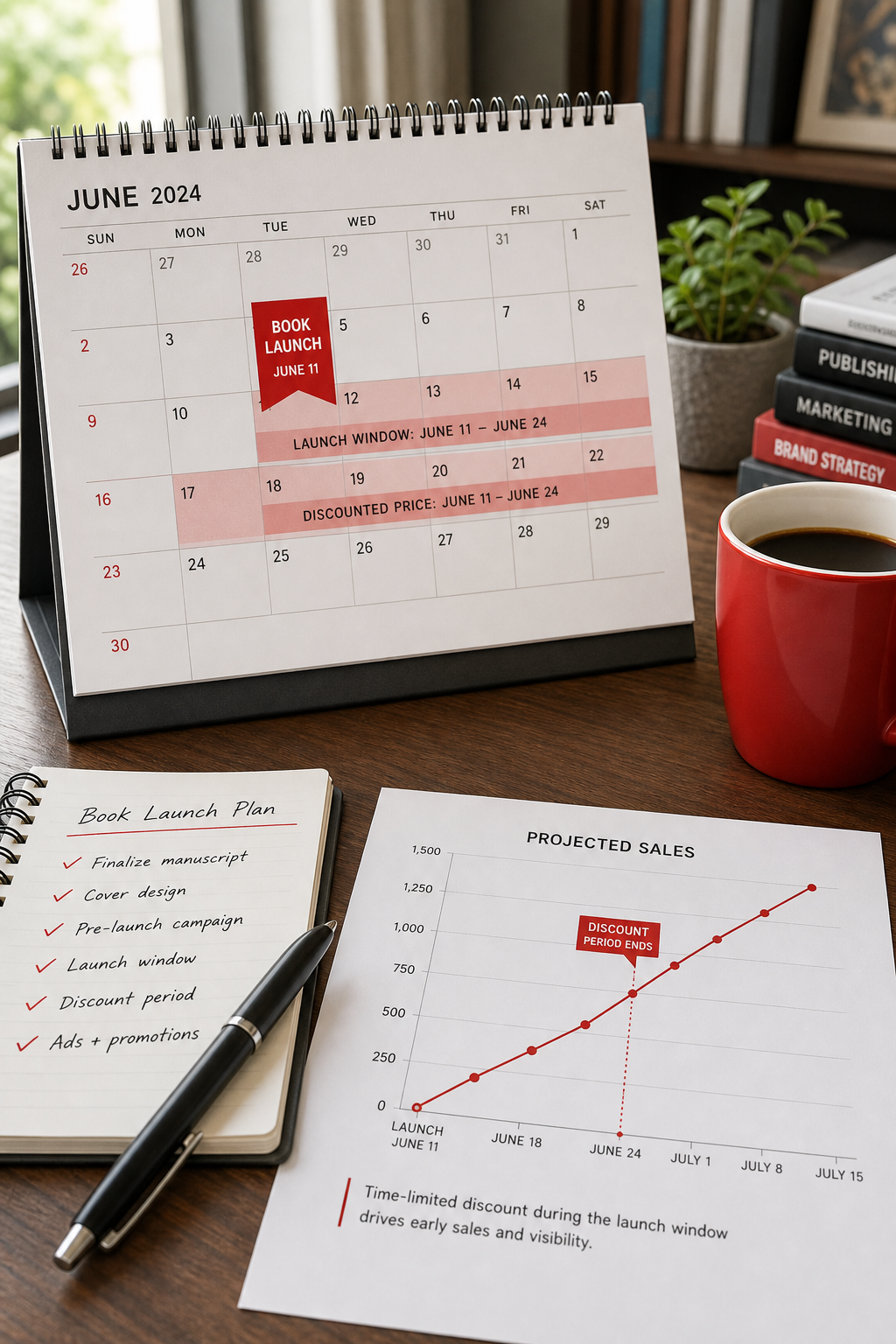
Long‑term, monitor how each price point performs. If a $4.99 book consistently sells 30 copies a month, but a $5.99 version only sells 10, the lower price may actually earn more total royalty. Use the formula: royalty per sale × units sold = total earnings.
For a complete look at launch tactics, read Best Author Book Launch Pricing Strategies. It walks you through countdown deals, free promotions, and how to time price changes for maximum impact.
Keep an eye on platform differences. Some platforms may pay 70% at $4.99, while others offer a 70% tier starting at $2.99. If you see a noticeable sales lift on one platform, consider a slightly higher list price there while keeping the other platform lower.
Step 5: Test and Adjust Based on Sales Data
Pricing isn’t a set‑and‑forget task. After the first month, pull the sales report from your dashboard. Look for three key metrics: units sold, royalty per unit, and conversion rate (how many page views turned into a purchase).
If the conversion rate is high but the royalty per unit is low, you may be leaving money on the table. Try raising the price by $0.50 and watch the numbers for two weeks. If sales dip less than 10%, the higher price wins.
Conversely, if the conversion rate is low, test a lower price or a limited‑time discount. Record the change and compare the total earnings over the same period.
Use a simple spreadsheet to track each experiment. Columns can include: date, price, units sold, royalty per unit, total royalty, notes on marketing activity. This visual log helps you see patterns and make data‑driven decisions.
Distribution channels affect the numbers too. Some platforms take a higher cut or add a delivery fee. For a quick comparison, see Indie Nonfiction Book Distribution: A 2026 Comparison Guide. Knowing each platform’s take helps you set realistic price targets.
Remember to revisit your pricing every quarter. Market trends shift, reader expectations change, and new titles in your series can alter the perceived value of older books.
Frequently Asked Questions
What is the best price for the first book in a series?
Most indie authors see the biggest discovery boost by pricing the first book at $0.99 or offering it for free for a limited time. This removes the cost barrier and lets readers sample your style. Because the royalty tier drops to 35% below $2.99, the goal is to treat Book 1 as a loss‑leader that fuels sales of higher‑priced sequels.
How does the 70% royalty tier affect my pricing decisions?
The 70% tier applies to e‑books priced between $2.99 and $9.99. If you set a price below $2.99, you fall into the 35% tier and also pay a $0.15/MB delivery fee. For series pricing, aim to keep most of your titles inside the 70% band to maximize earnings per sale.
Should I use a per‑book price or a bundle for a three‑book series?
Both work, but bundles often increase the average order value. A three‑book box set at $9.99 feels like a discount compared to buying three $4.99 e‑books separately. If you have at least three titles ready, offer both options: individual prices for readers who want one book, and a bundle for those who want the whole story.
How often should I change my book price after launch?
Most authors run a launch discount for 7‑30 days, then raise the price to a permanent level. After that, test a new price every 60‑90 days. Track the impact on sales velocity and royalty. If a price change doesn’t improve total earnings, revert to the previous level.
What tools can help me track pricing performance?
The major retailer’s dashboard provides daily sales, royalty, and price‑point data. For a broader view, services that aggregate data from multiple retailers into one spreadsheet are helpful. Combine this with a simple spreadsheet to log each price experiment and its outcome.
Can I price my print books differently from e‑books?
Yes. Print books have higher production costs, so a higher list price is normal. A paperback in a niche nonfiction market often sells for $13.95‑$17.95, while the e‑book version may sit at $4.99. Make sure the royalty you earn after printing costs still meets your profit goal.
How do I handle price differences across retailers?
Most platforms use the same list price, but some retailers have different royalty structures. If you notice a retailer consistently out‑performing others, you can set a slightly higher price there to capture extra revenue while keeping the price competitive on the primary platform.
Is it worth offering a permanent free first book?
Permanent free can drive long‑term visibility, especially if you have a strong back catalog. However, free‑book visibility on major platforms is lower than the paid charts, and you lose the chance to earn any royalty on that title. Many authors prefer a temporary free period or a $0.99 price to balance discovery with some earnings.
Conclusion
Pricing a book series is both art and science. Start by knowing your readers and the genre’s price norms. Map out the length of your series and decide how fast you’ll release each title. Choose whether you’ll sell books individually or bundle them, and set launch prices that spark early momentum. Finally, treat pricing as an experiment: track sales, test new numbers, and adjust every few months.
When you follow these steps, you’ll turn a vague hunch about price into a solid, data‑backed plan that fuels both discovery and profit. If you need personalized help, Bradley Johnson Productions offers coaching, roadmap templates, and ongoing support for indie authors looking to turn their series into a sustainable business.
Ready to put your pricing plan into action? Start with a simple spreadsheet, run a launch discount, and watch the numbers guide your next move. Your series deserves a price that reflects its value and helps you grow as a full‑time writer.