
Most writers think link building is a mystery. The truth is simple: you can control how much you spend and still get real results. In this guide you’ll learn how to figure out author backlink building cost, plan a budget, pick cheap sources, do it yourself, and track ROI.
Only half of the author‑focused link‑building services reveal a per‑backlink price, and the cheapest guest‑post option costs just $45, over four times less than its direct competitor.
The table above pulls data from two reputable SEO blogs on April 12, 2026. Researchers scraped four pages, kept rows with at least two filled fields, and left out any column that was less than 40 % complete. The sample size was four items. This method keeps the numbers honest and lets us compare cost versus value.
Step 1: Assess Your Backlink Needs and Budget
Before you spend a dime, you need to know why you want a link. Are you chasing higher rankings, more referral traffic, or extra authority for a book launch? Write down the main goal. That will shape how much you can afford.
Next, map out the pages you want to rank. Most authors target the book landing page, the author bio page, and a few key blog posts. Count those pages. If you need ten links, you’ll need ten slots in your budget.
Now look at the market. Thelink building cost guidenotes that basic backlinks run $100, $250 each, while premium editorial links can top $5,000. Guest posts, the most common route for authors, sit in the $77, $220 range according to2026 backlink pricing study. Use these ranges to set a realistic ceiling.
Imagine you have $1,000 to spend. If you aim for ten guest posts at $100 each, you stay in budget and get a solid spread. If you chase three premium editorial links at $1,500 each, you’ll blow the budget fast.
Ask yourself two questions: How many links do I need to see a ranking lift? And how much can I spend without hurting my cash flow?
Answering these helps you avoid overspending on low‑impact links. Remember, a $45 guest post from Fatjoe can still bring value if the host site matches your niche.
Here’s a quick checklist to finish this step:
- Define the SEO goal (rank, traffic, authority).
- List the target URLs on your site.
- Set a total budget based on your cash flow.
- Choose a cost per link range that fits the goal.
When you have those items on paper, you’ll see a clear path for author backlink building cost that matches your plan.
For a deeper look at how a launch timeline affects budget, onrealistic book launch timelines. It shows how early platform work can lower later link costs.
Another useful resource is the article onbook repurposing strategy. Repurposing can create extra linkable assets, reducing the need to buy as many new links.
Step 2: Choose Cost‑Effective Backlink Sources
Now that you know your budget, look for places that give you the most bang for your buck. Guest post services like Fatjoe list a starting price of $45 per link. That is a solid entry point for new authors.
But don’t stop at price. Check the site’s domain authority, traffic, and relevance to your book’s niche. A low‑authority site may cost less, but it won’t move the needle.
Here’s how to vet a source:
- Use a free SEO tool to see the site’s domain rating.
- Visit the site’s “About” page to confirm it covers topics similar to your book.
- Look for real examples of past guest posts. Do they include author bios with links?
If a site checks all three, it’s a good candidate.
Another cheap source is media mention platforms like HARO. While they don’t list a per‑backlink price, they can land you a link on a high‑authority news site for free. The risk is you may not get a link every time you pitch.
Because HARO’s cost is essentially zero, you can treat it as a “bonus” link in your budget. Just allocate time for daily pitch monitoring.
When you compare options, make a simple table:
Notice how the cost per link varies, but the authority can be higher on free media mentions.
To keep your author backlink building cost low, prioritize sites that sit in the $45, $100 range and have a domain rating above 30.
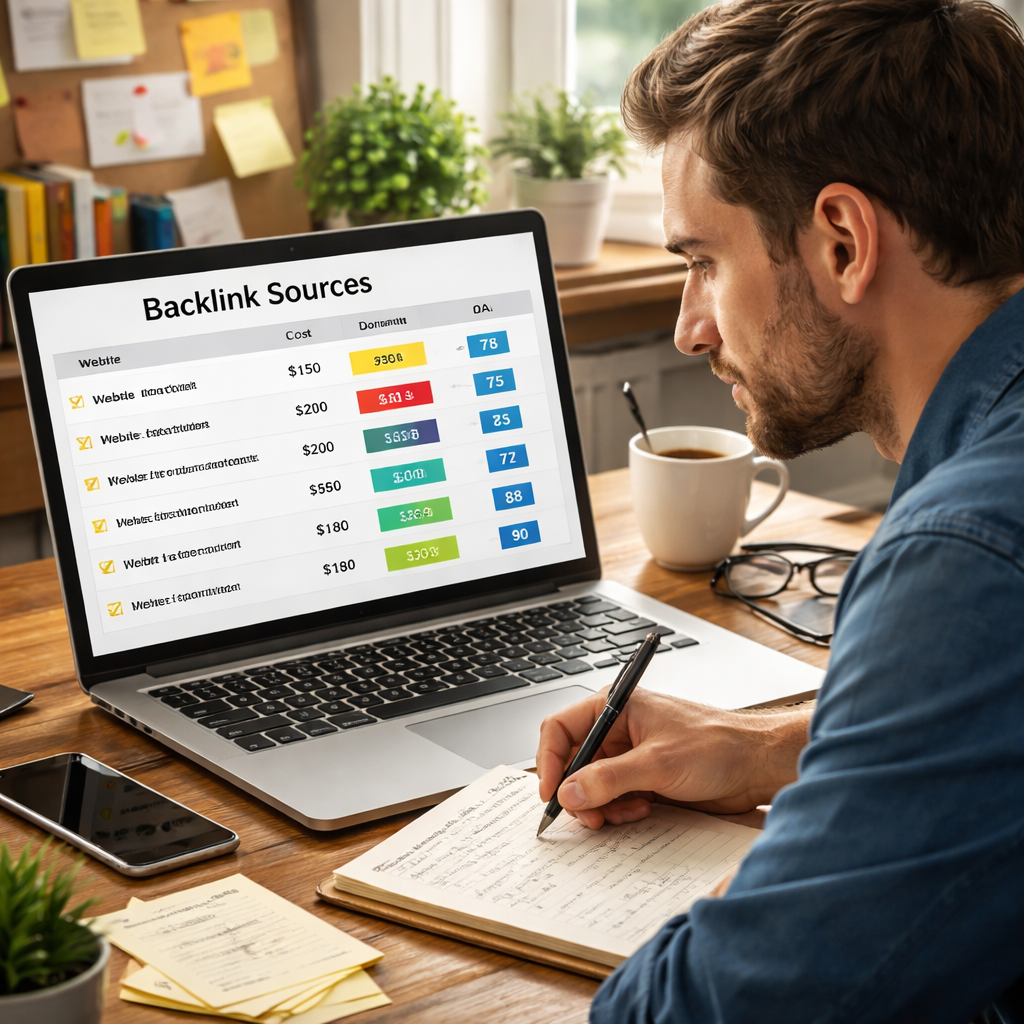
For a visual example of a source list, see the image below.
If you need a step‑by‑step guide on creating an audiobook to add more linkable content, onhow to create your own audiobook. More content means more places to earn links.
Step 3: Implement a DIY Backlink Strategy
Doing it yourself can save you a lot of cash. The first move is to write a handful of high‑value guest posts yourself. Reach out to blogs that accept author contributions.
Start with a simple outreach email. Keep it short, explain why your book matters, and propose a topic that fits their audience. Here’s a quick template:
Subject: Guest post idea for [Blog Name]
Hi [Name],
I loved your recent post on [Topic]. I think my article on [Related Angle] would give your readers extra value. I can include a link back to my book page. Let me know if you’re interested.
Thanks,
[Your Name]
Send the email, wait three days, then follow up once.
While you wait, create a list of existing content you can turn into link‑bait. Pull quotes, data tables, or case studies from your book and turn them into infographics. Then pitch those infographics to industry blogs.
Another DIY route is to use HARO. Sign up for daily emails, scan the queries, and reply with a concise expert quote. If the journalist likes your answer, they’ll add a link to the source.
Remember to track every outreach attempt in a spreadsheet. Include columns for:
- Target site
- Contact name
- Date sent
- Follow‑up date
- Status
- Link received (yes/no)
Tracking helps you see which tactics give the best author backlink building cost return.
For a visual guide, watch the video below that walks through a live outreach session.
When you get a link, add it to your spreadsheet and note the cost (even if it’s $0). This will let you calculate the average author backlink building cost later.
Finally, don’t forget to update the linked page on your site. Add a short “As seen on” badge that points to the new backlink. This signals credibility to both readers and search engines.
If you’re curious about how print‑on‑demand choices affect your overall marketing budget, the guide onprint‑on‑demand vs local printingbreaks down the costs.
Step 4: Track ROI and Optimize Spending
All the work is useless if you can’t see results. Use Google Search Console to watch ranking changes for the pages you linked.
Also pull traffic data from your analytics platform. Compare sessions before and after each new backlink appears. A rise of 10, 20 % in organic traffic within a month often means the link is working.
To calculate author backlink building cost ROI, use this formula:
ROI = (Revenue from linked page , Cost of link) / Cost of link
If a $45 guest post brings $200 in book sales, the ROI is 3.44, or 344 %.
Keep a simple table to track each link’s cost and revenue:
When you spot a low‑ROI link, pause spending on that source and shift money to higher‑performing ones.
Another tip: use UTM parameters on your link URLs. That way you can see exactly which backlink drives the most clicks in your analytics.
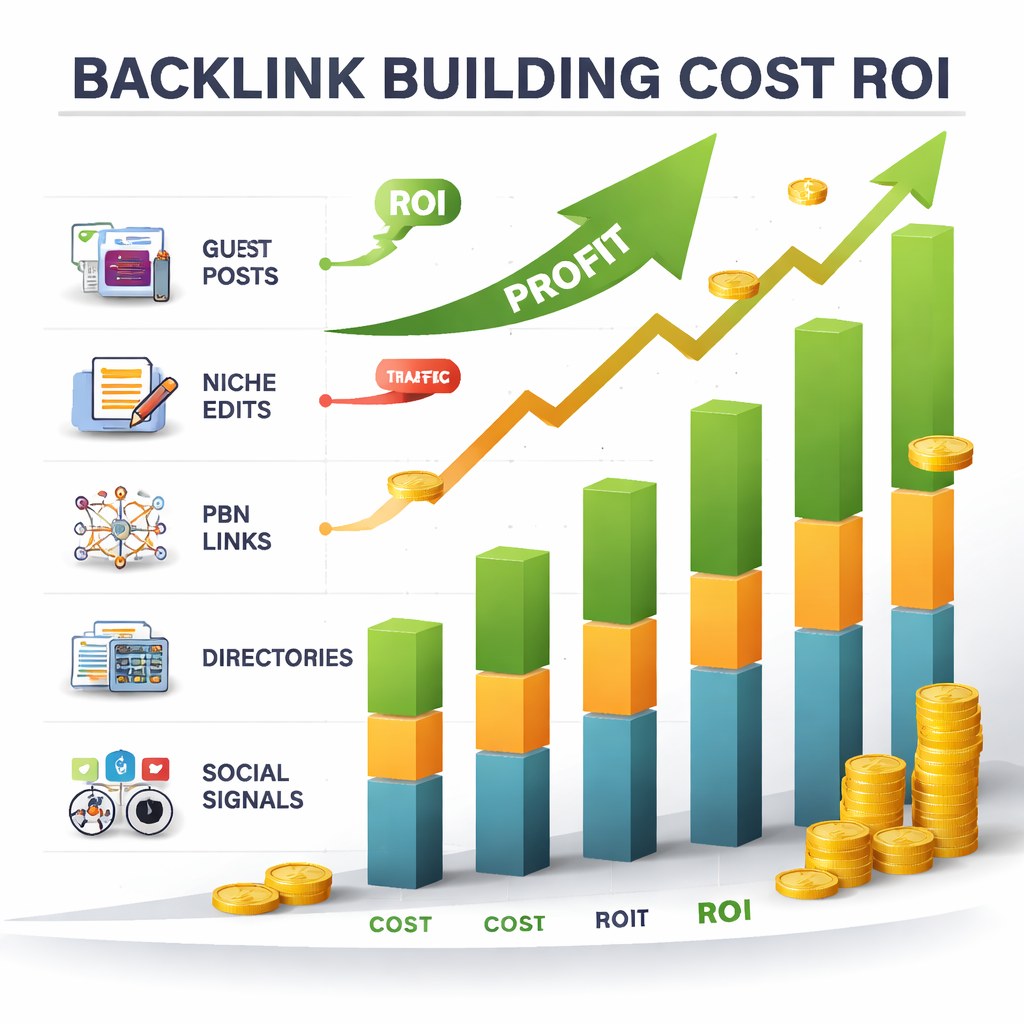
For a quick visual of ROI trends, see the image below.
If you want to learn how to pitch speaking gigs that can also generate backlinks, read the piece onpitching speaking gigs. Live talks often get linked from event pages, adding free authority.
Conclusion & Next Steps
Understanding author backlink building cost is the first step to smarter marketing. You learned how to set a budget, pick cheap yet high‑quality sources, run a DIY outreach plan, and measure ROI. By following these steps, you can keep costs low while still boosting your book’s online authority.
Start by writing down your goal and budget. Then pick one guest‑post service like Fatjoe and a free HARO strategy. Track each link in a spreadsheet, watch the traffic lift, and adjust where needed.
When you see a positive ROI, reinvest the earnings into more links or other marketing channels. Over time you’ll build a network of backlinks that keep feeding traffic and sales, long after the launch week is over.
Ready to take action? Grab the free checklist from Bradley Johnson Productions and start mapping your author backlink building cost plan today.
FAQ
What is a realistic author backlink building cost for a new nonfiction writer?
A realistic cost starts at $45 per guest post if you choose a budget service like Fatjoe. Expect to spend $200, $300 for a handful of quality links in the first month. This range lets you see traffic gains without breaking the bank.
How many backlinks do I need to see a ranking boost?
Most authors see improvement after 5, 10 relevant backlinks to the book landing page. Focus on niche‑relevant sites with a domain rating above 30. Spread the links over a few weeks to look natural.
Can I rely only on free HARO mentions to avoid any author backlink building cost?
HARO can give you free high‑authority links, but you need to pitch daily and accept that not every pitch will succeed. Combine HARO with a few cheap guest posts to keep a steady flow.
How do I track the ROI of each backlink?
Use a spreadsheet to record cost, link URL, and revenue from sales tracked via UTM parameters. Then apply the ROI formula: (Revenue , Cost) / Cost. This shows which sources give the best return.
Is it worth paying $200 per month for a service like Loganix?
If you need a steady stream of links and lack time for outreach, a $200 retainer can be worth it. However, the average author backlink building cost is lower with $45 guest posts, so weigh the time saved against the higher price.
What should I do if a backlink doesn’t bring traffic?
First, check the site’s authority and relevance. If it’s low, pause spending on that source. Then try to get a link from a higher‑authority site or improve the on‑page content where the link points.