
Audiobook budgets can surprise you. Some services hide the true cost while others charge a flat rate. In this guide you’ll see exactly how to size up author audiobook production cost so you can plan with confidence.
Below is the data set that backs our numbers. It compares eight providers and shows where the cheap and the costly options sit.
Step 1: Define Your Audiobook Project Scope
Before you spend a dollar, you need to know what you’re buying. The first thing to decide is how long your finished audio will be. A typical nonfiction book reads at about 9,300 words per hour. Take your manuscript word count, divide by 9,300 and you get an estimate in hours.
For example, a 56,000‑word book works out to roughly six finished hours. That number drives most of the author audiobook production cost because most providers charge per finished hour.
Next, ask yourself what parts of the book need to be recorded. Front matter, tables of contents, and legal pages are usually left out. Cutting those sections can shave a half hour off the final count.
Now look at your budget buckets. You can go DIY, you can hire a pro narrator, or you can use a full‑service studio. The DIY route may keep the author audiobook production cost under $1,000, but you’ll spend weeks learning recording software. A pro narrator typically costs $100‑$250 per finished hour, so a six‑hour book lands around $1,200‑$1,500.
Finally, decide how much control you want over the voice. Some services let you audition dozens of narrators, while others match you with a single talent. More control often means a higher author audiobook production cost because you’re paying for the casting time.
Use this quick checklist to lock in your scope:
- Word count → finished‑hour estimate.
- Exclude non‑narrated sections.
- Choose DIY, pro, or full‑service.
- Decide on casting control level.
And remember, the scope you set today will shape every quote you get later.
For a deeper dive on how to pick the right book and set up a script, check outStep‑by‑Step Guide on How to Create Your Own Audiobook. It walks you through the whole process from selection to final upload.
Step 2: Choose Narration Options
Now that you know the length, you need a voice. Human narrators give you tone, emotion, and a natural feel. AI voices are cheap and fast, but they can sound flat.
Human options fall into three camps:
- Marketplace casting (Voice123, Voices.com) , you post a brief and get many auditions.
- Full‑service studio (Scribe Audiobooks, Jony Studios) , they handle casting, recording, editing, and delivery.
- Hybrid in‑house (Author’s Republic) , you get a vetted narrator and a project manager.
AI tools like ElevenLabs let you upload a text file and get a synthetic voice in minutes. The cost is a subscription of $5 per month for 50‑60 minutes, which works for short prototypes.
When you compare costs, note that Voice123 lists rates as low as $75 per finished hour. That is the cheapest disclosed rate, but you’ll need to pay for editing separately.
Pros of human narration:
- Natural pacing and emotion.
- Better listener reviews.
Cons of human narration:
- Higher author audiobook production cost.
- Longer turnaround.
Pros of AI narration:
- Very low upfront cost.
- Instant turnaround.
Cons of AI narration:
- May lack nuance.
- Limited rights for commercial use.
Here’s a simple decision tree you can follow:
- Do you need strong emotion? Choose human.
- Is budget tight? Try AI for a test run.
- Do you want full casting control? Use Voice123.
And if you want a full look at the pros and cons of each major provider, see the table we shared earlier.
For more on narration rates and how to evaluate talent, read Mayfair Publishers’ cost guide.
Step 3: Get Recording & Editing Quotes
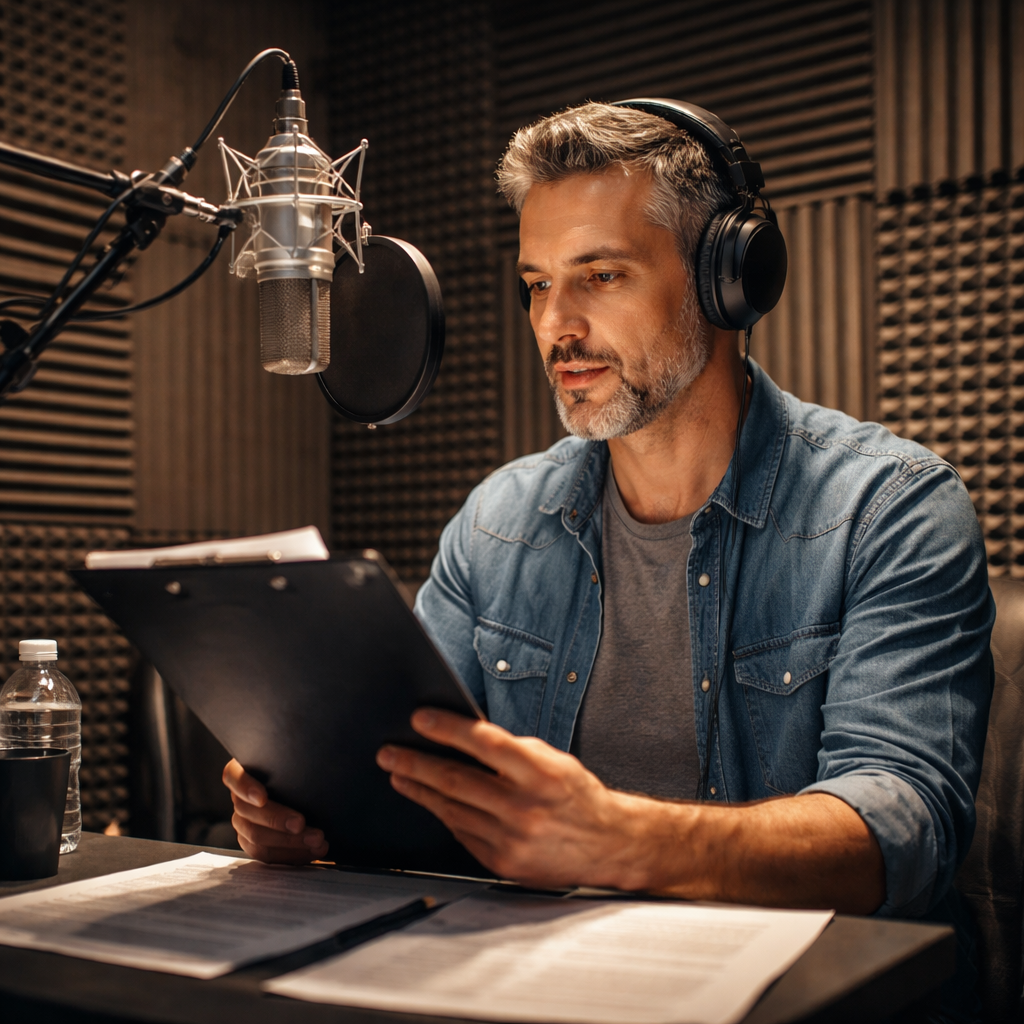
With your voice choice in hand, you need concrete numbers. Most services will give you a per‑finished‑hour (PFH) quote that includes recording, editing, mastering, and sometimes distribution.
Start by reaching out to three providers. Ask for a breakdown that shows:
- Recording fee per hour.
- Editing fee per finished hour.
- Mastering fee per finished hour.
- Any extra costs for sound effects or multiple voices.
When you compare quotes, watch for hidden fees. Some studios charge a flat studio‑rental rate of $50‑$150 per hour on top of PFH.
Here’s a quick way to calculate total author audiobook production cost from a quote:
Total Cost = (PFH rate × finished hours) + (studio fee × recording hours) + extras
Let’s say a studio quotes $250 PFH for a six‑hour book and $100 studio fee per recording hour. If they need eight recording hours, the math looks like:
(250 × 6) + (100 × 8) = $1,500 + $800 = $2,300
That $2,300 is your baseline. Add a 10% buffer for revisions.
Most authors find that the biggest surprise is editing cost. Editing averages $150 per finished hour, so a six‑hour book adds $900.
Now watch the video below for a step‑by‑step walk‑through of how to ask for quotes and read them.
After you collect three quotes, put them in a simple spreadsheet. Compare the total cost, turnaround time, and what’s included.
For a deeper look at how different services price their work, see Reedsy’s audiobook services guide. It lists PFH ranges and what each tier offers.
Step 4: Factor in Distribution & Marketing Expenses
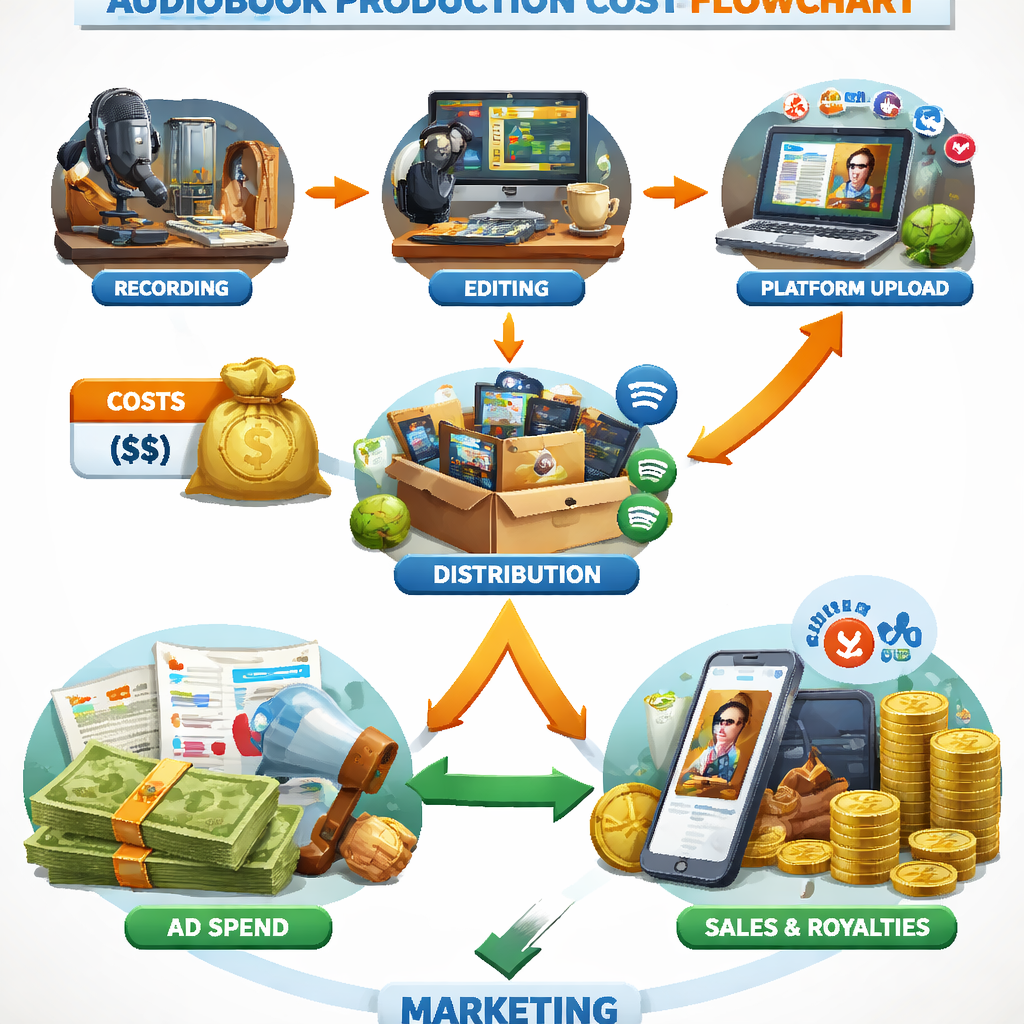
Production is only half the battle. Once you have a finished audio file, you need to get it onto platforms and tell listeners about it.
Distribution costs fall into two groups:
- Aggregator fees , services like Author’s Republic charge a % of net sales (usually 20%).
- Direct platform fees , some retailers take a cut of each sale (Audible takes about 25% for non‑exclusive).
Marketing adds another layer. Common items include:
- Paid ads on Amazon or Facebook , $200‑$500 per campaign.
- Launch team bonuses , a few hundred dollars to reviewers.
- Cover art for the audiobook , $50‑$300 if you hire a designer.
To keep the author audiobook production cost manageable, try these tips:
- Use a free aggregator likeAutomateed’s list of free distributorsto avoid upfront fees.
- Bundle your audiobook with the ebook in a limited‑time discount to boost sales.
- Use your email list , a single newsletter can drive dozens of sales without ad spend.
Remember to budget for ongoing costs. Many authors spend $1,000‑$2,000 on marketing in the first three months after launch.
Financial models show that a typical audiobook production company has fixed overhead of $23,250 per month and variable costs that can be 200% of revenue. While you’re not running a studio, those numbers remind you to keep a tight eye on cash flow.
For a clear picture of how the numbers break down, readFinancial Models Lab’s operating cost analysis. It explains how talent costs can eat up more than half of your revenue.
Step 5: Build Your Budget Spreadsheet
The best way to keep track of every dollar is a simple spreadsheet. Start with columns for:
- Task (e.g., narration, editing, mastering).
- Provider.
- Rate (PFH or flat).
- Hours.
- Total cost.
- Notes (turnaround, revisions).
Fill in the rows as you collect quotes. Then add a row for distribution fees and another for marketing spend.
Here’s a quick example layout you can copy:
Use the spreadsheet to calculate your break‑even point. Divide the total cost by your expected royalty per sale. If you expect $3 per sale, and your total cost is $3,500, you need about 1,167 sales to break even.
Keep the sheet updated as you receive invoices. That way you’ll always know the current author audiobook production cost and can adjust your marketing spend accordingly.
For a free template that tracks narration time, pacing, and editing, check outCarol Beth Anderson’s spreadsheet. It’s a solid base you can tweak for your own project.
And if you want to see how pricing strategies affect ROI, readScribeCount’s pricing guide. It walks you through setting a price that covers the author audiobook production cost and still leaves profit.
Conclusion
Figuring out author audiobook production cost doesn’t have to be a guessing game. You start by defining scope, pick the right narration path, get clear quotes, add distribution and marketing, and then lock everything in a spreadsheet. Follow each step, use the checklists, and you’ll know exactly where every dollar goes.
When you budget wisely, you can create a professional‑grade audiobook without blowing your cash reserves. That means more listeners, better reviews, and a steady stream of royalty income.
If you’re ready to put the plan into action, grab the free spreadsheet, pick a narrator, and start reaching out for quotes. Need more hands‑on help?Bradley Johnson Productions offers detailed platform guidesthat can take you from file to storefront.
Good luck, and happy recording!
FAQ
What is the typical author audiobook production cost for a 10‑hour nonfiction title?
For a ten‑hour nonfiction title, most authors spend between $2,000 and $4,000 on narration alone if they pay $200‑$250 per finished hour. Adding editing ($150 per hour) and mastering ($100‑$200 per hour) can push the total author audiobook production cost to $4,000‑$6,000. If you use a full‑service studio, expect an all‑in‑one price around $6,000‑$8,000, which includes distribution fees.
Can I reduce author audiobook production cost by recording at home?
Yes, you can cut studio rental fees, which often run $50‑$150 per hour. A decent USB condenser mic and a quiet room can bring equipment costs down to $100‑$300. However, you’ll still need to budget for editing, which typically costs $150 per finished hour. Many authors find a hybrid approach, home recording plus a professional editor, keeps the author audiobook production cost under $3,000 for a six‑hour book.
How do royalty‑share models affect my overall cost?
Royalty‑share lets you avoid upfront payments. Services like ACX offer a 40% exclusive or 25% non‑exclusive split. That means you pay nothing up front, but you give up a portion of each sale. If you expect high sales volume, a royalty‑share can raise the effective author audiobook production cost because you lose more per sale. For low‑volume projects, it can keep cash outflow low.
What hidden fees should I watch for when budgeting?
Look out for extra editing rounds, studio‑rental surcharges, and licensing fees for music or sound effects. Some studios charge a flat “post‑production” fee that can be $200‑$500. Distribution aggregators may also have set‑up fees of $50‑$100. Adding these to your base numbers ensures your author audiobook production cost estimate stays realistic.
Is it worth paying more for a celebrity narrator?
Celebrity narrators can charge $300‑$400 per finished hour or higher. That raises the author audiobook production cost substantially, but the name can boost sales and justify a higher retail price. If your goal is exposure and you have a strong marketing plan, the extra spend may pay off. If you’re on a tight budget, a skilled mid‑tier narrator usually delivers comparable quality for a fraction of the cost.
How do I calculate break‑even sales for my audiobook?
First, total all costs, including production, distribution, and marketing, to get your author audiobook production cost total. Then divide that number by your net royalty per sale. For example, if total cost is $4,500 and you earn $3 per sale after platform cuts, you need 1,500 sales to break even. Track sales weekly in your spreadsheet to see when you cross that line.