
Most email platforms promise thousands of automation options, but free and low-cost plans often strip out the exact features nonfiction authors need most. If you want behavior-based sequences, tagging by reader interest, and welcome flows that actually convert, you need to pick carefully. Here are the five best tools for the job, starting with the one built specifically for authors like you.
1. Bradley Johnson Productions (Our Top Pick) — Tailored Coaching & Automation for Authors
Bradley Johnson Productions is the only option on this list built exclusively for nonfiction authors and writers. Where every other platform hands you a blank canvas and says “good luck,” Bradley Johnson Productions gives you the strategy, the sequences, and the system already mapped to how author businesses actually work.
The focus is on helping authors grow their readership through both organic and paid methods, write books their readers love, and build a lifestyle of creative freedom. That means you get coaching on what to send, when to send it, and how to set up automations that run without you, not just access to a tool that makes you figure it all out alone.
For authors who want done-for-you email sequence systems, the nonfiction author email sequence templates at Bradley Johnson Productions are built specifically for this audience, not repurposed from e-commerce or SaaS workflows. You get welcome sequences, book launch flows, and reader nurture series that match how nonfiction readers actually behave.
The honest caveat: this is a coaching and strategy service, not a self-serve software tool you log into daily. If you want a plug-and-play platform to send your own campaigns from scratch, pair it with one of the tools below. But if you want your email system built right the first time, this is where to start.
2. ConvertKit — Simple Tagging & Creator Commerce for Writer Newsletters
ConvertKit (now also branded as Kit) has a free tier for up to 10,000 subscribers, which is the most generous free plan among major email platforms right now. That alone makes it worth a serious look for authors just starting to build their list.
The tagging system is where ConvertKit earns its spot. You can tag subscribers based on which lead magnet they downloaded, which link they clicked, or which book topic interests them most. That lets you send targeted emails to specific reader segments instead of blasting your whole list with every message. For nonfiction authors who write across multiple topics or have readers at different stages, this matters a lot.
ConvertKit also has Creator Commerce built in, so you can sell digital products, reader bonuses, or mini-courses directly through the platform without a separate storefront. Paid plans start from $20 per month once you move past the free tier’s feature limits.
The limitation worth knowing: ConvertKit leans toward plain-text email design. If you want visually rich, heavily branded newsletters, you’ll find the template library limited compared to MailerLite or ActiveCampaign. It’s a deliberate choice that keeps emails feeling personal, but it’s not for everyone. Authors who want to grow their author email list organically will find the free tier a strong starting point.
3. Beehiiv — Built-In Monetization & Growth Tools for Independent Newsletters
Beehiiv is built for newsletter operators who want to turn their audience into a business. It has a free tier up to 2,500 subscribers with unlimited email sends, which beats most competitors on volume at the entry level.
What sets Beehiiv apart for nonfiction authors is the built-in monetization layer. You can run paid subscriptions, accept ad placements through its platform, and set up referral programs, all without a third-party integration. If your goal is to build a newsletter that generates direct revenue alongside your book sales, Beehiiv has infrastructure for that baked in from the start.
The platform also handles SEO-optimized web hosting for your newsletter archive, which means your back issues can rank on Google and bring in new subscribers passively over time. That’s a real advantage for authors publishing evergreen nonfiction content.
The caveat: Beehiiv’s automation tools are more limited than ConvertKit or ActiveCampaign on free and lower-paid tiers. Custom HTML and more advanced automations sit behind paid plans, so go in with clear expectations about what the free plan actually includes.
4. MailerLite — Affordable Automation with Landing Pages & Pop‑Ups
MailerLite is the budget‑friendly option that doesn’t feel like a budget tool. Plans start at an affordable monthly rate for 500 subscribers, and the free plan includes up to 1,000 subscribers, 12,000 emails per month, automation, landing pages, and pop‑up forms, offering a strong feature set at no cost.
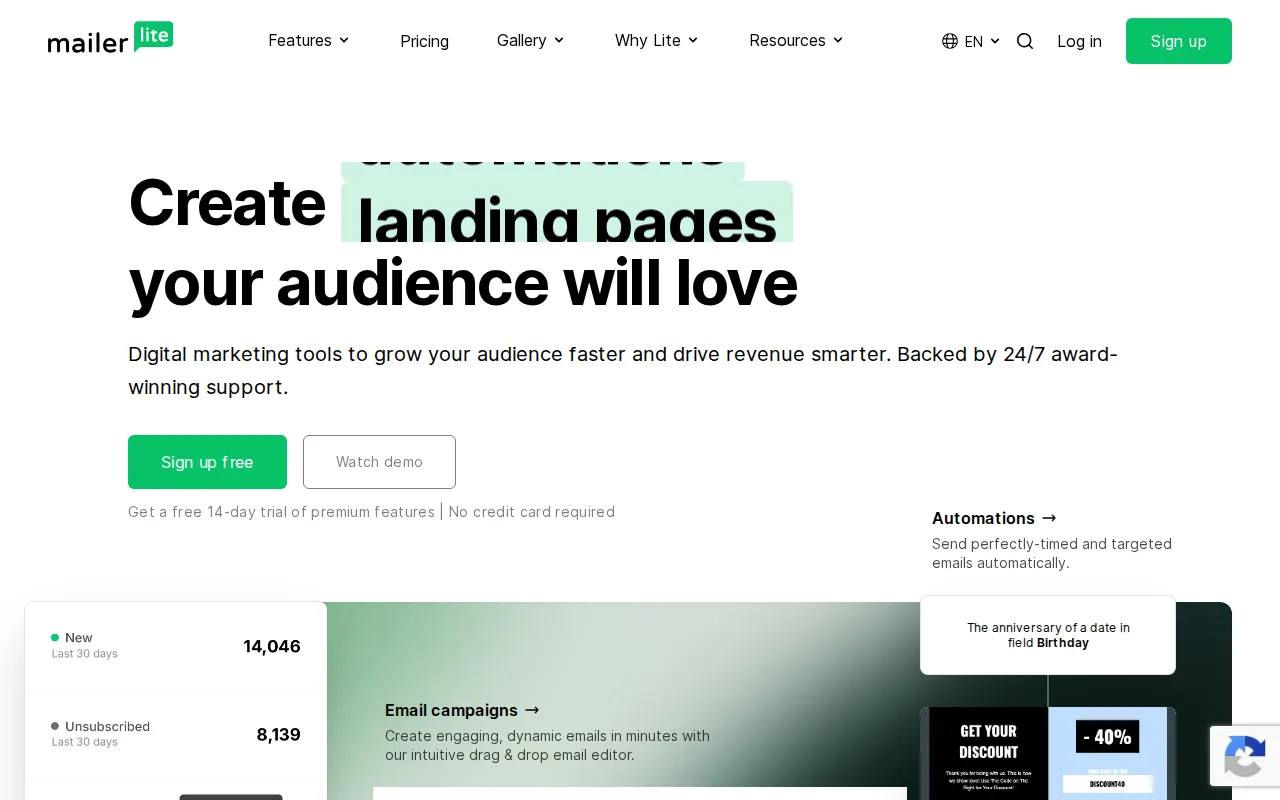
The automation builder at MailerLite uses a drag‑and‑drop interface with up to three triggers per automation, conditional branching based on segment membership or campaign activity, and A/B testing on subject lines and email content. You can test up to three variations per automation without test limits, which is more flexibility than most tools at this price point offer.
For nonfiction authors, the usable use case looks like this: a new subscriber downloads your free chapter, gets tagged automatically, enters a five‑email welcome sequence, and then branches into a book recommendation flow based on whether they clicked a specific link. All of that is possible on MailerLite’s paid plan, and the platform also connects to over 150 integrations including Shopify, WooCommerce, and major landing page builders.
MailerLite also has a Model Context Protocol connection, allowing you to link it to AI tools such as ChatGPT to analyze automation performance and receive improvement suggestions directly within your workflow.
The one real limitation: MailerLite lacks a built-in CRM, so if you want deep contact management or sales pipeline tracking alongside your email system, you’ll need a separate tool or integration. For most authors focused on reader nurture rather than sales pipeline management, that’s not a dealbreaker.
5. ActiveCampaign — Powerful Visual Workflows and AI-Driven Sending
ActiveCampaign is the most powerful automation tool on this list. It has a visual workflow builder with over 135 triggers, split-testable automations, and an AI layer called Active Intelligence that handles predictive sending, meaning it learns when each subscriber is most likely to open and times delivery accordingly.
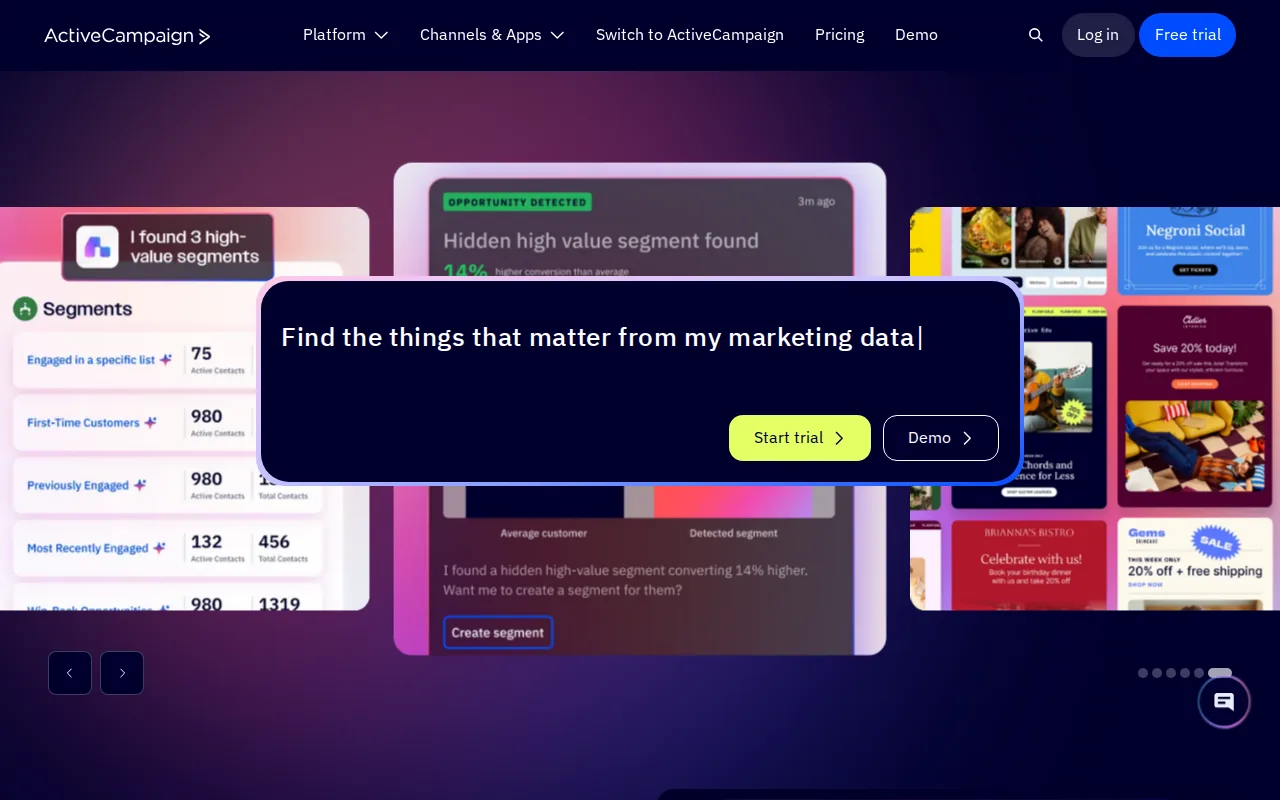
For nonfiction authors specifically, ActiveCampaign has published ready-to-use automation recipes for book pre-orders, free chapter giveaways, book review requests, and reader VIP segments. You’re not starting from scratch. The platform can fire a new sequence when a subscriber forwards an email, visits a specific page on your site, or joins a particular segment, which makes it possible to build genuinely behavior-based reader journeys.
ActiveCampaign also integrates with Salesforce, Shopify, Webflow, and Calendly, among others. For authors running workshops, online courses, or speaking engagements alongside their books, that integration depth matters. If you want to understand the full scope of email automation sequences for nonfiction book launches, ActiveCampaign has the infrastructure to run every variation.
The honest downside: ActiveCampaign has a steep learning curve. It’s not the tool to pick if you want to be up and running in an afternoon. Pricing starts at a level that may be higher than basic plans, and the most powerful features are available on higher tiers. Authors who are just starting out may find the complexity overwhelming before they have the list size to justify it.
How to Choose the Right Tool for Your Author Business
The right platform depends on where you are in your author career and what you actually need the tool to do. Here’s a simple decision framework.
List size and budget:If you’re under 1,000 subscribers and cost is a constraint, MailerLite or ConvertKit’s free tiers give you real automation without paying anything. Beehiiv works well if monetization is the immediate goal.
Automation depth:If you want behavior-based sequences, branching logic based on link clicks, and reader segmentation that updates automatically, ConvertKit and ActiveCampaign are the strongest options. MailerLite handles most author use cases at a lower cost.
Pricing model:Most platforms charge by subscriber count. That means your bill grows as your list grows, even if inactive subscribers sit there doing nothing. Email marketing platforms that charge by email volume instead can be cheaper for authors with large but infrequently-emailed lists. Factor in your expected list size in 12 months, not just today.
Author-specific support:Generic platforms don’t know what a book launch sequence looks like. If you want your system built with author workflows in mind from the start, Bradley Johnson Productions is the only option here that offers that level of specificity. For authors building out their full nonfiction book marketing strategy, having the email infrastructure match the overall plan saves significant time.
Feature Comparison Table
Here’s a side-by-side look at how these tools compare on the criteria that matter most for nonfiction authors.
FAQ
What email marketing tool is best for a nonfiction author just starting out?
ConvertKit’s free plan is a strong starting point for many nonfiction authors. It supports up to 250 contacts at no cost, includes tag-based automation, and is designed for creators and newsletter writers. If you want your email system set up correctly from day one with author‑specific sequences, Bradley Johnson Productions offers coaching and done‑for‑you setup that saves significant trial and error.
Do free email marketing plans include automation for authors?
Some do, but most free tiers limit automation meaningfully. MailerLite’s free plan includes automation features, and ConvertKit’s free tier includes basic automations. Beehiiv’s free plan offers limited automation.
How does email automation help nonfiction authors sell more books?
Email automation lets you send the right message at the right moment without doing it manually every time. A welcome sequence delivers your lead magnet, builds trust over several emails, and introduces your book naturally. A launch sequence times pre‑order announcements and follow‑ups to readers who opened but didn’t click. These sequences run automatically for every new subscriber, so your list is always being warmed up.
Is ActiveCampaign worth it for independent nonfiction authors?
ActiveCampaign is worth it if you have a growing list and want behavior‑based automation, like sequences that fire when a reader visits your book page or forwards an email. It has ready‑made recipes for book pre‑orders and review requests. However, it may be overkill for authors with smaller lists or those just setting up their first welcome sequence. Start simpler, then move up when the list size justifies the complexity.
What’s the difference between an email platform and an author email coaching service?
An email platform is software: you log in, build sequences yourself, and figure out the strategy alone. An author email coaching service like Bradley Johnson Productions gives you the strategy, the templates, and the system already designed for how nonfiction author businesses work. The platform is the tool. The coaching service is the plan. Many authors need both, and starting with the right plan prevents months of rebuilding later.
Conclusion
If you’re picking one tool to start with today, ConvertKit or MailerLite will get you running quickly without upfront cost. If you want your entire email system built with nonfiction author workflows in mind from the start, Bradley Johnson Productions is the clear first call. Check out the full author newsletter platform comparison to dig deeper into pricing and feature breakdowns before you commit.