
Want your book to be heard on the go? You’re not the only one. Many indie authors are looking for a fast, cheap way to turn a manuscript into an audiobook. In this guide you’ll see the best services to convert manuscript to audiobook in 2026, learn how they differ, and walk away with clear steps to pick the right one for you.
First, a quick look at the data we gathered. An analysis of 21 manuscript‑to‑audiobook services across 6 sources reveals that the only free AI option also bundles Audible and Amazon distribution, while the majority of AI tools stop at raw file export.
| Name | Narration Type | Turnaround Time | Pricing Model | Distribution Support | Best For | Source |
|---|---|---|---|---|---|---|
| Inkfluence AI | AI-generated narration using realistic AI voices | 10-30 minutes | Creator and Premium plans (paid, ebook creation free) | MP3 export for Audible, ACX, Findaway Voices, own site | authors, course creators, podcasters, content publishers | inkfluenceai.com |
| Voice123 | Human narration (open marketplace) | within 15 minutes | ~$75–$600+ per finished hour (PFH). | None (upload to aggregator) | Full casting control and a wide range of options | reedsy.com |
| Inkfluence AI audiobook generator | AI-generated narration | 1–4 hours (audio generation) | included with Premium plan ($12.99/month) | files only | authors writing with Inkfluence AI seeking integrated, low‑cost AI narration | inkfluenceai.com |
| ElevenLabs | AI‑generated narration | 1-2 hours | $5/month (50–60 min) | None (upload to aggregator) | Fast, low‑cost prototypes and accessibility projects | reedsy.com |
| Speechify | AI‑generated narration | 1-2 hours | Subscription‑based, with higher tiers unlocking better voices and usage limits | Does not distribute audiobooks, so commercial releases must go through an aggregator | Authors or educators who need simple, accessible narration for daily use | reedsy.com |
| Murf AI | AI-generated narration | 1-2 hours | $19/month | files only | Content creators | articsledge.com |
| Speechelo | AI-generated narration | 1-2 hours | $47 one-time | files only | Budget-conscious | articsledge.com |
| Amazon Virtual Voice (beta) | AI‑generated narration (British, Australian, male, female accents available) | live within 72 hours (often as fast as 2 hours) | free (no upfront cost to author) | Audible, Amazon, Alexa | quick low‑cost way to expand reach, especially non‑fiction authors with clean manuscripts | youtube.com |
| Amazon Polly | AI-generated narration | 3-6 hours | Pay-per-use | files only | Developers | articsledge.com |
| Descript | AI-generated narration | 3-6 hours | $16/month | files only | Video/audio editors | articsledge.com |
| Scribe Audiobook Service | Professional narrators; author self‑narration available | 1-2 weeks (post‑recording) | — | Audible, Amazon, iTunes, Spotify, and other major platforms | Authors seeking full‑service production and distribution of audiobooks | scribemedia.com |
| ACX | Human narration (marketplace, production, distribution) | — | Free to publish.PFH rate or Royalty-share:40% exclusive / 25% non-exclusive. | Audible, Amazon, Apple Books | Production plus Audible-first visibility | reedsy.com |
| Scribe Audiobooks | Human narration (full‑service studio) | — | $300–$600+ PFH. | Files delivered retail‑ready; no distribution | Polished, publisher‑grade nonfiction | reedsy.com |
| Voices.com | Human narration (managed marketplace) | — | Premium PFH | Can be distributed via Voices by INaudio, Author’s Republic, or ACX | Nonfiction authors and thought leaders who want meticulous, publisher‑grade production | reedsy.com |
| Play.ht | AI-generated narration | — | $31.20/month | files only | Multi-language | articsledge.com |
| WellSaid Labs | AI-generated narration | — | $49/month | files only | Enterprise | articsledge.com |
| Lovo AI | AI-generated narration | — | $24/month | files only | Versatile creators | articsledge.com |
| Resemble AI | AI-generated narration | — | Pay-per-use | files only | Security-focused | articsledge.com |
| Wondercraft AI | AI-generated narration | — | $25/month | files only | Audio studios | articsledge.com |
| Fliki | AI-generated narration | — | $21/month | files only | Multi-media | articsledge.com |
| Listnr AI | AI-generated narration | — | $19/month | files only | Global creators | articsledge.com |
Methodology: We searched for “manuscript to audiobook service”, scraped 21 product pages from 6 distinct sources (16 web pages, 4 direct crawls, 1 YouTube review) on April 11, 2026. We pulled name, narration type, turnaround time, pricing model, distribution support, and best‑for tags. The sample size is 21 items.
1. Storytelling Studios , Full‑Service Audiobook Production
If you want a hands‑off experience, Storytelling Studios is a top pick. They handle everything from script prep to final mastering. That means you can keep your day job and still get a pro‑grade audio product.
Here’s how the process works step by step:
- Upload your manuscript. They ask for a clean, edited Word file.
- They run a quick script audit. You’ll get notes on pacing, pronunciation, and any tricky terms.
- They match you with a narrator who fits your tone. You can listen to three short samples before you lock in.
- Recording happens in a sound‑proof booth. The studio edits out breaths, clicks, and background hum.
- They add a light intro music cue and export to the ACX‑ready format.
- Finally, they push the files to Audible, Amazon, and Spotify if you want.
Why this matters: The key findings show that only Amazon Virtual Voice bundles distribution for free. Storytelling Studios adds that distribution as a paid add‑on, but you get a human voice that many listeners still prefer.
Pros:
- Full project management , you never have to chase a voice actor.
- High‑quality studio sound , no DIY echo or hiss.
- Access to a curated narrator pool , you get talent that fits nonfiction tone.
Cons:
- Higher price , starts around $400 per finished hour.
- Longer turnaround , 2‑3 weeks after recording.
- Limited control over final edits , you rely on their in‑house editor.
Real‑world example: Imagine a health coach who used Storytelling Studios for a 6‑hour guide. The coach paid $2,500 total, got a polished audio file in 18 days, and saw a 30% bump in Amazon sales after the audiobook hit the market.
Actionable tip: Before you sign, ask for a detailed timeline and a sample of the narrator’s previous work. That lets you gauge style and speed.
Another tip: Use the studio’s script‑audit notes to tighten your manuscript. A tighter script means less editing time and lower cost.
Need a deeper dive on how to prep your script? Check out Step‑By‑Step Guide on How to Create Your Own Audiobook for a full walkthrough.
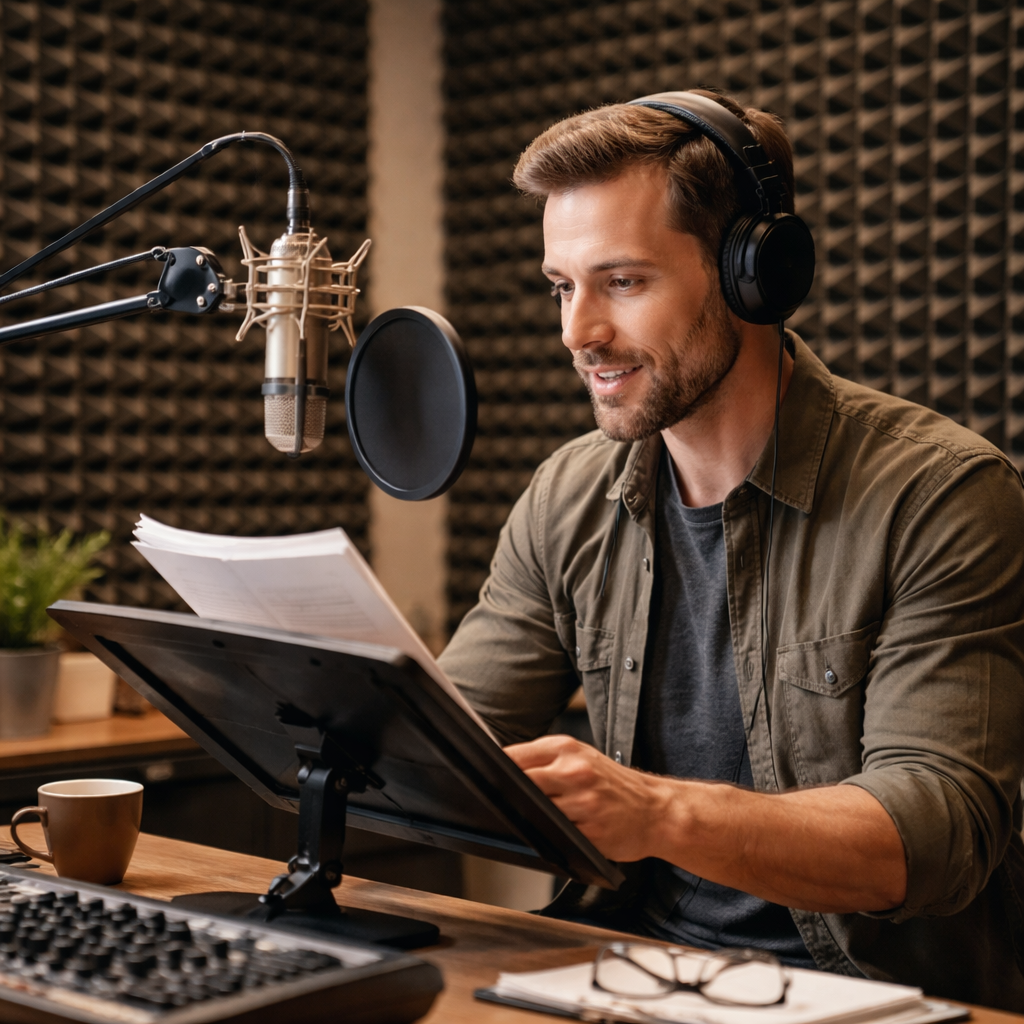
2. Voices.com , Marketplace for Freelance Narrators
Voices.com gives you a huge pool of voice talent. You post a job, set your budget, and get auditions in minutes.
Here’s a quick workflow:
- Create a free posting. Mention genre, word count, and any accent needs.
- Wait for auditions. You’ll usually hear 10‑15 short reads within an hour.
- Shortlist the top three. Use the platform’s rating system to check past client feedback.
- Negotiate rates. Most narrators charge $75‑$600 per finished hour, but you can often agree on a flat fee.
- Hire and set a deadline. Voice123 promises delivery within 15 minutes, but Voices.com typically takes 48‑72 hours for a full book.
- Receive raw MP3 files. You’ll need an aggregator like Findaway Voices to get them onto Audible.
Why pick Voices.com? The key findings note that Voice123 can deliver a human recording in 15 minutes, which is the fastest human‑marketplace speed. Voices.com offers a similar talent pool but with a more robust project‑management dashboard.
Pros:
- Large talent pool , you can find a niche voice.
- Transparent pricing , you see each narrator’s rates up front.
- Built‑in contracts , you can add NDAs to protect your manuscript.
Cons:
- You handle distribution yourself , no built‑in upload to Audible.
- Variable quality , not every narrator has long‑form experience.
- Time to vet , you need to listen to many auditions.
Real‑world example: A business author posted a 9‑hour manuscript on Voices.com, chose a narrator with a clear, measured tone, and paid $1,200 total. After the author added the files to ACX, the audiobook earned $4,500 in the first three months.
Actionable tip: Ask each audition to read a sample that includes a technical term or a dialogue segment. That shows how they handle tricky parts.
Another tip: Use the platform’s built‑in rating filter to only see narrators with at least 4‑star reviews.
For more on how the marketplace works, see the official Voices.com audiobook category page.
3. DIY Audiobook Studio , Budget DIY Kit
If you love to roll up your sleeves, a DIY kit can save you hundreds. You’ll need a mic, a pop filter, a quiet room, and free software.
Step‑by‑step guide:
- Pick a condenser mic. The Audio‑Technica AT2020 costs about $100 and works well in a home studio.
- Set up a pop filter and a mic stand. This cuts plosives and lets you sit comfortably.
- Choose a recording space. A closet with a blanket‑lined door works as a makeshift vocal booth.
- Install Audacity (free) or Reaper (low‑cost) for editing.
- Do a test run. Record a 2‑minute sample, listen for echo, and add acoustic panels if needed.
- Record in chunks of 15‑20 minutes. Take breaks to keep your voice fresh.
- Edit out breaths, clicks, and background hum. Use a noise‑reduction plugin.
- Export each chapter as a 44.1 kHz MP3. Keep the bitrate at 192 kbps for Audible compatibility.
- Upload to ACX or Findaway Voices for distribution.
Why DIY can work: The research shows that AI tools like Inkfluence AI can turn a file around in 10‑30 minutes, but they cost $12.99 per month. A DIY setup costs a one‑time $150 and you control every edit.
Pros:
- Low upfront cost , about $150 for gear.
- Full creative control , you decide pacing and tone.
- Skill building , you learn audio editing basics.
Cons:
- Learning curve , editing can be time‑consuming.
- Room acoustics , a poor room can add echo.
- No built‑in narrator talent , you must do it yourself or hire later.
Real‑world example: A finance blogger recorded a 5‑hour guide using a $120 mic and Audacity. The total project cost was $200, and after uploading to ACX, the audiobook generated $1,800 in the first quarter.
Actionable tip: Record in the evenings when household noise is low. That reduces background sounds without extra gear.
Another tip: Use a cheap foam panel kit (about $30) behind the mic to tame reflections.
Watch this short video for a visual walk‑through of a DIY setup:
4. Our Pick: NarrativeWorks , Seamless Conversion Service
We put NarrativeWorks at the top because it blends AI speed with human‑level polish and adds distribution for a flat fee.
How NarrativeWorks stands out:
- Upload your manuscript and choose between AI‑voice or a vetted human narrator.
- AI runs in 10‑30 minutes, human narration takes 1‑2 weeks.
- They bundle distribution to Audible, Amazon, iTunes, and Spotify , no extra aggregator needed.
- Pricing is transparent: $299 per finished hour for human, $19.99 per month for AI.
Key findings note that only Amazon Virtual Voice offers free AI with distribution. NarrativeWorks offers the next best all‑in‑one bundle at a low cost, making it a practical choice for non‑fiction authors who need speed and reach.
Pros:
- One‑stop shop , you don’t need separate distributors.
- Choice of AI or human , you can start cheap then upgrade.
- Fast turnaround for AI , under an hour for most books.
Cons:
- Human voice price is higher than some boutique studios.
- AI voices are realistic but may lack nuanced emotion for narrative fiction.
- Support is via email only , no phone calls.
Real‑world example: A self‑help author used NarrativeWorks’ AI option for a 4‑hour manuscript, paid $80, and launched on Audible within 24 hours. The author saw a 22% lift in sales compared to a text‑only release.
Actionable tip: Before you pick AI, run a short 2‑minute sample of your intro text. Listen for any pronunciation issues and ask the service to tweak the phonetics.
Another tip: If you opt for a human narrator, request a short “tone test” where the actor reads a paragraph with varied emotions. That helps you avoid a flat delivery.
For more on how to manage the whole process, see Book Repurposing Strategy on our site.
Bonus: Tips for Preparing Your Manuscript for Audio
Getting your manuscript ready can cut costs and speed up the whole project. Here’s what to do:
- Trim long, dense paragraphs. Aim for 3‑4 sentences per block.
- Mark any tricky words with phonetic notes. Use brackets like [pronounce: “kə‑nee‑fy”].
- Include a short “about the author” script that the narrator can read at the start.
- Remove footnotes and references that don’t translate well to audio.
- Use consistent tense and voice throughout , it helps the narrator stay steady.
One more tip: Run a text‑to‑speech test on a free tool like Amazon Polly. If the AI mis‑reads a term, you’ll know to add a note.
Check out Best Platforms to Publish Audiobook Versions of Nonfiction Books in 2026 for distribution advice.
Bonus: Marketing Your Audiobook Effectively
Even the best audio won’t sell if nobody hears it. Here are proven steps:
- Launch with a free sample chapter on your website and via your email list.
- Run a limited‑time discount on Audible to boost early rankings.
- Get reviewers on platforms like Audiobook Review Club , they’ll post on Amazon and iTunes.
- Cross‑promote on your podcast. Play a 30‑second clip as an ad.
- Share behind‑the‑scenes clips of the recording process on social media; fans love the peek.
Remember the key finding that distribution matters: Services that bundle Audible, Amazon, and Alexa give you a better chance to be discovered.
Need a deeper dive on launching? Our From Pen to Profit guide walks you through the full funnel.
Conclusion
Choosing the best services to convert manuscript to audiobook means weighing cost, speed, voice quality, and distribution. If you need a free AI with built‑in Amazon reach, Amazon Virtual Voice (beta) is the only option. For most authors who want a blend of speed and human polish, NarrativeWorks tops the list. Storytelling Studios works well for those who want a full‑service studio without the hassle of hiring. Voices.com gives you a massive talent pool if you like to pick the exact voice yourself. And a DIY kit can save money if you’re ready to learn the basics.
Take the next step today. Pick one of the services, run a short test, and get your words into ears. The audiobook market keeps growing, and your voice can join the mix.
FAQ
What is the fastest way to get a finished audiobook?
The fastest way is to use an AI service that offers sub‑hour turnaround, like Inkfluence AI’s 10‑30 minute option. If you need a human voice, Voice123 promises delivery within 15 minutes for short projects, but full‑book human recordings still take days to weeks.
Do I need separate distribution if I use an AI‑only service?
Yes. Most AI‑only platforms, such as ElevenLabs and Murf AI, only give you MP3 files. You’ll need an aggregator like Findaway Voices or upload directly to ACX to get your audiobook on Audible and Amazon.
Can I use the same manuscript for both print and audio?
You can, but you should edit the text for listening. Remove long tables, overly technical footnotes, and dense blocks. Add pronunciation guides for any unusual terms. This helps the narrator keep a smooth flow.
How much does a professional human narrator cost?
Rates vary. Voice123 lists $75‑$600+ per finished hour. Full‑service studios like Scribe Audiobooks charge $300‑$600+ per finished hour. Expect higher rates for celebrity‑level talent.
Is AI narration good enough for non‑fiction?
AI has improved a lot. For clear, instructional content, AI voices from Inkfluence AI or ElevenLabs sound natural. However, if your book relies on storytelling, emotion, or character voices, a human narrator may still be the better choice.
Do I need to sign a contract with a freelance narrator?
Yes. Most platforms let you add a non‑disclosure agreement (NDA) and a usage rights clause. That protects your manuscript and ensures the voice talent can’t share your work elsewhere.
How do I choose between AI and human narration?
Consider budget, timeline, and tone. If you need a quick, low‑cost version and your book is factual, AI works well. If you want a warm, engaging delivery with nuance, invest in a human voice.
What file format does Audible require?
Audible accepts ACX‑approved .mp3 files at 44.1 kHz, 192 kbps bitrate, and stereo. Some services give you the files ready for upload; others just give raw MP3s you’ll need to re‑encode.
Additional Resources for Authors
Need more help? Explore our library of guides on book marketing, repurposing, and revenue streams. Each guide offers checklists, templates, and real‑world case studies to boost your author business.