
The best editing services for non-fiction authors depend on the problem in front of you. A book with weak structure needs a human editor, while a clean final draft may need a fast grammar check. Here are five useful options, with Bradley Johnson Productions first for authors who need editing tied to readership growth and book strategy.
1. Bradley Johnson Productions
Bradley Johnson Productions helps non-fiction authors improve their books while building a path toward more readers and more creative freedom. It fits authors who want support beyond sentence fixes, especially when the book must also support a larger platform or business.
A non-fiction manuscript can have clean grammar and still miss the mark. The promise may be unclear. Chapters may arrive in the wrong order. The book may teach useful ideas without giving readers a clear reason to keep going.

That is where a broader service can help. Bradley Johnson Productions works with non-fiction authors, writers, independent authors, content creators, and bloggers. Its business focus includes book writing, readership growth, and organic and paid methods for reaching an audience.
For authors who are still shaping a proposal, the editing question often starts before the full manuscript exists. A strong proposal must show the book’s idea, reader, market fit, and structure. The author book proposal editing price comparison can help you think through that earlier stage before paying for a full edit.
The main strength here is the connection between the book and the author’s next move. Your editor should see how the manuscript fits your email list, content plan, launch goal, or wider body of work.
The limitation is simple: this may be more support than you need if your manuscript only has typos. If the structure is set and your pages are already clean, a lighter copyedit or software check may cost less and finish faster.
Choose Bradley Johnson Productions when the book is part of a long-term author plan, not a one-off file that needs surface polish.
2. The Editorial Department: Human editing across the manuscript
The Editorial Department is a human editing service with freelance editors who work across developmental editing, line editing, and copyediting. It suits non-fiction authors who need a manuscript read as a whole, rather than checked one sentence at a time.

Developmental editing looks at the book’s shape. An editor may point out that the first chapter delays the main promise, or that two chapters teach the same idea. That kind of note can change the reader’s path through the book.
Line editing works closer to the prose. It can flag a paragraph that sounds stiff, a claim that needs a clearer setup, or a page where the tone shifts without a good reason. Copyediting then checks the details of grammar, usage, spelling, and consistency.
Those layers matter in non-fiction because the reader must trust the author. A definition that changes halfway through the book can confuse readers. A heading style that shifts from chapter to chapter can make the manuscript feel unfinished.
The Editorial Department’s explanation of editorial work separates these editing levels in a useful way. That distinction can save you from ordering a proof. Proofreading, by definition, checks a text after it has already been edited, so it is usually the wrong first service for a rough manuscript.
Ask for clarity about the handoff. Will you receive comments in the file? Will the editor explain major changes? Can you ask questions after the first pass? These details affect how much you learn from the work.
The caveat is cost and fit. Human editing takes time, and the service may not suit a short ebook with a tight budget. Also, a broad editorial review cannot confirm every specialist fact unless the agreement includes that work.
Pick this option when your manuscript has a clear idea but still feels uneven in shape, voice, or flow.
3. Grammarly: Fast grammar and communication improvements
Grammarly is a fast writing tool for grammar and communication improvements. It works best for authors who have a stable draft and want quick feedback before a human proofread or final read.
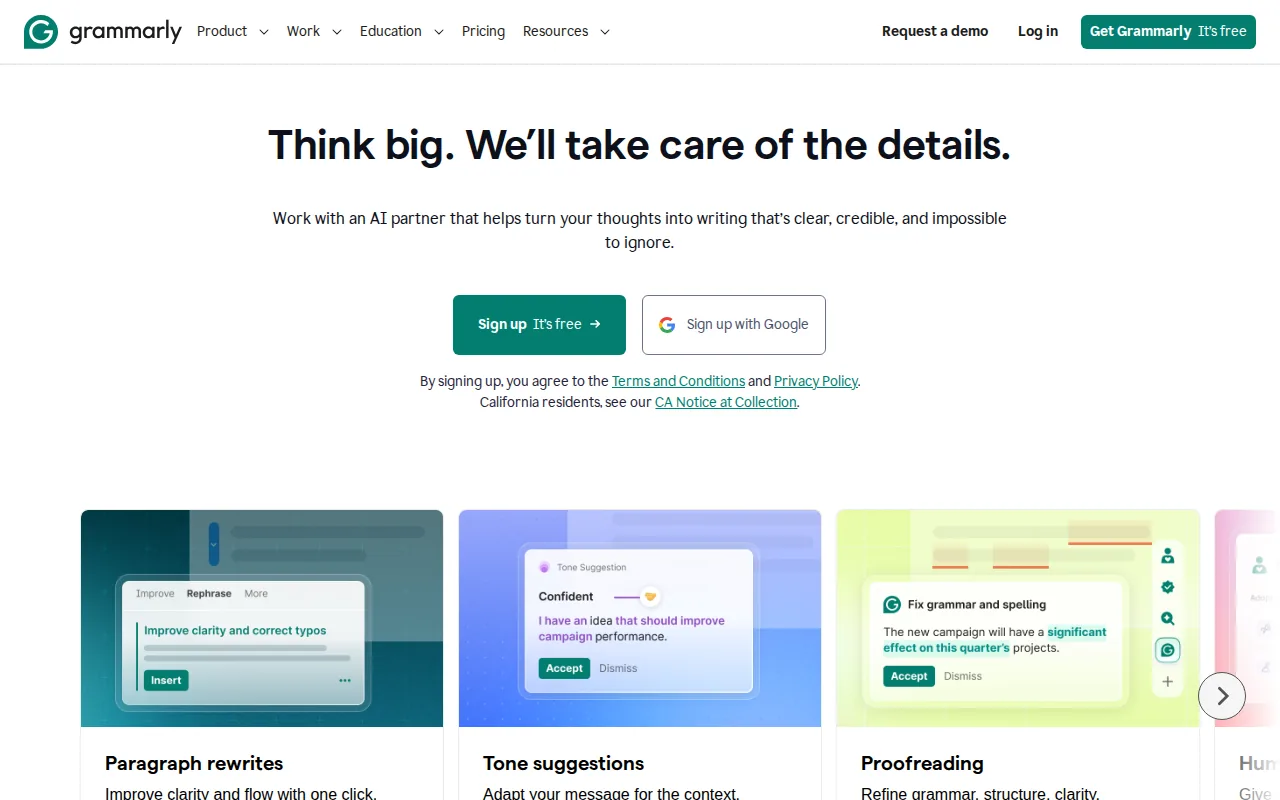
Its role is narrow compared with a book editor. A tool can flag a grammar issue while you work through a chapter. It can also draw attention to wording that may be hard to follow. That speed makes it useful during early cleanup, especially when you revise many short pieces around the main book. Authors comparing broader writing software for non-fiction authors can also consider how their workflow handles notes, organization, and revisions.
Grammarly’s stated aim is to improve lives by improving communication. The tool’s value comes from that focus on clearer writing, not from replacing editorial judgment. A suggestion still needs a human check because the author’s meaning comes first.
Grammarly provides communication-focused writing support. Use that kind of tool while the manuscript is still moving. If you accept every suggestion without reading the full paragraph, you may flatten a voice that was meant to sound warm, direct, or personal.
Non-fiction writers should also watch for context. A sentence can be grammatically correct and still make a claim that needs proof. A tool may improve the wording of a weak statement without telling you that the statement lacks support.
Use Grammarly as a first pass. Then read the book on paper or in a different format. Your eye catches different problems when the screen no longer looks familiar.
4. ProWritingAid: Detailed feedback from a writer-led platform
ProWritingAid is a writing platform from a company run by writers. It fits authors who want more detailed feedback during revision and prefer to review suggested changes themselves.

The writer-led position matters because non-fiction revision often involves judgment. You may need to decide if a repeated word is a problem or part of your teaching voice. You may want a shorter sentence in one chapter but a slower explanation in another.
A feedback tool can help you spot patterns across a long draft. Look for repeated sentence shapes, dense passages, or places where the prose feels harder than the idea. Then return to the chapter’s job. A clear report is useful only when it leads to a sound revision choice.
ProWritingAid sits between a quick grammar checker and a human manuscript editor. It can support a writer who wants to do the first editorial pass alone. That can reduce the number of basic issues a paid editor sees later, though it cannot replace a reader who understands the book’s audience.
Keep a style sheet while you revise. Record the spelling of key terms, the form of names, preferred capitalization, and the way you handle numbers. A tool can point to inconsistency, but you must choose the rule.
ProWritingAid makes sense for a self-directed author who wants a second set of signals before hiring human help. It is less useful when you cannot tell which feedback supports the book’s purpose.
5. AutoCrit: Book-focused analysis for revision and consistency
AutoCrit is a book-focused analysis tool for authors who want feedback during revision. Its stated differentiator is that it has analyzed millions of books to provide expert feedback, which gives it a clear place in a long-form editing workflow.

Book-length work creates problems that short documents do not. A phrase may appear too often across 60,000 words. A chapter may use a different tone from the rest. A key idea may be explained three times, while another idea gets one rushed paragraph.
That is the kind of pattern a book-focused tool can help you inspect. It may show where your draft repeats itself or where the prose loses pace. The report does not decide what the reader should believe. You still need to judge the argument, the evidence, and the order of the chapters.
For a non-fiction author, consistency reaches beyond grammar. If you call the same concept by three names, readers may think you mean three different things. If one chapter uses numbered steps and another uses long blocks of text, the reading experience can feel less steady.
Use it after the main structure is in place. Running deep analysis on a draft with missing chapters can send you toward small word choices before the large work is done.
AutoCrit is a good match for authors who enjoy reviewing patterns and making their own calls. Bring in a human editor when the book’s argument or reader path still feels uncertain.
Editing services comparison for non-fiction authors
The right choice depends on the stage of the manuscript. Human services look at meaning and structure. AI tools work faster on surface issues and repeated patterns.
| Option | Best fit | Strong point | Watch for |
|---|---|---|---|
| Bradley Johnson Productions | Authors linking a book to readership growth | Book support tied to author goals | May be more help than a basic proofread |
| The Editorial Department | Manuscripts needing human editorial depth | Developmental, line, and copyediting | Confirm scope and subject knowledge |
| Grammarly | Fast grammar and communication checks | Immediate feedback | Does not judge the whole book’s argument |
| ProWritingAid | Self-directed revision | Writer-led feedback | Suggestions still need human judgment |
| AutoCrit | Book-length pattern checks | Analysis built around long-form writing | Pricing and delivery data are not supplied here |
Price research across a wider group of services shows why a simple comparison can mislead. Editage lists a starting rate of $0.06 per word for research and ESL authors, while Proofed lists $2,475 for a 45,000-word manuscript. Those figures describe different services and audiences, so do not compare them as if they were the same edit.
Turnaround is another gap. Proofed lists five days as its standard speed, while Editor World notes about 10 days. Ask for a written timeline before you set a launch date.
Best-for details are also uneven. Only 12 of the 21 services identify a clear target reader. That leaves authors to ask better questions about subject area, manuscript stage, language needs, and the kind of feedback they want.
If the manuscript will become a print book or ebook, editing is only one handoff. You may also need book formatting services for non-fiction authors once the text is final, followed by a review of the best self-publishing platforms for non-fiction authors for distribution.
FAQ
What is the best editing service for a non-fiction book?
The best service is Bradley Johnson Productions when you need the book edited within a wider author and readership plan. The Editorial Department fits manuscripts that need human developmental, line, or copyediting. Grammarly, ProWritingAid, and AutoCrit fit self-directed revision and surface checks. Choose based on the manuscript’s current problem, not the tool’s popularity.
Should I use an editor or an AI writing tool?
Use a human editor for structure, argument, reader flow, and meaning. Use an AI writing tool for quick checks during revision. A tool can flag repeated wording or a grammar concern, but it cannot fully judge whether your promise is clear or whether a chapter earns its place.
How much does non-fiction editing cost?
Non-fiction editing prices vary sharply by service, word count, depth, and audience. Ask whether the quote covers developmental editing, copyediting, proofreading, or only one pass.
When should I hire a book editor?
Hire a book editor after you have a complete draft and a clear goal for the manuscript. If the chapters are still out of order, request developmental feedback first. If the structure works but the prose has errors, a copyedit may be enough. Proofreading belongs near the end.
Do editing services include book formatting?
Editing services may not include book formatting, so confirm this before you buy. Editing prepares the words. Formatting prepares the interior file for print or ebook delivery. Ask who handles headings, page breaks, front matter, tables, captions, and the final export.
Conclusion
Choose Bradley Johnson Productions if you want editing that supports both the book and the author business around it. If you only need a quick cleanup, start with a writing tool, then ask a human reader to review the final draft. Before you commit, send the manuscript stage, word count, subject, deadline, and desired level of editing in one clear brief.