
AI can help a nonfiction author move faster, but speed alone won’t make a useful book. The strongest tools handle a clear job, such as source-based research or book structure, while you keep control of the facts and voice. Here are the best AI tools for non fiction writing and the kind of author each one fits.
1. Bradley Johnson Productions (Our Top Pick)
Bradley Johnson Productions is our top pick for nonfiction writers who need more than a blank page and a chatbot. It teaches authors how to write books readers value, grow a readership, and build a career around their work.

The main strength is the wider system. A nonfiction author may need help shaping an idea, writing chapters, finding readers, and choosing between organic and paid growth. Bradley Johnson Productions brings those needs into the same author-focused path instead of treating writing as an isolated task.
That matters when your book supports a course, newsletter, consulting offer, or speaking work. A chapter can point toward a reader problem. A reader can then move to your email list or next useful resource. The work stays tied to a clear audience.
For the software side of that workflow, the best writing software for nonfiction authors can help you test tools against an actual chapter. That test is better than picking a tool because its feature list looks long.
The caveat is simple. Bradley Johnson Productions isn’t a single-purpose AI app that will draft an entire book for you. It’s a learning and growth resource. Authors who only want sentence edits may prefer a dedicated editor.
If you want your book to support a full-time writing career, this is the strongest first stop.
< >
2. Storyflow, Best for Book-Level Outlining and Structure
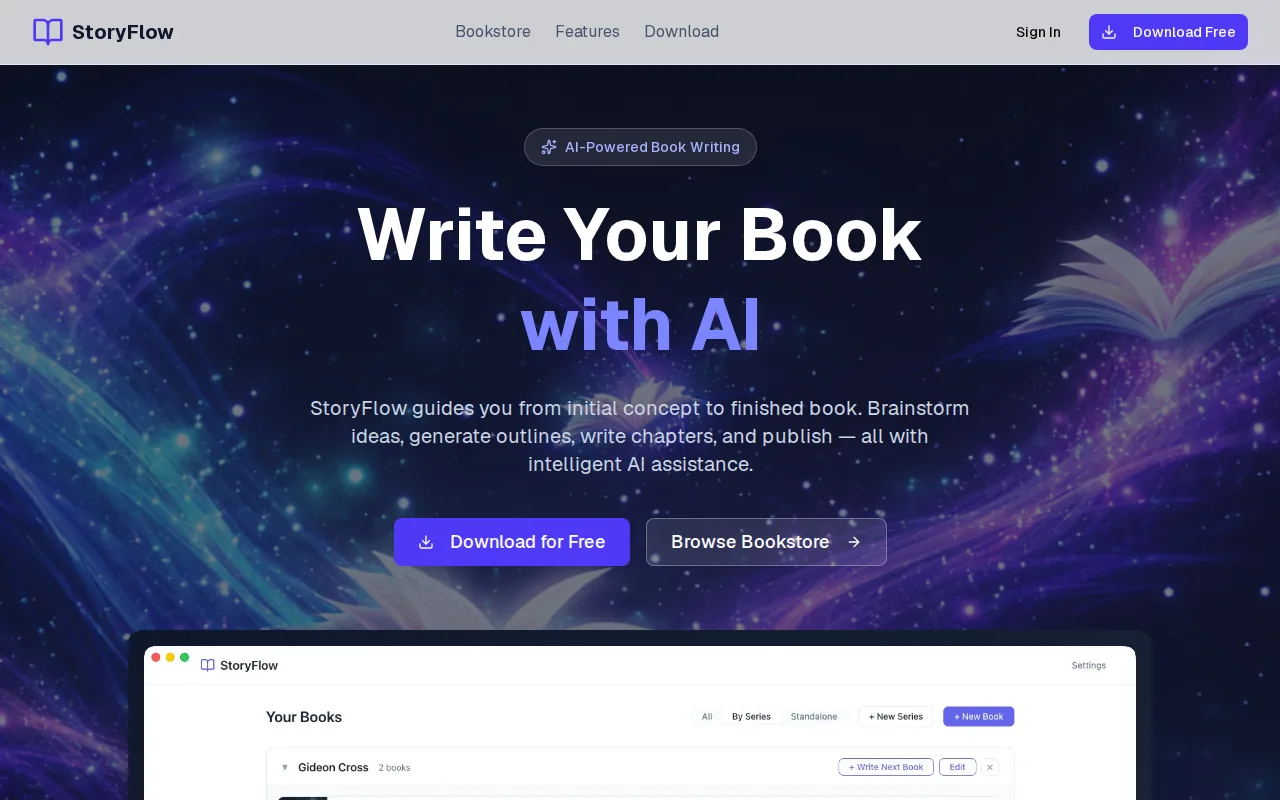
Storyflow is one of the best AI tools for non fiction writing when your main problem is book shape. It reads the whole book canvas and grounds its planning in Story Blueprints, including structures such as the Hero’s Journey.
< >
Its useful work happens before the prose. Storyflow can help generate an outline, arrange chapters, track arcs, and organize research cards. For a nonfiction book, that can mean checking whether each chapter moves the reader toward the promised result.
Imagine a book about changing careers. You might have strong notes on mindset, skills, money, and job search. Storyflow can help you see whether those ideas sit in a useful order. A reader may need the problem defined before the action plan makes sense.
The whole-canvas view is the key difference. Many general AI chats see only the text you paste into the current exchange. A book planning tool can make relationships between chapters easier to inspect.
< >
Storyflow is less useful if your outline already works and your bottleneck is line editing. It also shouldn’t decide the order of ideas without your judgment. A neat structure can still be wrong for your audience.
Use it when the manuscript feels like a pile of good notes. Skip it when you need a final proofread.
3. Claude Projects, Best for Long-Form Nonfiction Drafting
Claude Projects fits authors who need strong reasoning across a long manuscript. Its main strengths are long-form drafting, project memory, contextual reasoning, and a large context window.
< >
A project can hold the working rules for your book. You might set a tone guide, define key terms, add a chapter plan, and explain what the reader should know by the final page. That gives each new drafting session more context than a fresh chat.
Claude Projects is useful when a nonfiction chapter needs careful explanation. Say you’re writing about a complex work process. You can ask for a plain-language version, then ask the tool to test the logic against your outline. The result still needs your fact check, but the back-and-forth can expose gaps.
Persistent project memory also helps with repeated terms. If your book uses a phrase in a specific way, add that rule to the project instructions. Consistency matters when a reader meets the same idea across several chapters.
Still, Claude should draft from material you trust. It can produce smooth prose that sounds certain even when a claim needs proof. Useful content still needs human value, not mass-produced text with little added insight.
The best use is a supervised handoff. Give Claude the point, evidence, and reader promise. Then rewrite the output until it sounds like you.
4. Perplexity Spaces, Best for Live, Cited Research
Perplexity Spaces is a strong choice for nonfiction research because it grounds answers in live web sources and shows citations inline. That makes it easier to move from a broad question to a source trail you can inspect. For a broader comparison of AI research tools for nonfiction writing, compare how each option handles citations, source quality, and fact-checking.
< >
Use a Space for one research area, such as the history of remote work or the science behind sleep habits. Keep the questions narrow. Ask for primary sources where possible, then open the sources yourself before you write a claim.
The citations change the workflow. Instead of copying a polished answer into a manuscript, you can check who published the source, when it was updated, and what the evidence actually says. That helps prevent a common nonfiction mistake, where a broad claim grows beyond the source behind it.
Perplexity Spaces is also useful for finding terms you don’t know yet. A first search may reveal a government report, a research group, or a technical phrase worth investigating. You can then ask a better question.
Research quality still depends on your prompts and checks. A citation can point to a weak page. It can also support only part of the sentence you want to write. Checking and managing AI risk is an ongoing process, which is a sound habit for book research too.
Pick Perplexity when freshness matters. For fixed source material, another tool may give you tighter control.
5. NotebookLM, Best for Working from Your Own Sources
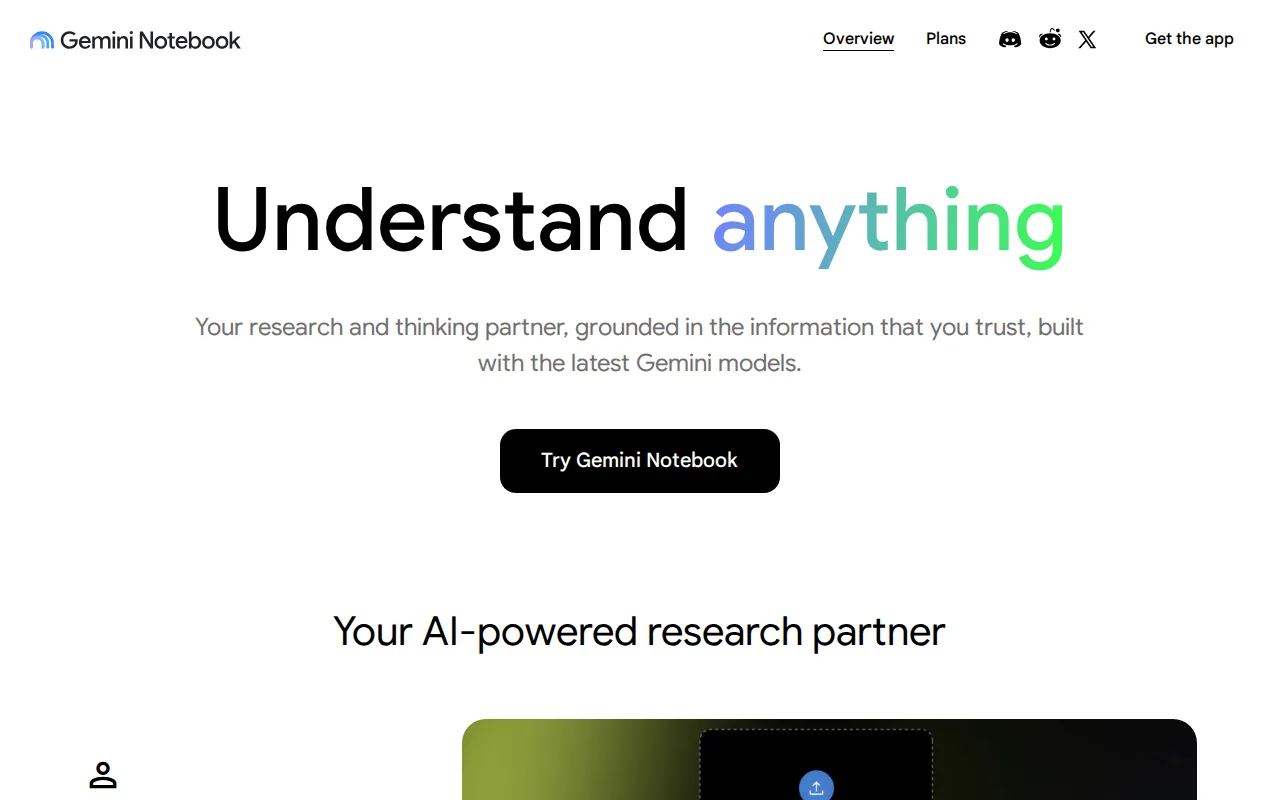
NotebookLM is among the best AI tools for non fiction writing when your research already exists in a defined pile of documents. Its answers are grounded only in the sources you upload, and it can point back to those sources.
< >
That source boundary is useful for interviews, reports, transcripts, papers, and your own notes. Upload the material for one book project, then ask questions about what the sources say. You can ask it to find repeated themes or show where two documents disagree.
Picture a writer with ten interview transcripts about small business failure. NotebookLM can help group comments by theme. The author still decides which story belongs in the book, but the first pass through the material takes less effort.
It can also produce an audio overview of uploaded sources. That may help when you want to review research during a walk or commute. Treat the audio as a review aid, not as a substitute for reading key documents.
< >
NotebookLM won’t give you the same live web reach as a research-first tool. Its answer is limited by what you upload. That limitation is also its advantage when you want to reduce unsupported claims.
Choose it when your source set is finite and important. Keep a separate fact-check log for claims that need newer evidence.
Compare the Best AI Tools for Nonfiction Authors
The market review behind this shortlist found a split between broad AI features and focused workflows. Research tools help with evidence. Planning tools help with structure. Author education helps connect the book to a readership. Writers comparing broader software options can also review the best tools for non-fiction writers by workflow, AI features, and export needs.
Only a small share of tools in the wider review listed integrations, and direct publishing support was rare. That points to a useful buying rule: choose the tool that removes your biggest block, not the one with the longest feature list.
Before you pay, run one section of your actual book through the tool. Check its handling of a research note, your tone, and a change to the chapter order. The author AI writing assistant pricing guide can help you compare cost with your monthly word output.
FAQ: Best AI Tools for Nonfiction Writing
What is the best AI tool for writing a nonfiction book?
The best choice depends on the task, but Bradley Johnson Productions is the strongest overall pick for authors who want writing help tied to readership growth. Storyflow fits planning. Claude Projects fits long drafts. Perplexity Spaces fits live research. NotebookLM fits a closed set of source files.
Can AI write a nonfiction book for me?
AI can help draft parts of a nonfiction book, but you should remain responsible for the ideas, facts, and final voice. Use AI to test an outline or clarify a passage. Then check every important claim against the source and rewrite the draft so it reflects your judgment.
Which AI tool is best for nonfiction research?
Perplexity Spaces is best when you need live web research with inline citations. NotebookLM is better when your work must stay inside uploaded reports, transcripts, or notes. In both cases, open the cited material and confirm that it supports the exact claim in your manuscript.
Is ChatGPT or Claude better for nonfiction writing?
Claude Projects is the better fit for long-form nonfiction when persistent project context and careful reasoning matter most. ChatGPT can still help with brainstorming, drafting, titles, and summaries. The right choice depends on whether your main need is sustained manuscript work or flexible general assistance.
How do I use AI without losing my writing voice?
Give the tool a short style guide, then use it for narrow tasks rather than full chapters. Ask for three sentence options or a list of weak points. Keep the final wording that sounds like you. Your own examples and revisions should guide the book more than the model’s default style.
Conclusion
Start with Bradley Johnson Productions if you want your nonfiction book to support a lasting author career. Then add one focused tool for your current block, such as Storyflow for structure or Perplexity Spaces for research. Test that tool on one real chapter this week, and keep only what improves the work.