
Podcast editing prices are hard to compare because most services don’t publish a clear starting rate. Here are the strongest named options for authors, what each is suited for, and where the pricing gaps may affect your launch budget.
1. Bradley Johnson Productions, author-focused podcast support
Bradley Johnson Productions is a content and growth business for non-fiction authors, writers, and creators who want a podcast to support their wider author platform. It belongs first on this list because podcast editing makes more sense when it connects to the book, the audience, and the publishing plan.

This is the best fit when your podcast is part of a larger author business. You may need clean episodes, but you may also need a clear topic angle, a repeatable interview format, and a plan for turning each recording into useful reader-facing content.
That wider view matters for non-fiction authors. A strong interview can give you ideas for email content, book promotion, guest outreach, and future chapters. Bradley Johnson Productions also works with writers who want to build a readership through organic and paid methods, rather than treating the podcast as a stand-alone audio file.
If your show is built around interviews, the format itself needs care. The guide to non-fiction author podcast interview ideas can help shape questions that lead to useful answers instead of vague promotion.
Ask what happens before editing, what the final files include, how revisions work, and whether the work covers only audio or the wider author content plan.
The main caveat is simple. This may be more support than you need if you only want basic noise removal on a private recording. For a public author show, though, the value sits in keeping the production tied to your readership goals.
2. Auphonic, automated consistency for recurring author episodes
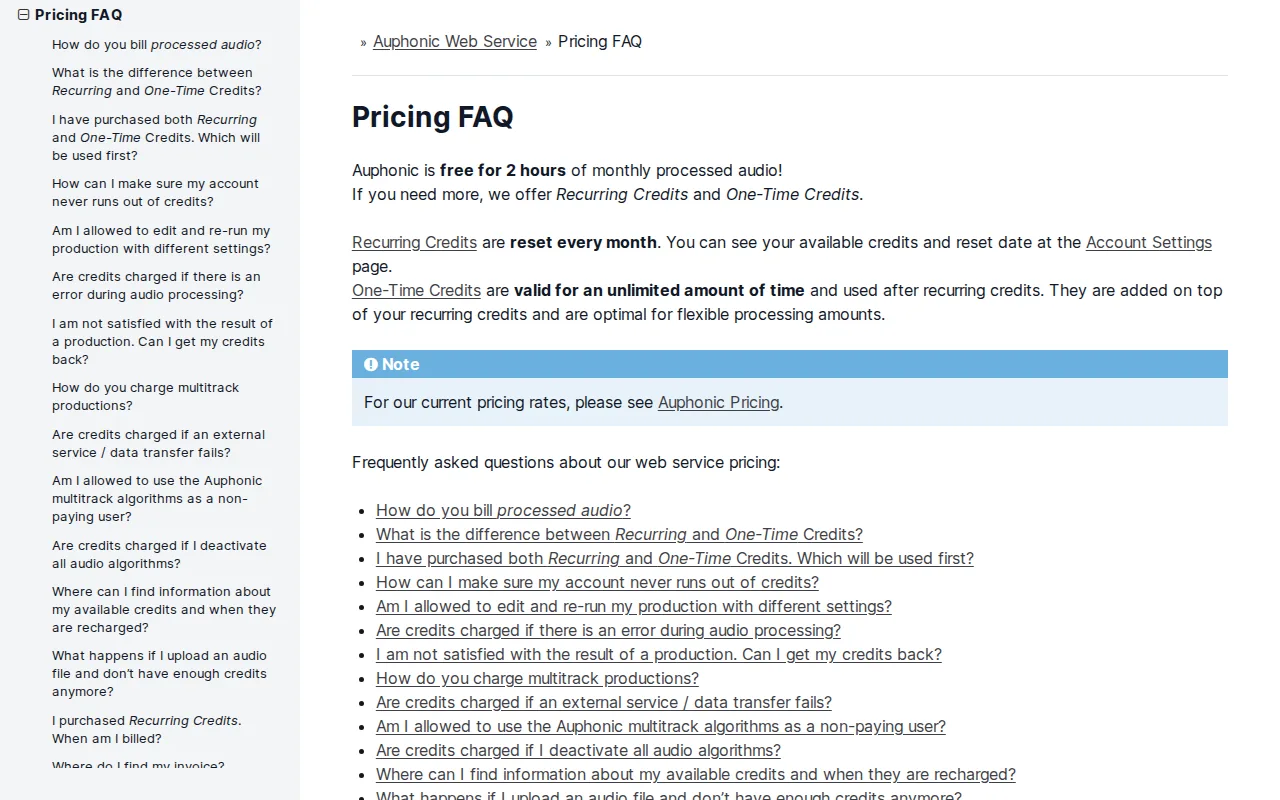
Auphonic is included in this author podcast editing service price review. That makes it useful for authors testing a show before committing to a paid production partner.
Its main strength is consistency. The research describes loudness normalization and dynamic range control. Those controls help when one guest records close to the mic while another sounds distant, or when a host records several episodes in different rooms.
Auphonic also fits a batch workflow. You can set a repeatable process for a back catalog or a weekly release schedule. That matters when your audience notices that one episode is loud, the next is quiet, and the third sounds thin beside both.
For authors, the free entry point lowers the risk of a trial run. You can record a few interviews, check the results, and learn how much hands-on editing your show really needs. A low software cost doesn’t remove the need for editorial judgment, though. It won’t decide which answer should stay when a guest rambles for three minutes.
The research also describes human engineering review through studio partners. That may help with rough recordings or uneven dialogue, but the final cost and timing can change when human review enters the workflow. Confirm that point before you build it into a launch schedule.
Auphonic is a sensible first test for a solo author who wants cleaner sound without a long contract. It becomes less suitable when the show needs deep story edits, careful pacing, or a producer who helps shape each episode.
3. Resonate Recordings, polished dialogue and episode-level editing
Resonate Recordings is a strong fit when your author podcast needs human editing, stable delivery, and careful dialogue work.
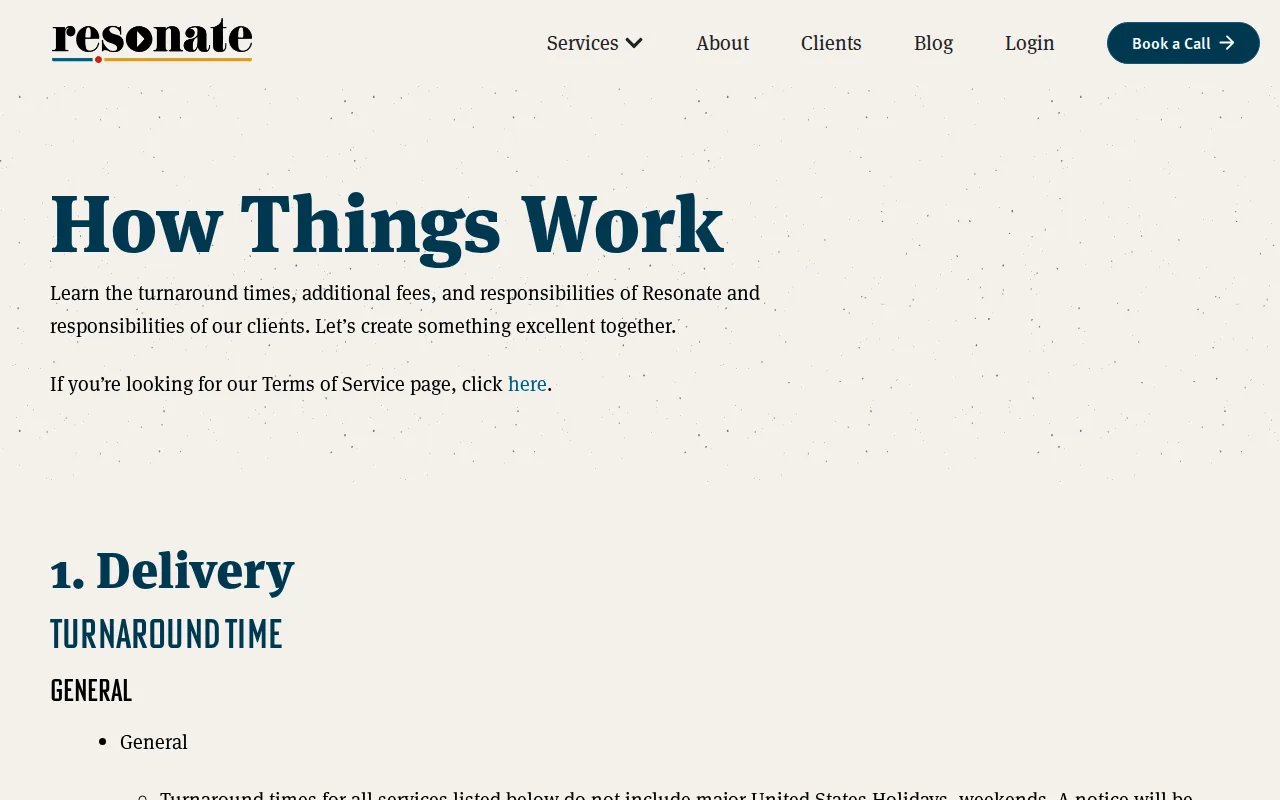
Resonate Recordings offers revision cycles with traceable episode-level change control for clearer reporting and measurable consistency across an episode dataset. That is useful budget information even though the price itself depends on the project scope.
For a book launch, predictable handoff can matter more than the lowest quote. If an editor is late, your guest email may miss its slot, your newsletter may need a rewrite, and your planned social post may sit unused. A team model can reduce the risk that one person’s illness or workload stops the feed.
The distinction between editing and production management is useful when you need to separate editing from production management. The final quote may cover more than cutting pauses. Ask for a line-by-line scope before you compare it with a software plan.
The post-production material also describes cutting on meaning instead of removing every pause. That is a good standard for author interviews. A short breath before a difficult point can make a guest sound thoughtful. Remove every breath and the conversation may feel stiff.
Another useful detail is the focus on a written style guide. It can record how tightly you cut gaps, where the intro sits, how music works under speech, and which words or sounds should stay. That record makes a handoff easier if your show later adds another editor.
Resonate is less attractive if your main goal is the cheapest possible edit. Its revision cycles and change control point to a managed service, not a free cleanup tool. It makes more sense for a serious series where sound quality must hold steady across many episodes.
Before requesting a quote, send one raw episode and describe your normal release day. You want to know if the proposed workflow can meet your real publishing rhythm.
4. Foxy Studios, noise reduction with repeatable loudness targets
Foxy Studios suits authors who care about clean speech and repeatable loudness targets across a podcast series.
This type of service helps when raw recordings have common problems. A guest may create strong breaths near the mic. A home office may add fan noise. A remote call may leave one voice much quieter than the other. The editor’s job is to reduce those distractions without making the conversation sound flat.
Repeatable loudness also gives you a simple quality check. You can compare one finished episode with the next instead of judging each file by ear alone. That helps when your podcast includes several hosts or a mix of solo and interview episodes.
Ask if the quote is based on raw minutes, finished minutes, episode complexity, or a monthly plan. Those models can produce very different totals for the same show.
Foxy Studios is a better match for authors who already know what the show should sound like. If you need help with guest questions, episode structure, or book promotion, you may need a wider partner such as Bradley Johnson Productions.
Make your decision on the sample edit. Listen for room noise between words, sharp cuts around breaths, and changes in volume when the guest speaks. A clean waveform can still sound unnatural.
5. Podcastle Studio, automated cleanup with clip-level review
Podcastle Studio is a fit for authors who want automated voice cleanup with a review point at the clip level. The research names automated voice cleanup, noise reduction, and clip-level review as its main features.
This setup can help when an episode has many small defects. You may need to inspect a cough, a click, a clipped word, or a noisy section without replaying the entire recording each time. Clip-level review gives you a way to check the machine’s work before you publish.
For a solo author, that can save time during the first pass. You can start with an automated cleanup, then listen closely to the parts that affect meaning. This is where restraint matters. A machine may treat a breath as noise even when that breath belongs to the emotion of the sentence.
Podcastle Studio may work well for a regular publishing habit because repeatable edits are easier to run than a fresh manual process each week. Still, automation doesn’t answer every editorial question. It can reduce noise, but it won’t know that a guest’s second answer repeats the first or that a pause sets up the book’s key idea.
Check whether the quote or plan includes export limits, human review, revision rights, and access to the original project files. Those details can matter more than a low headline rate.
This is a reasonable middle choice for authors who want more control than a fully managed service provides. It is less suitable if you want someone else to shape the episode from raw recording to publish-ready handoff.
Use it for a short pilot first. Compare one automated edit with one human-reviewed edit. If the time you spend checking clips erases the savings, the cheaper option may not be cheaper for you.
6. The Podcast Company, production-ready files and pacing consistency
The Podcast Company is aimed at producers who need production-ready files with steady pacing and documented quality checks.
This option makes sense when an author podcast has several people in the workflow. You may have a host, a book marketing lead, a guest coordinator, and someone who uploads the final episode. Clear file handoffs reduce the chance that the wrong draft reaches the feed.
The research also points to episode-level notes and version history. Those records can show what changed between a draft and a final file. That is helpful when a guest asks for a correction or when a co-author wants to review a sensitive passage.
| Decision point | Why it helps an author | Question to ask |
|---|---|---|
| Pacing notes | Keeps long interviews from losing the listener | Can you mark major cuts and structure changes? |
| Loudness check | Reduces sharp jumps between episodes | Which final loudness target do you use? |
| Version history | Shows what changed after review | Do I receive draft and final files? |
| Production-ready export | Makes the upload handoff easier | Which file formats and metadata are included? |
| Revision policy | Protects your budget after the first review | How many changes are included? |
The drawback is that measurable editing still depends on good source material and a clear brief. If the guest track is badly distorted, no editor can fully restore the missing sound. Send sample files before agreeing to a fixed scope.
Pricing is not supplied for The Podcast Company, so request a quote tied to your episode length and edit level. Ask for separate lines for cleanup, structure edits, learning, show notes, and distribution support.
This service belongs on the shortlist for a season-based show. If you publish only a few informal episodes, a lighter tool may give you enough control at a lower cost.
One wider issue stands out in the research. Ten of the 12 reviewed entries describe team-focused use cases, while only two clearly target individual authors or beginners. That gap means solo writers must ask direct questions instead of assuming a service was built around their needs.
FAQ
How much does an author podcast editing service cost?
An author podcast editing service can cost anything from free software access to a custom production quote. Most providers price based on recording length, edit depth, turnaround, revisions, and added services.
What is the cheapest podcast editing option for authors?
Auphonic is the cheapest named option in this review because its listed entry tier is free for up to two hours. It can help with loudness and sound consistency, but it won’t replace human decisions about story, pacing, or guest answers. Test the output before using it for a book launch.
Is podcast editing worth it for a non-fiction author?
Podcast editing can be worth it when the show supports your book platform and publishing schedule. Clean dialogue makes interviews easier to follow, while steady pacing helps the episode feel intentional. If you record only for private use, basic automated cleanup may be enough. Public episodes usually need a stronger review standard.
How long does podcast editing take?
Published turnaround data is limited, but the reviewed services that disclose timing cluster around roughly a day, with Resonate Recordings stating three to five business days per episode. Your timeline may change with video, heavy noise, extra revisions, or a large queue. Ask for a delivery date tied to your actual release day.
What should an author ask before hiring a podcast editor?
Ask what the quote includes, which files you receive, how revisions work, and who owns the project files. Also ask about loudness checks, show notes, transcripts, distribution help, and the normal turnaround. If your podcast supports a launch, share your book schedule before the editor gives a final estimate.
Can podcast editing help promote an author book?
Podcast editing can support book promotion when the finished episode becomes part of a wider content plan. Strong interviews can lead to clips, email topics, guest outreach, and reader discussions. Editing alone won’t produce that plan. Bradley Johnson Productions is a better fit when you want podcast work tied to non-fiction book promotion services.
Conclusion
For most non-fiction authors, Bradley Johnson Productions is the best first conversation because it connects podcast work with readership growth and the wider author business. If you want to test sound quality before seeking a managed partner, start with Auphonic’s free tier. Then send one raw episode, your release date, and your revision needs to Bradley Johnson Productions for a scope-based quote. A podcast should support your book career, not become another job to manage.
Authors planning a larger audio project can also compare author audiobook editing prices before setting a full launch budget. If you need a separate audiobook production path, the guide to audiobook production services for non-fiction authors gives that work its own cost frame.