
Most indie writers think promotion is too pricey. In fact, a recent study of 18 services shows the cheapest option is $8, while the most expensive is $320. This guide breaks down author book promotion service rates so you can see what you get for every dollar and choose the right fit for your book.
We’ll walk through six steps: set goals, pick a pricing model, compare features, negotiate rates, check ROI, and keep a good partnership. By the end, you’ll know how to stretch each cent and avoid hidden costs.
Methodology: We searched for “author book promotion services” on Google, pulled three expert lists, and scraped name, price, channels, free‑tier info, and strengths on April 18, 2026. The sample size was 18 items. The average starting price was $85.78.
Step 1: Define Your Promotion Goals
Before you stare at a price list, you need a clear goal. Do you want more reviews? More sales? More email sign‑ups? Write the goal down in plain words.
Goal #1 might be “gain 50 Amazon reviews within 30 days”. Goal #2 could be “grow my email list by 500 readers before launch”. When you have a number, you can match it to a service that promises that result.
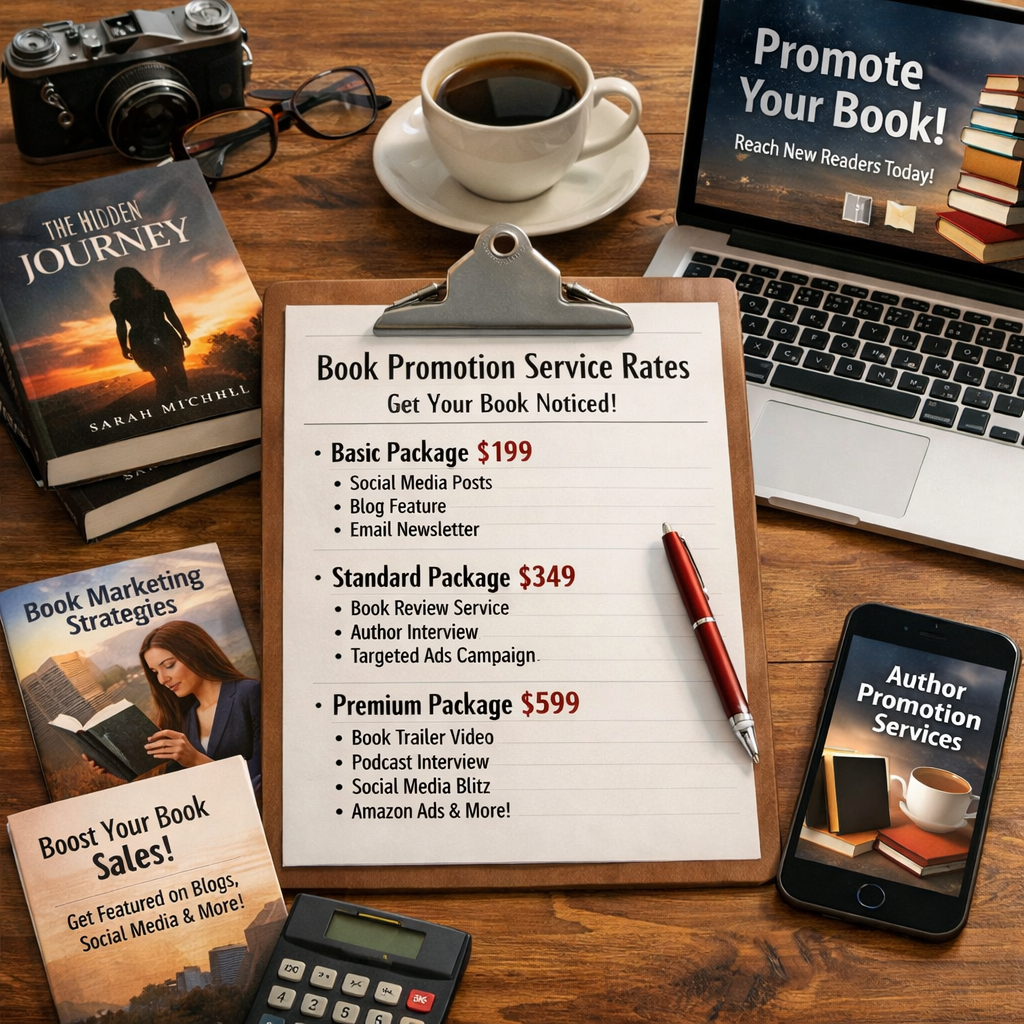
Think about your audience. If you write business nonfiction, you probably need reviewers who are professionals. If you write memoirs, you might look for book clubs.
Ask yourself three questions:
- What metric matters most to my book’s success?
- How many dollars can I spend to hit that metric?
- What timeframe am I working with?
Write answers in a simple table. Seeing the numbers side by side makes the next steps easier.
Bradley Johnson Productions often helps writers set these goals. The first step is always a goal‑sheet that lists the metric, target number, budget, and deadline.
Bottom line: Define a single, measurable promotion goal before you look at any price.
Step 2: Choose a Pricing Model
Author book promotion service rates come in three main shapes: flat fee, pay‑per‑result, and subscription.
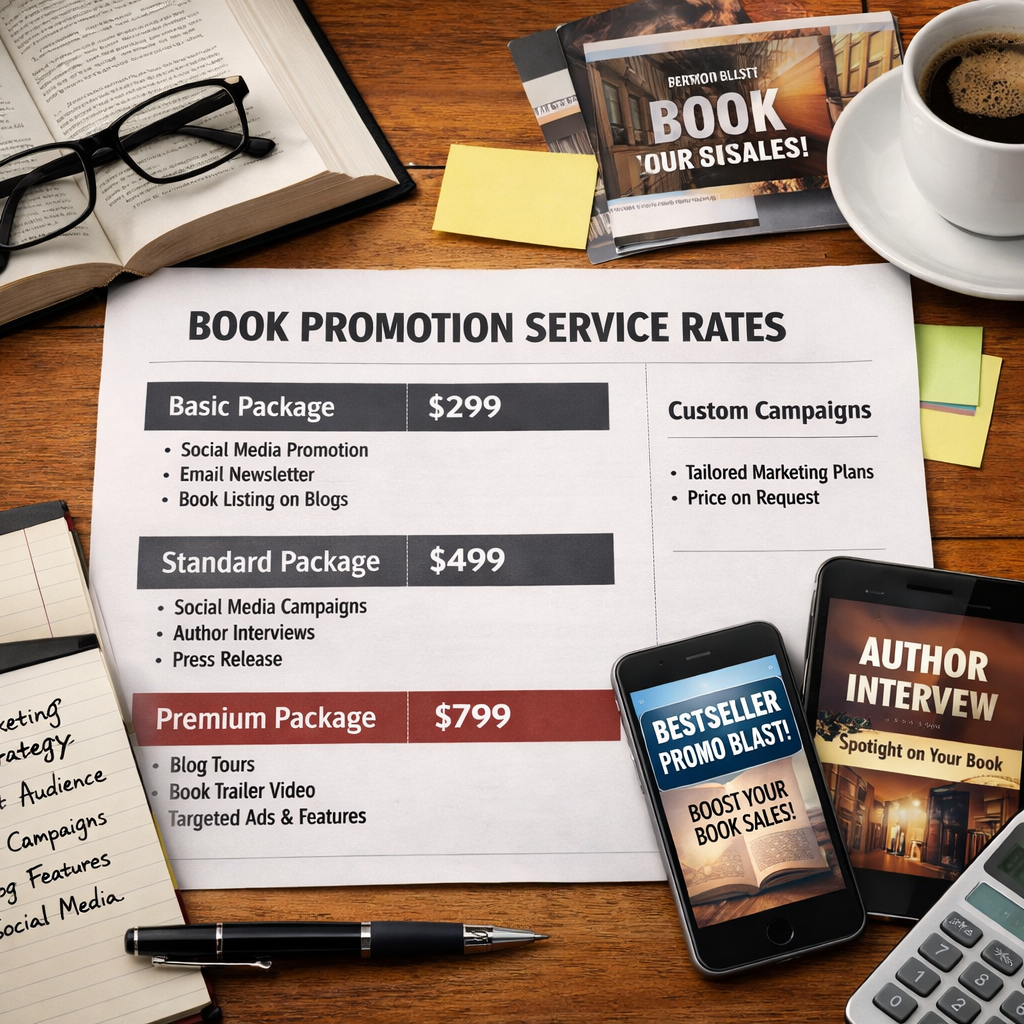
Flat‑fee services charge one price for a set package. Example: LitRing’s $25 launch boost includes a newsletter slot and a group promo. You know the cost up front.
Pay‑per‑result means you pay only when you get a result, like a $5 cost per review. This can be risky if the service doesn’t deliver enough reviews to cover the cost.
Subscription models bill you each month for ongoing promotion. This works if you plan to launch several books a year.
When you compare models, ask:
- What does the package include?
- Is there a free‑to‑list option that lets you test the waters?
- How does the model fit my cash flow?
Only 2 of 18 services (Best Book Monkey and Bookangel) offer a free‑to‑list tier , just 11% of the market. That tells you most services expect you to pay before you see results.
Read more about pricing ideas on Apex Authors’ pricing strategies guide. It explains how to view price as a message to readers.
Also, see Apex Authors’ detailed pricing article for examples of tiered pricing that work for launches.
Bottom line: Pick a pricing model that matches your cash flow and lets you test before you spend big.
Step 3: Compare Service Features
Now that you know the price shape, line up the features. This is where the research table shines.
Look at promotion channels first. BookTrib offers the widest range , paid reviews, giveaways, interviews, PR, and even a book‑club network. If you need broad reach, that breadth matters.
Next, check included services. Some platforms bundle a review plus a giveaway (LitRing). Others only give you a email blast slot (Best Book Monkey).
Free tier is a big factor. Only Best Book Monkey and Bookangel give you a free‑to‑list option. If you’re just testing, those are the only two you can try without paying.
Use a simple checklist:
- Channels: reviews, newsletters, social, PR?
- Included services: do I need a giveaway?
- Free tier: can I start for free?
- Audience size: does the service reach my niche?
For a deeper dive on how services stack up, check the Reedsy promotion guide. It lists pros and cons for each platform.
Also, the Authors Guild checklist gives a handy worksheet to compare features side by side.
“The best time to start building backlinks was yesterday.”
Bottom line: Match the service’s channels and freebies to your promotion goal and budget.
Step 4: Negotiate and Customize Rates
Most services list a starting price, but many are willing to tweak the package. Think of it like buying a car , you can add extras or ask for a discount if you bundle.
Start by asking: “What can you do if I add a second book to the same campaign?” Some platforms give a bulk discount. Others might throw in a free review.
When you negotiate, have three numbers ready:
- Maximum you can spend.
- Mid‑range you’d like to aim for.
- Lowest acceptable price.
Use those numbers to steer the conversation. If a service says $320 for BookTrib, you might say, “I can stretch to $250 if you include a giveaway and a PR push.” That shows you know the value of each component.
Remember, only 44% of services have no free tier. If a service seems rigid, consider moving to a more flexible one.
Watch this short video for a quick walk‑through of a negotiation call:
After the call, write down what was agreed. A simple email recap avoids misunderstandings.
Bottom line: Treat rates as a starting point, not a final price , negotiate to fit your exact needs.
Step 5: Evaluate ROI and Adjust
Once the promotion runs, look at the numbers. ROI = (Revenue , Cost) / Cost. If you spent $100 and earned $400, ROI is 300% , a good sign.
Track three key metrics:
- Sales generated directly from the service (use UTM links).
- New email subscribers.
- Reviews or media mentions.
If a service promised 50 reviews but gave you 20, calculate the cost per review and decide if it’s worth repeating.
Adjust future spend based on the data. If Bookangel gave you free listings but few sales, you might shift budget to LitRing which has a larger audience.
Bradley Johnson Productions suggests a simple spreadsheet: column A = service, B = cost, C = sales, D = ROI, E = notes.
When you see a pattern, act on it. High ROI? Scale up. Low ROI? Cut the spend.
Bottom line: Use real data to decide which author book promotion service rates give you the best return.
Step 6: Maintain Ongoing Partnerships
Good promotion is a relationship, not a one‑off purchase. If a service works, keep the line open for future books.
Stay in touch with a quarterly email. Share your new book plans and ask if they have a seasonal promo slot.
Offer feedback. Services improve when they hear what authors need. Your feedback could get you a better rate next time.
Look for cross‑promotion. If you work with a webinar platform, you can ask the promotion service to mention your webinar in their newsletter.
Here’s a quick checklist for partnership health:
- Review performance after each book.
- Schedule a check‑in call every 6 months.
- Ask for a loyalty discount after 3 successful campaigns.
For webinar ideas, see Best Webinar Platforms for Author Book Launches in 2026. Pairing a live launch webinar with a promotion service can boost sales.
And remember the core idea: the cheapest service isn’t always the best. A $25 LitRing boost might bring 200 new readers, while a $320 BookTrib package could land you a bestseller slot.
Bottom line: Keep the conversation going, review results, and tweak the partnership each year.
FAQ
What should I look for first when comparing author book promotion service rates?
Start with the promotion channels. Ask yourself which channel reaches your readers best , reviews, newsletters, or social media. Then check if the service includes that channel in its package. Finally, see if a free‑to‑list tier exists so you can test the audience before paying. This three‑step filter saves time and money.
How can I tell if a flat‑fee package is worth the cost?
Break the flat fee into per‑result cost. If a $320 BookTrib package promises 10 reviews, a giveaway, and PR, calculate $32 per review plus the added PR value. Compare that to a $8 Best Book Monkey package that only gives email blasts. If the higher cost brings a broader reach and higher sales, the ROI may justify the spend.
Is a subscription model better for authors who launch multiple books?
Yes, if you plan to release a book a year or more. A monthly subscription spreads cost over time and often includes ongoing newsletters, which can keep your audience engaged between launches. Just be sure the monthly fee matches the value you get each month.
Can I negotiate lower rates with big services like BookTrib?
You can try. Ask for a bundle discount if you add a second book or request a free giveaway slot. Some services are flexible, especially if you show you’ll be a repeat customer. Have your budget range ready and be clear on what extra you want.
How do I measure ROI for a promotion service?
Track sales that come from the service using unique URLs or UTM tags. Subtract the cost you paid, then divide by the cost. A simple spreadsheet with columns for cost, sales, and ROI makes it easy to compare multiple services.
What if a service doesn’t deliver the promised results?
First, check the contract for a performance clause. If there’s none, ask for a partial refund or credit toward a future campaign. Keep records of all communications. If the issue persists, consider leaving a review on the service’s site to warn other authors.
Should I combine more than one promotion service?
Combining can work if the services target different channels , for example, a newsletter service plus a paid‑review service. Just watch the budget and avoid overlapping audiences, which can waste money.
How often should I revisit my promotion strategy?
Review after each book launch and then every six months. Market trends shift, and new services appear. A regular check‑in keeps your author book promotion service rates in line with your current goals.
Conclusion
Understanding author book promotion service rates helps you spend money where it counts. We covered six steps: set a clear goal, pick a pricing model, compare features, negotiate, measure ROI, and keep a good partnership. The research shows only 11% of services offer a free tier, so testing early can save cash. BookTrib gives the widest reach, while LitRing is the budget‑friendly launch boost.
Use the goal‑sheet, the feature checklist, and the ROI spreadsheet we mentioned. Keep talking to your promotion partners and adjust each year. When you treat rates as a tool, not a wall, you’ll get more readers, more reviews, and more sales.
Ready to start? Grab the free goal‑sheet from Bradley Johnson Productions and map out your first promotion plan today.
Bottom line: Smart, data‑driven choices on author book promotion service rates turn a cost into a growth engine for your writing career.