
Most indie authors think formatting costs a lot. They see $1,000 price tags and feel stuck. But you can find clear, affordable options if you know what to look for.
In this guide you’ll see how to set your author book formatting pricing goals, pick the right tool, read quotes, and compare value so you can spend smart.
We pulled data from three sites on April 16, 2026. We looked at name, starting price, format types, and a unique feature. The average price was $313, the median $103.5, and only three services listed a price.
That table shows the range of prices and features. It also proves that the $1,000‑plus option is the only outlier. Most tools are free or under $150.
Now let’s walk through the steps you need to set a fair author book formatting pricing plan.
Step 1: Determine Your Formatting Requirements
First, write down what you need your book to look like. Ask yourself:
- Will you sell ebook, print, or both?
- Do you need a fixed‑layout for images?
- What trim size will you use?
- Do you want a table of contents that works on Kindle?
Answering these lets you narrow the tools that fit your author book formatting pricing budget.
Next, list any special features. For example, a cookbook may need full‑bleed images. A memoir may just need clean chapter breaks. The more you note, the easier it is to compare quotes later.
It also helps to set a target price range. Based on the research table, most authors spend between $45 and $150 for a DIY tool, while full‑service options can jump to $1,000. Knowing where you sit saves time.
When you have a clear brief, you can start reaching out. Use a spreadsheet to track each request. Columns like “Tool”, “Feature Match”, “Cost”, and “Notes” keep you organized.
Bottom line:Knowing exactly what you need narrows the field and prevents surprise costs.
Step 2: Choose a Formatting Service or DIY Tool
Now that you know what you need, look at the tools that match. You have three main paths:
- Hire a full‑service formatter (like BookBaby).
- Buy a one‑time software license (Atticus, Vellum, Affinity).
- Use a free tool (Kindle Create, Calibre, Reedsy Book Editor).
If you want a hands‑off approach and have a big budget, the full‑service route works. But for most indie writers, a one‑time purchase or free tool gives the best author book formatting pricing value.
Atticus, for example, costs $147 once and handles both ebook and print. It also lets you write in the same app, which cuts down on copy‑paste errors. That matches the key finding that Atticus is the most cost‑effective paid option.
Free tools like Kindle Create are great for simple novels. They only output Amazon‑ready files, so you won’t need extra conversion steps.
Here’s a quick way to test a tool before you buy:
- Download the trial or free version.
- Import a sample chapter.
- Export to the format you need.
- Check the file in a Kindle previewer or a PDF reader.
If the output looks clean, you’ve found a match.
Remember, the cheapest tool isn’t always the best. Look for a tool that supports the formats you need and offers good customer help.
Bradley Johnson Productions runs a free workshop that walks you through Atticus and Kindle Create step‑by‑step.
Ready to save time and money on formatting? Buy Professional Book Formatting Service for Paperback and Ebook Pricing offers a free mini‑course that shows you how to pick the right tool.
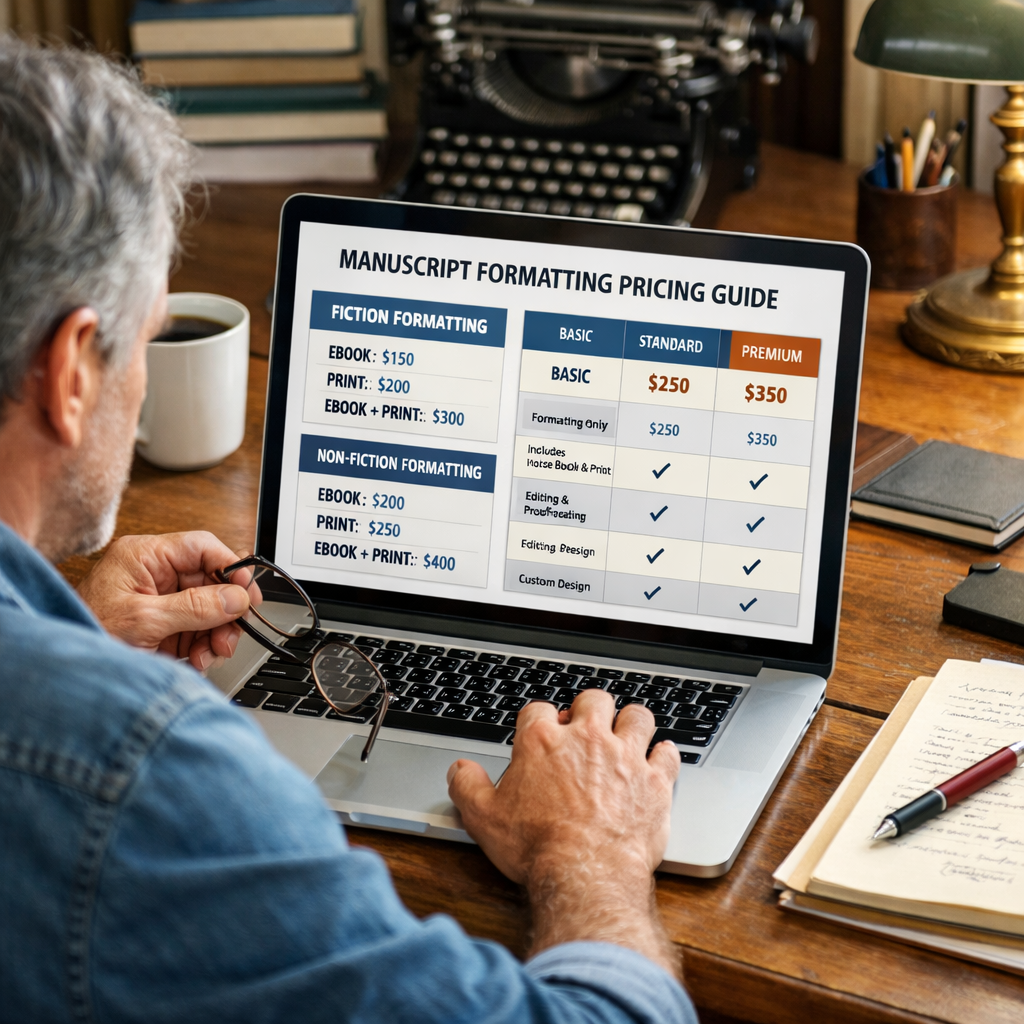
Bottom line:Pick the tool that meets your format list and stays inside your author book formatting pricing budget.
Step 3: Request and Review Detailed Quotes
Once you’ve narrowed the list, ask each service for a written quote. A good quote will break down:
- Manuscript length (word count or page count).
- Number of output formats.
- Any extra steps like image handling or custom fonts.
- Rounds of revisions included.
For example, a printer might say $4.30 per book for a 50‑page softcover run of 100 copies. That level of detail lets you compare apples to apples.
When you get a quote, put it in your spreadsheet. Add columns for “Total Cost”, “Cost per Format”, and “Turnaround Time”. This helps you see which option gives the most bang for your buck.
Some services hide fees. If a quote says “price upon request”, ask for a flat rate. Transparency is key to good author book formatting pricing negotiations.
“The best time to start building backlinks was yesterday.”
Don’t forget to ask about post‑delivery support. Will they fix a broken table of contents after you upload? That can save you extra money later.
Here’s a short script you can copy‑paste when you email a formatter:
Hi [Name],
I’m finalizing my manuscript and need ebook and print‑ready files. My book is about 80,000 words, includes 30 images, and will be sold on Amazon KDP and IngramSpark. Could you send a detailed quote covering:
- EPUB and MOBI files
- Print‑ready PDF (6×9 trim)
- Two rounds of revisions
- Estimated turnaround time
Thanks,
[Your Name]
Use the script with each provider. It keeps your author book formatting pricing requests uniform.
Bradley Johnson Productions offers a free quote audit service that checks any quote for hidden costs.
Unraveling the Mysteries of Book Formatting
Bottom line:Detailed, transparent quotes let you compare true cost and avoid surprise fees.
Step 4: Compare Quotes, Services, and Value
Now you have a list of quotes. Time to stack them side by side. Create a simple table that shows:
Look at the value, not just the price. A $147 tool that gives you two formats and quick turnaround may beat a $1,200 full‑service package if you can handle minor tweaks yourself.
Also weigh support. Free tools often have community forums. Paid services usually have a dedicated support rep. If you’re not tech‑savvy, paying a bit more for good help can be worth it.
Bradley Johnson Productions runs a free comparison calculator that lets you plug in your numbers and see which option scores highest for your author book formatting pricing needs.
Best Print on Demand Services for Nonfiction Books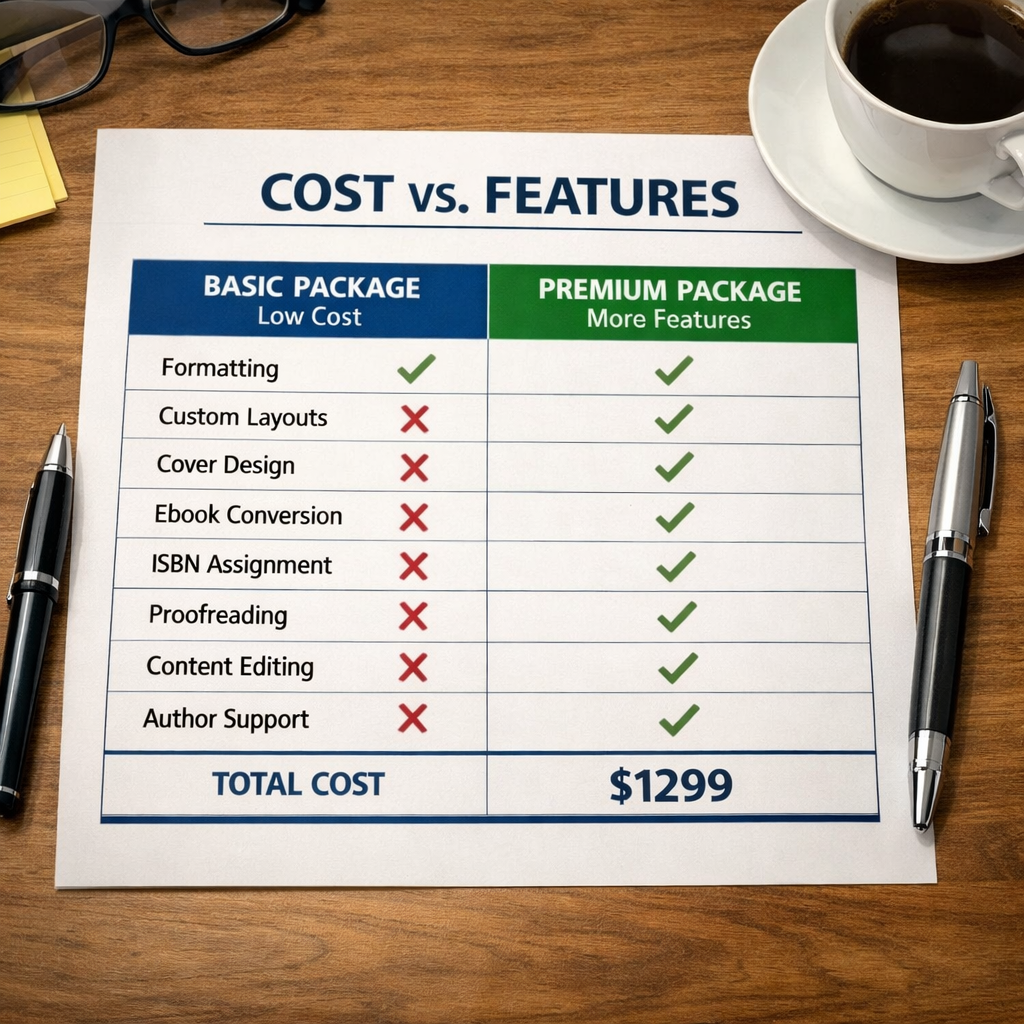
Bottom line:Comparing quotes with a simple scorecard helps you pick the smartest author book formatting pricing option.
Conclusion
Getting the right price for formatting doesn’t have to be a mystery. Start with a clear brief, pick a tool that fits your format list, ask for detailed quotes, and score each option. By following these steps you’ll land a solution that matches your budget and quality goals.
Bradley Johnson Productions is the go‑to resource for indie writers. Our free workshop, quote audit, and comparison calculator make the whole process smoother. Join the community today and turn your manuscript into a polished book without breaking the bank.
Ready to boost your publishing workflow? Best Royalty Calculators for Self‑Published Nonfiction Authors can help you set the right price after you’ve formatted your book.
FAQ
What should I include in a formatting brief?
A good brief lists the book’s length, trim size, print vs. ebook needs, image count, and any special layout requests. It also notes your budget range for author book formatting pricing. Adding these details helps providers give you accurate quotes and saves you back‑and‑forth emails.
Are free tools good enough for a professional look?
Free tools like Kindle Create and Calibre can produce clean files for simple text‑heavy books. They may lack advanced styling for image‑rich titles, but for many nonfiction works the result looks professional enough. Test a chapter first to see if the output meets your standards before you commit.
How many revisions should I expect?
Most paid services include at least two rounds of changes. That’s usually enough to fix layout glitches and tweak headings. If you need more, ask about extra‑cost options up front so the author book formatting pricing stays clear.
Can I mix a DIY tool with a professional service?
Yes. Some authors format the main text themselves with Atticus, then hire a pro to polish the cover and add image layouts. This hybrid approach can keep costs low while still delivering a high‑quality final product.
What hidden costs should I watch for?
Watch for fees for extra formats, image editing, or rush delivery. Some services also charge per revision after the included rounds. List these in your spreadsheet so the total author book formatting pricing stays transparent.
How does author book formatting pricing affect royalties?
The lower your formatting spend, the higher your net royalty per sale. If you spend $1,200 on a full‑service package, you’ll need more sales to break even compared to a $45 DIY tool. Factor the cost into your pricing plan to keep royalties healthy.