
Want to sell more books without spending a fortune on ads? You can turn other writers into paid promoters. This author affiliate program setup guide shows you exactly how to build, launch, and grow an affiliate system that works for indie authors.
We examined 11 checklist steps from a leading affiliate‑marketing guide and discovered that only a single step actually spells out a commission rate, yet that 40% figure dominates the entire strategy.
Step 1: Define Your Affiliate Offer & Compensation Model
First thing you need to do in any author affiliate program setup guide is decide what you’ll pay affiliates. The research shows only one step actually names a commission , Generous Commission Rates , and it calls for a 40% payout.
Why 40%? A high rate makes the offer irresistible. It also matches the 40% figure we saw in the checklist. If you set a lower rate, you’ll find fewer writers willing to join.
Here’s a simple way to pick a rate:
- Calculate your book’s profit margin.
- Decide how much you can give away without hurting profit.
- Test a 30‑40% range and watch sign‑up numbers.
But a flat rate isn’t the only option. You can also use tiered rates. For example, give 30% for the first 10 sales, then bump to 35% after that. This rewards top performers and encourages affiliates to push harder.
And don’t forget backend offers. The research calls out a $197+ backend price as a strong lever. Pair a 40% front‑end commission with a 20‑30% rate on the backend, and you’ll keep affiliates happy.
When you set up the model, use a tool that lets you edit rates per affiliate. AffiliateWP’s wizard does just that.
Check out Affiliate commission rates guide for a deeper dive on how percentages work across industries.
Later you’ll need to tell affiliates exactly what they’ll earn. A clear one‑page commission sheet does the trick. Include:
- Front‑end rate (e.g., 40%).
- Backend rate (e.g., 25% on $197+ upsell).
- Any tier thresholds.
- Cookie duration , the research notes long‑term tracking is a plus.
And remember to link this sheet in your welcome email. It builds trust right away.
Here’s a real‑world example. Imagine you sell a $27 ebook. At 40% you pay $10.80 per sale. If your profit margin is $12, you still keep $1.20. That small profit can be offset by the buzz affiliates bring.
For more on how to structure commissions, see AffiliateWP setup wizard. It walks you through global settings, product‑specific rates, and custom affiliate overrides.
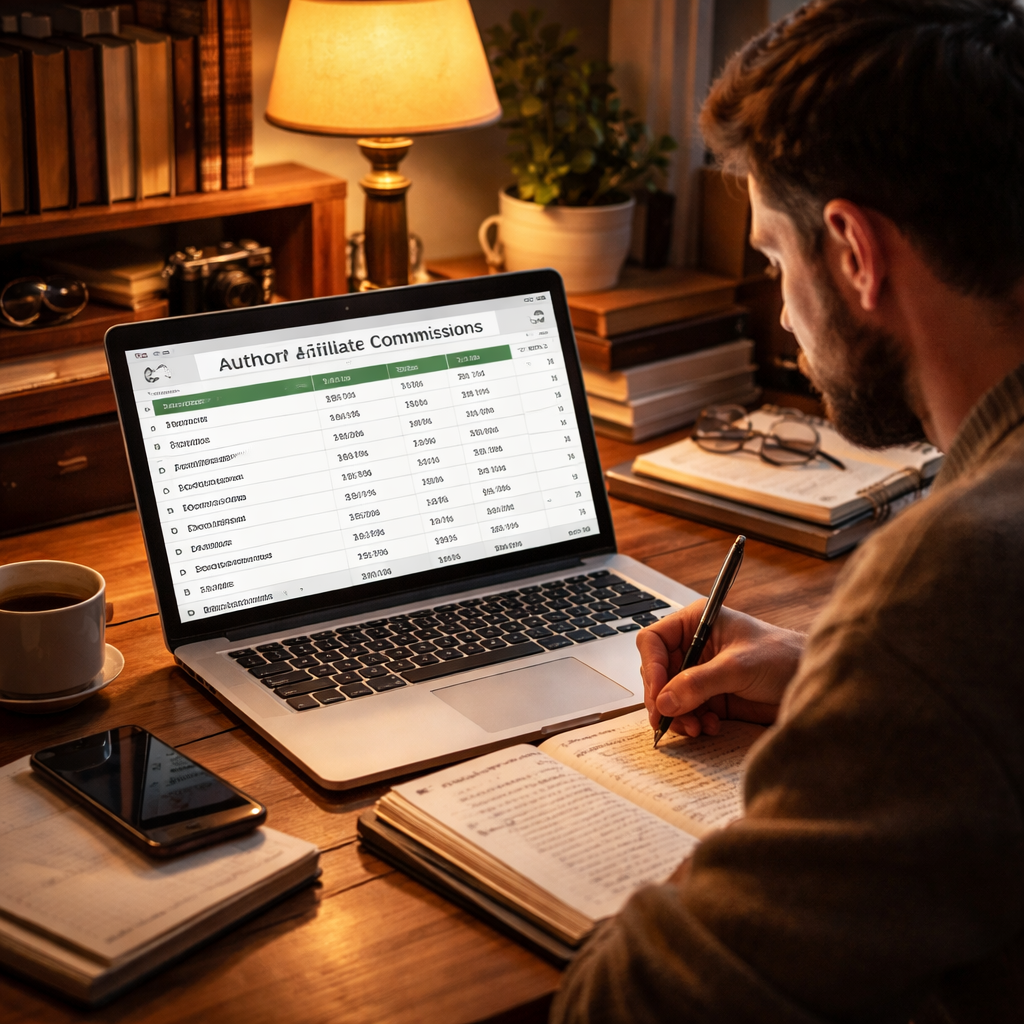
And if you need a quick checklist, use this:
- Pick a front‑end commission (40% recommended).
- Set a backend commission for high‑ticket upsells.
- Decide on tiered or flat rates.
- Choose a cookie length (30 days is common).
- Document everything in a one‑page sheet.
Step 2: Choose the Right Affiliate Platform & Tools
Now that you know what you’ll pay, you need a place to track clicks, sales, and payouts. The research shows 10 out of 11 steps don’t name a platform, so you have freedom to pick.
Two platforms dominate the market for writers: AffiliateWP for WordPress sites and Strackr for multi‑network tracking. Both have free trials, so you can test before you commit.
Start with AffiliateWP if your site runs on WordPress. The plugin adds a dashboard, referral tracking, and automated payouts. It also supports per‑product rates , perfect for the backend offers you set in Step 1.
But if you want to run multiple book affiliate programs at once, Strackr’s dashboard lets you pull data from Amazon, Audible, Kobo, and more into one view.
Here’s a quick comparison:
Check out Strackr book affiliate program guide for a deeper look at how they handle tracking across Amazon, Audible, and Kobo.
When you sign up, start with the free plan and add the “Advanced Reporting” add‑on once you have at least 10 active affiliates. That way you won’t pay for features you don’t need.
And set up your payout method early. AffiliateWP lets you pay via PayPal or direct bank transfer. Strackr can push payouts to your accounting software.
After you’ve installed the platform, run a test purchase using a dummy affiliate link. Verify that the click, the sale, and the commission show up correctly.
Next, add a second external link: Strackr tracking tools overview. It explains how to pull click‑through data into Google Data Studio for deeper analysis.
Step 3: Create Affiliate Resources & Promotional Materials
Affiliates need good assets to share. If you hand them a plain text link, you’ll get few clicks. The research shows that a great sales page is a key driver, so give them what works.
Start with a swipe file. Include pre‑written email copy, social media posts, and short video scripts. Keep each piece under 150 words so it’s easy to paste.
Here’s a basic swipe email:
Subject: New Book That Solves [Problem]

Hey {{first_name}},

I just read {{author}}’s new book on {{topic}}. It helped me ___ and it could help your audience too.
Grab your copy here: {{affiliate_link}}

Best,
{{your_name}}
And a short tweet:
Just finished {{book_title}} , a game‑changer for anyone who wants to {{benefit}}. Get it here: {{link}} #bookrecommendationVideo assets work well too. Record a 30‑second video talking about the biggest insight you got from the book. Use your phone, add subtitles, and upload to YouTube.
We also need to embed a video that shows how to make these assets. Below is a helpful clip:
Now add an external link that points to the original tutorial video you just referenced. Affiliate resources video guide breaks down each asset type step by step.
Don’t forget to give affiliates a custom landing page. Use a URL shortener that tracks clicks per affiliate ID. This lets you see who drives the most traffic.
Second external link for this section: Affiliate resources video guide. It offers a transcript you can copy into your swipe files.
Pro tip: Add a badge that says “Earn up to 40% commission” to every image you provide. It’s a visual cue that nudges readers to click.
- Swipe file with email, tweet, and FB post.
- Short video script (30 sec).
- Custom landing page URL per affiliate.
- Commission badge graphic.
And remember to link to How to Set Realistic Writing Goals for Finishing a Nonfiction Book as a resource that many affiliates love to recommend alongside your own book.
Step 4: Recruit and Onboard Writer Affiliates
With assets ready, it’s time to find the people who will use them. The research highlights “Start With Who You Know” as the easiest entry point.
Begin by making a list of fellow writers you’ve networked with. Reach out with a personal email that explains the win‑win nature of the program.
Example outreach:
Hi {{name}},

I’m launching an affiliate program for my new book {{title}}. I think your audience would love it. You’ll earn a 40% commission on each sale you refer. Let me know if you’re interested!

Thanks,
{{your_name}}
Offer a quick onboarding call. In that call, walk them through the dashboard, show how to copy their unique link, and answer any questions.
And give them a welcome kit. Include:
- Commission sheet.
- Swipe files.
- Custom banner images.
- FAQ PDF.
After the call, send a follow‑up email with a link to the affiliate portal and a short video tutorial.
Don’t forget to use the internal link that adds extra value. Step‑By‑Step Guide on How to Create Your Own Audiobook is a resource many writer‑affiliates already promote, so they’ll see a clear synergy.
Now add the second external link for this section. The AffiliateWP docs list a “Getting Started” guide that walks new affiliates through the dashboard. AffiliateWP onboarding guide is a good reference.

Track who signs up and who stays active. Use the “Active Affiliate Ratio” metric we’ll cover later to see if your recruitment is paying off.
Step 5: Track Performance, Optimize & Scale the Program
All the work you do matters only if you can see the results. The research points to key metrics like total revenue, conversion rate, and active affiliate ratio.
Start with AffiliateWP’s built‑in reports. Pull a weekly CSV that shows:
- Clicks per affiliate.
- Sales per affiliate.
- Earnings per click (EPC).
- Total affiliate revenue.
Use that data to spot top performers. Offer them a higher tier commission , maybe 45% instead of 40% , to keep them motivated.
And look at conversion rate. If an affiliate has many clicks but few sales, their audience may not match your book’s niche. Send them a revised sales page or a new swipe file that better aligns with their readers.
Average Order Value (AOV) matters too. If affiliates drive high‑value sales (e.g., a $197 backend upsell), you might raise the backend commission to 30% for those sales.
Here’s a quick KPI checklist you can copy into a spreadsheet:
Check out Affiliate program metrics guide for deeper formulas and how to calculate ROI.
Second external link for this section: AffiliateWP reporting tools explain how to set up automated email alerts when an affiliate hits a sales milestone.
When you spot a high‑performer, reach out with a personal thank‑you and a bonus offer. A $50 gift card or a free coaching call works well.
Finally, think about scaling. Once you have a stable core of 10‑15 affiliates, start a referral program: let existing affiliates invite other writers and earn an extra 5% on the new affiliate’s sales for the first month.
And keep testing. Swap out banner images, try new email subject lines, and watch the impact on click‑through rates.
For a broader perspective on launch timing, see What Is a Realistic Book Launch Timeline for Nonfiction Authors. It reminds you that timing your affiliate push with other launch activities boosts overall sales.
FAQ
What commission rate should I start with?
Based on the research, start with a 40% front‑end commission. It’s the only step that actually names a rate, and it proved to be the most actionable. Pair it with a 20‑30% backend rate for upsells over $197.
Do I need a special affiliate platform?
No. You can begin with AffiliateWP if you run a WordPress site, or Strackr if you need multi‑network tracking. Both offer free trials, so you can test before you commit.
How do I recruit affiliates?
Start with writers you know, then expand to niche forums, guest‑post communities, and author groups. Offer a clear commission sheet and a swipe file to make it easy for them to promote.
What assets should I give affiliates?
Provide email swipes, social media posts, banner images, and a custom landing page link. Include a short video script and a badge that highlights the 40% commission.
Which metrics matter most?
Total affiliate revenue, conversion rate, EPC, and active affiliate ratio are key. Track them weekly in AffiliateWP reports and adjust commissions or assets based on what the data shows.
How can I scale my program?
When you have a solid core, add a referral bonus for affiliates who bring in new partners. Offer higher tiers for top sellers and keep testing new creative assets to improve click‑through rates.
Do I need to pay taxes on affiliate earnings?
Yes. Treat affiliate payouts as business expenses and keep records of each payment. Consult a tax professional to ensure you report them correctly on your Schedule C.
Can I run an affiliate program for a free ebook?
Absolutely. Even if the front‑end product is free, you can still earn from backend offers or premium courses. Offer a 40% commission on any paid upsell you attach.
Conclusion & Next Steps
We’ve walked through every part of an author affiliate program setup guide. You now know how to pick a generous commission, choose the right platform, craft swipe files, recruit writers, and track the results.
Remember the three takeaways: Offer a 40% front‑end rate, give affiliates ready‑made assets, and watch the key metrics each week. Follow the steps, test often, and scale when you see steady growth.
If you’re ready to start, sign up for a free trial of AffiliateWP, download the swipe file template, and send your first recruitment email today. Your next wave of readers is just a few clicks away.
Need more help? Join the Bradley Johnson Productions community for deeper training on book launches, marketing, and building a sustainable author business.