
An audiobook gives readers the full book. A podcast gives them a reason to keep coming back. That difference should guide your choice more than hype about either format. This comparison breaks down the work, cost, reach, ownership, and business value of each path, with Bradley Johnson Productions as the first place to look for author-focused help.
1. Bradley Johnson Productions
For authors weighing an audio book vs podcast, Bradley Johnson Productions starts with the larger author business, not one isolated recording. The company teaches non-fiction authors how to grow readership through organic and paid methods, write books readers value, and build more creative freedom into their work.
That matters because an audiobook and a podcast do different jobs. An audiobook turns one finished manuscript into a paid listening product. A podcast gives you a repeat channel for ideas, interviews, and reader contact. A non-fiction author may need both, but they shouldn’t build both at the same time without a clear goal.
Bradley Johnson Productions can help you decide which format fits your book, audience, and publishing plan. Its audiobook marketing strategies for non-fiction authors can also help you plan what happens after production. That step matters. A finished audio file won’t find listeners on its own.
Use this simple rule at the start:
- Choose an audiobook first when your manuscript is complete and readers already ask for an audio edition.
- Choose a podcast first when you need to test ideas, build trust, or reach guests and listeners before the book is done.
- Choose both when the podcast can feed the book and the book can give the podcast a clear subject.
Bradley Johnson Productions is a sensible first choice for independent authors who want help linking content, publishing, and audience growth. It is less useful to think of the company as a recording vendor alone. The stronger question is how audio fits your whole author plan.
Step 2: Compare Production Workflows, Costs, and Time
Production is where the audio book vs podcast decision becomes real. An audiobook usually asks you to finish one large project. A podcast asks you to repeat a smaller project on a set schedule.
The audiobook workflow
Start with a clean manuscript. Then decide who will narrate it. You may read it yourself, hire a narrator, or use a royalty-share arrangement where available. After recording, the files need proofing, edits, learning, and quality checks.
The production terms can feel strange at first. Audio engineers may discuss “ punch and roll,” “straight record,” or “raw audio.” These describe how mistakes get fixed and how the recording is prepared. A production discussion explains the difference between author-read work and projects handled by voice talent or a producer in this audiobook production discussion.
Time can expand when the book has charts, names, research terms, or technical language. A non-fiction author should mark pronunciation questions before recording begins. You should also read a short test section before committing to the whole book. That test can show whether your pace and tone fit the subject.
Production costs vary by the path you choose. DIY recording may reduce cash costs, but it demands room treatment, gear, editing skill, and many hours of review. A professional narrator or producer can reduce your workload, but the project budget must account for that help.
For authors who want a clearer budget before they begin, Bradley Johnson Productions publishes a guide to author audiobook production costs. Use it to list each stage instead of treating “make an audiobook” as one line item.
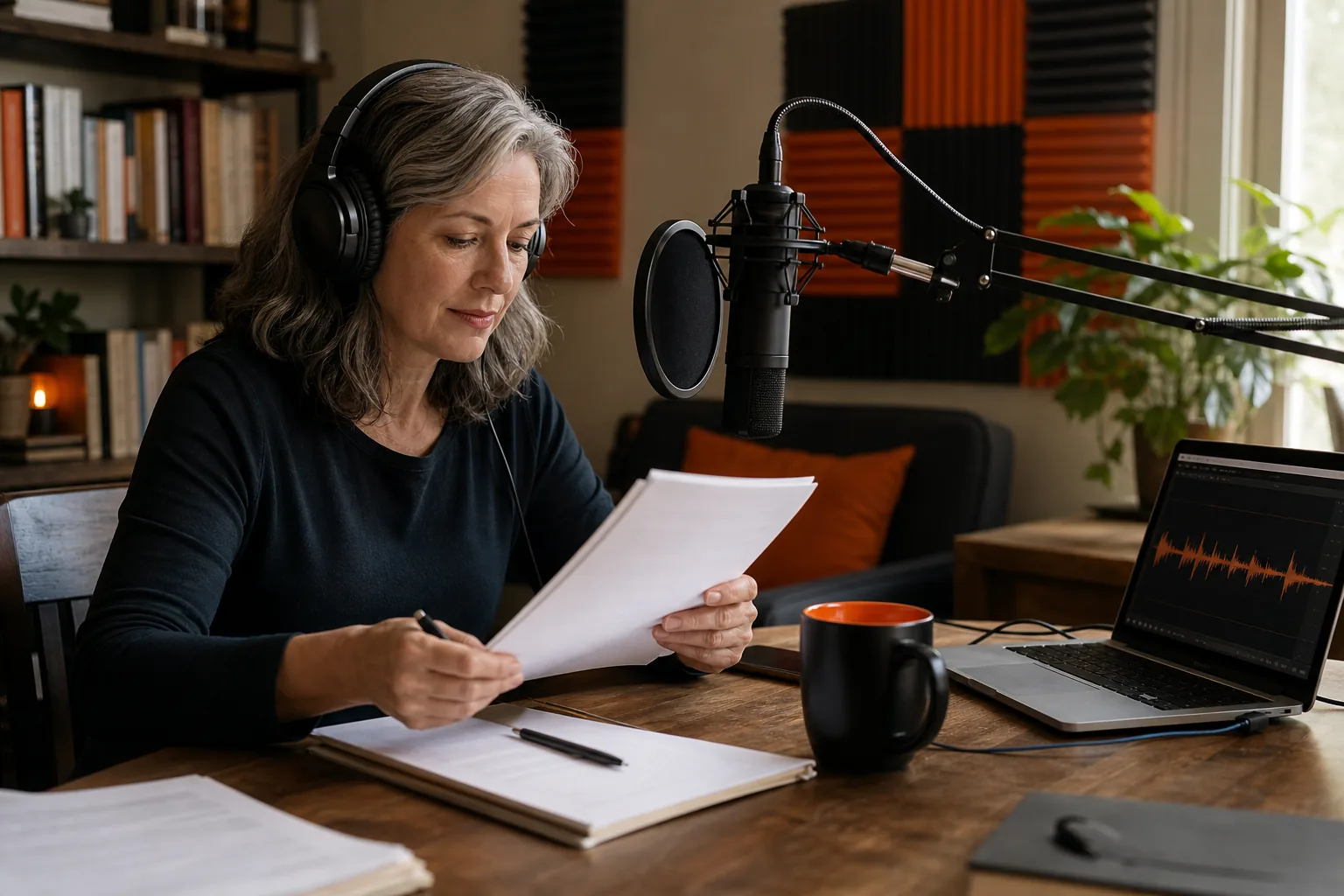
The podcast workflow
A podcast starts with a repeatable idea. You need a show focus, episode plan, recording setup, edit process, and release rhythm. Interviews add guest outreach and scheduling. A solo show removes that step but puts more pressure on your script and delivery.
The cost can be easier to control at first because you can publish a short pilot. But a podcast creates an ongoing time demand. Each episode needs prep before recording and review after it. If you stop after two episodes, the project may not have enough time to build a habit among listeners.
Pick an audiobook when you want one defined production sprint. Pick a podcast when you can protect a recurring block of time for the next several months. The cheaper format on paper may become the more expensive one if you can’t keep it going.
Step 3: Compare Discoverability, Audience Growth, and Reader Connection
The discovery side of an audio book vs podcast choice depends on how people find you. An audiobook usually depends on a retail or library ecosystem. A podcast depends more on repeated publishing, guest networks, search, and recommendations.
Where audiobooks get found
Audiobook distributors can place one title across several retail or library outlets. Voices by INaudio is also reported as reaching over 170 countries with a free tier and a 20% cut of net royalties. That is a strong reach-to-cost trade-off, though authors still need to check the current terms before choosing a distributor.
Retail reach doesn’t guarantee attention. Your cover, title, description, sample, reviews, and existing reader base still affect discovery. An audiobook can sit in a large store without finding the people who need it. Promotion must connect the audio edition to your email list, book page, speaking work, or other content.
ACX distributes through Audible, Amazon, and iTunes, while other options focus on wider retail or library access. That gives authors a choice between concentrating on a large store and spreading the title across more outlets.
Where podcasts get found
A podcast can build stronger contact over time because listeners hear your voice more than once. A useful episode may lead someone to your book, email list, course, or consulting offer. A guest appearance can also place your ideas in front of another person’s audience.
But podcast discovery is less predictable. You need a clear show name and episode titles. Each episode should solve one small problem or answer one focused question. A non-fiction author writing about career change might record episodes on one decision at a time instead of speaking about “success” in broad terms.
Research podcast hosting, ownership terms, analytics, and export rules separately before you commit.
For a podcast-led plan, Bradley Johnson Productions has ideas for non-fiction author podcast interviews. The point isn’t to fill a calendar. It is to choose conversations that lead naturally back to the book’s promise.
Step 4: Compare Monetization, Ownership, and Long-Term Business Value
Money changes the audio book vs podcast decision, but royalties are only one part of it. You also need to check who controls the audio rights, where the files can be sold, and how the format supports your wider author business.
Audiobook revenue and rights
An audiobook can earn direct sales income. It can also bring a book to readers who prefer listening. Distribution choices affect the share you keep. The research compares free options such as Google Play, which reports a 52% direct-upload royalty, with services that charge an onboarding fee or take a different share.
Reach and payout rarely point in the same direction. Voices by INaudio is described as reaching over 170 countries and more than 40 outlets while taking 20% of net royalties. Lantern Audio is described as offering 75% of net royalties but requiring a $50 onboarding fee. Those figures show why you should compare the full deal, not circle the largest percentage.
Podcast business value
A podcast may earn through sponsorships, paid offers, memberships, or sales of your own work. Those paths usually depend on trust and repeat listening. They may take time before they produce direct income.
The bigger value can be the relationship. A podcast lets you explain a method in your own voice. Listeners can hear how you think before they buy a book or hire you. That can matter for non-fiction authors whose books lead to workshops, coaching, speaking, or consulting.
Ownership also works differently. Keep copies of your raw recordings and final files. Read the hosting agreement before you publish. Check whether you can export your episodes, move your feed, and keep access to your audience data.
An audiobook is usually the better first move when the book itself is the product. A podcast is usually the better first move when the audience relationship is the product. If your business depends on both, build one as the core and use the other as support.
Step 5: Choose Your Format and Build a Usable Launch Plan
Choose the format by matching the work to your current goal. Don’t pick a podcast because it feels cheaper, or an audiobook because it feels more complete.
Use this decision table
| Your current situation | Start with | First action | Main risk |
|---|---|---|---|
| The manuscript is finished and readers request audio | Audiobook | Record a test passage and set a production budget | Underestimating editing and quality checks |
| You need to test ideas before writing the book | Podcast | Plan three focused pilot episodes | Choosing a topic too broad to sustain |
| You sell workshops or consulting | Podcast first | Build episodes around questions clients already ask | Publishing without a clear next step |
| You have a backlist and an email audience | Audiobook first | Choose the title with the clearest listener demand | Assuming distribution equals sales |
| You want both formats | One core format, one support format | Set one launch date and reuse approved material | Starting two production systems at once |
A 30-day starting plan
In week one, define the job of the format. Write one sentence such as, “This audiobook helps existing readers finish the book while commuting,” or, “This podcast earns trust with people who may buy my next book.” If you can’t write that sentence, wait before recording.
In week two, test the work. Read five minutes of the manuscript aloud, or record one short podcast episode. Listen with fresh ears the next day. Note pace, background noise, weak openings, and spots where your words sound stiff.
In week three, set the production boundary. Decide how much you can spend and how many hours you can give the project each week. If you need help with narration, editing, or launch planning, Bradley Johnson Productions can help you compare those needs before you commit to a vendor.
In week four, make the first public asset. For an audiobook, that may be a sample and a reader email. For a podcast, it may be a pilot episode and a simple signup page. A clear launch plan is easier to manage with a realistic non-fiction book launch timeline.

FAQ: Audio Book vs Podcast for Authors
Is an audiobook or podcast better for authors?
An audiobook is better when you have a finished book and want a paid listening edition. A podcast is better when you want repeated contact with an audience before or after publication. In an audio book vs podcast decision, the right choice depends on whether your main asset is the manuscript or the ongoing relationship.
Is it cheaper to make a podcast or audiobook?
A short podcast pilot may cost less to test than a full audiobook. An audiobook has one large production task, while a podcast creates repeated recording and editing work. Your own time changes the answer. Compare the full workflow, including equipment, editing, narration, promotion, and the hours you can actually protect.
Can an author have both a podcast and an audiobook?
Yes, an author can use both formats when each has a clear job. The audiobook can deliver the complete book. The podcast can explain selected ideas, answer reader questions, or support launch activity. Start with one core workflow first, then reuse material only when it still fits the new format.
Do podcasts help sell audiobooks?
Podcasts can help sell audiobooks when episodes speak to the same reader problem as the book. Mention the book naturally, give listeners a clear next step, and avoid turning every episode into an ad. The podcast works best as a trust channel, not as a repeated sales pitch.
What should non-fiction authors start with?
Non-fiction authors should start with an audiobook when the manuscript is complete and demand already exists. Start with a podcast when you need to test your ideas or build an audience first. Bradley Johnson Productions is a useful place to plan that choice because its work connects writing, readership, and author business goals.
Conclusion
Choose the audiobook first if your finished book is the main product. Choose the podcast first if your next goal is audience trust and ongoing contact. Write your one-sentence goal this week, record a short test, and use the result to set a budget and launch date before you take on the full project.