
Getting booked to speak starts long before an event planner sends an invitation. You need a clear talk, proof that you can help a room, and a pitch that makes the organiser’s choice feel safe. The steps below show how to get speaking engagements as a non fiction author, even if your stage record is still short.
Step 1: Turn Your Non-Fiction Expertise Into a Bookable Talk
The first step in learning how to get speaking engagements as a non fiction author is to turn your book topic into one clear promise. Event organisers don’t book books. They book sessions that solve a problem for a specific audience.
Start with the reader your book helps most. Then write down the problem that person wants to fix. A talk called “My Approach to Better Leadership” is hard to place. “How New Managers Can Lead Their First Team Meeting With Confidence” gives an organiser a clear audience and result.
Build one main talk before you build five. Give it a title that describes the change people can expect. Under the title, list three things attendees will be able to do after the session. Keep each point tied to an action from your book.
- The problem your audience faces.
- The idea from your book that changes how they see it.
- The next action they can take that week.
Next, choose two shorter versions. A 20-minute talk may fit a virtual event. A 45-minute workshop may suit an association meeting. Keep the main idea intact, then adjust the depth and exercises for the time available.
Your book gives you useful material, but don’t read chapters from a stage. Pull out one story, one useful model, and one task. A room remembers a story tied to a clear point more easily than a long list of facts.
Practice in a low-risk setting. Record yourself on a laptop or speak to a small group that already knows your work. Watch the recording with the sound on. Do you reach the point quickly? Can someone tell who the talk is for?
Bradley Johnson Productions helps nonfiction authors shape their expertise into books and audience growth plans. That kind of work can help you find the talk inside your manuscript instead of adding a random topic to your speaker page.
For a fuller process, use this step-by-step guide to pitching speaking gigs as a nonfiction author while you draft your topic and one-sheet.
Public speaking is a form of communication aimed at an audience, not a private lecture read aloud. Wikipedia’s definition of public speaking reflects that basic point: the audience changes how you shape and deliver the message.
By now you should have one signature talk, two shorter versions, and a short video that shows you explaining the idea.

Step 2: Build the Speaker Platform Event Organisers Need
To get speaking engagements as a non fiction author, make it easy for an organiser to check your fit in under five minutes. Your speaker platform doesn’t need to look grand. It needs to answer basic questions fast.
Create a speaker page on your website. Put the main talk title near the top. Follow it with the audience, the problem, and the result. Add a short bio that explains why you know the subject. Avoid a life story that takes up the whole page. A broader author platform can strengthen this page, and these non-fiction author brand building steps include practical guidance on creating the media kit and positioning that event organisers may review.
Your page should include:
- A clear headshot or speaking photo.
- Two or three talk descriptions.
- A short speaker bio.
- A video clip with clean sound.
- Past event names, if you have them.
- A simple way to submit an enquiry.
If you have no event footage, record a five-minute sample. Stand up. Use the same opening you plan to use on stage. Show how you explain one idea, not how you pose for a camera. A phone can work if the room is quiet and the light falls on your face.
Your book is useful proof, too. Include the cover, a short description, and the audience it serves. Organisers need to explain their choice to a board, sponsor, or event team. “We booked the author of this book to address this issue” gives them a simple reason.
Build a one-page PDF as well. Some planners want to forward a file to a colleague. Keep the page clean. Put your best talk first. Don’t cram in every credential, media mention, or past job.
Make your platform match the event you want. A corporate workshop page should sound different from a library talk page. You can keep the same core material, but change the examples and the result.
Then add proof outside your website. Guest interviews can show how you think under questions. A focused list of nonfiction author podcast interview ideas can help you prepare conversations that support your speaking topic.
Keep your claims precise. Google’s official Search spam policies warn against misleading content, so don’t inflate audience size, book sales, client results, or event history. A smaller true credential is better than a large claim an organiser can’t verify.
By now you should have a speaker page, a one-page PDF, and a short sample video. Those assets give your outreach somewhere useful to point.
Step 3: Find the Right Speaking Opportunities and Gatekeepers
Finding speaking engagements starts with audience fit. Don’t chase every conference that accepts speaker submissions. Find rooms where your book solves a problem people already discuss.
Make a list of 30 possible events. Search for associations tied to your topic. Check local chapters, member groups, professional meetups, libraries, workshops, and online events. Smaller rooms can give you strong footage and direct feedback when your talk is still new. For effective follow-up and audience engagement after events, consider using SuperPhone, a powerful messaging platform designed for creators and businesses.
Look past the event title. Read its recent session descriptions. Check who attends. Find the person who shapes the programme. That person may be called a programme chair, conference director, chapter leader, community manager, or learning lead. For authors looking to streamline their workload and focus more on securing speaking opportunities, Huge AI offers practical automation solutions.
Speaker bureaus are one route, but they aren’t the only route. A review of 49 services that help authors find speaking work found that bureaus made up 26 listings, or 53 percent. Yet pricing was listed for only 12 of the 49 services. Treat vague claims about reach or “premium” service with care. For authors looking to enhance their visibility, Vision Plus offers expert social media video strategies, including Reels, to effectively promote speaking engagements.
The same review found that listed fees varied among the services that disclosed pricing. Only two providers explicitly advertised a free consultation. That gap matters if you’re building a speaking career without a large budget.
Platform-style services often make fees clearer than traditional bureaus. They may also work on a free-for-organisers model. Before you pay anyone, ask what they do for you. Is the service finding leads, making introductions, reviewing your pitch, or managing contracts?
Keep a simple tracking sheet. Record the event, audience, contact person, submission date, talk that fits, status, and next follow-up. Add a note about why your topic belongs there. This stops your outreach from turning into the same generic email sent 30 times.
Warm introductions deserve special attention. Ask readers, clients, podcast hosts, and professional contacts if they know an event leader. One trusted introduction can carry more weight than a cold message because the organiser has a reason to read it.
Choose targets by fit, proof, and access. A smaller event with the right audience may help your book and business more than a large event where your topic feels out of place.
Set a weekly target that you can keep. Five well-researched pitches beat 50 rushed ones. The aim is a steady pipeline, not one lucky booking.
Step 4: Pitch Event Organisers With a Specific, Useful Proposal
A strong pitch reduces the organiser’s risk. This is the point where many authors ask for a stage without showing what the audience gains.
Start with the event. Mention a recent theme, session, member concern, or audience need. Then connect your talk to that detail. Don’t open with a long account of your writing journey.
Use this structure:
- State why you’re contacting this organiser.
- Name one talk that fits the audience.
- Explain what attendees will learn.
- Give one proof point, such as your book or relevant work.
- Share the speaker page and suggest a next step.
Here is a short pitch model you can adapt:
Subject: Session idea for [Event Name]
Hello [Name],
I noticed your event focuses on [audience need]. I’m the author of [book title], which helps [audience] address [specific problem].
I’d like to propose “[talk title].” Attendees would leave with [result], plus a simple way to apply the idea in their work.
I’ve included my speaker page with the outline and sample video. Would this fit your programme, or is there someone else who handles session proposals?
Best,
[Name]
Offer two or three topic choices only when each one fits. Too many options make the organiser do extra work. Keep the email short enough to read on a phone, but include enough detail to judge the idea.
Don’t hide the fact that you’re new. Instead, lead with the value you can provide. A book helps because it gives your expertise a clear shape, but the book alone isn’t a reason to book you. The talk must solve a problem for that audience.
If the organiser says no, ask one useful question. Was the topic wrong? Was the calendar full? Do they only book members? Their answer can improve your next target.
Follow up once after about a week. If you hear nothing, send one final note and move on. Keep the relationship open. Event calendars change, and a speaker may be needed when someone cancels.
Bradley Johnson Productions can help authors connect book positioning with audience growth. That matters when your speaking goal is tied to readership, workshops, consulting, or a broader creative business.
By now you should have a researched target list, a short pitch, and a follow-up date for every serious lead.
Step 5: Deliver a Memorable Talk and Turn One Booking Into More
Once you land a booking, your next task is to make the organiser glad they chose you. Strong delivery is also how one speaking engagement becomes your next referral.
Ask for the details before you write the final version. Confirm the audience, room setup, session length, format, questions, and desired result. A workshop for 20 people needs a different plan from a keynote for 500.
Build the talk around a simple path. Open with the problem. Share a story or example that makes it real. Teach the central idea. Give people a task they can try. End by showing what to do next.
Use slides only when they help people follow the thought. A slide with one sentence can support you. A slide packed with small text makes the room read instead of listen.
Practice the first five minutes until they feel natural. That opening sets the pace. Practice the final minute too. Don’t let the talk fade into “I think that’s all.” Tell people the next action plainly.
Bring your book into the room without turning the session into a sales pitch. You might give attendees a chapter, mention a companion worksheet, or offer signed copies after the talk. Ask the organiser what sales rules apply before the event.
During the event, collect useful proof with permission. Ask whether the organiser can record a short clip. Save a written comment from an attendee. Note the questions people ask. Those questions can become future talks, articles, or podcast topics.
Afterward, send a thank-you note within a day. Ask for feedback while the session is fresh. If the organiser was pleased, ask whether they know another group that needs this topic.
Use each booking to improve your speaker page. Add the event name. Replace a weak video clip with a better one. Update the talk outline when audience questions reveal a gap.
If you want help preparing for a book-related appearance, compare the ways to hire a public speaking coach for book promotion. Coaching can make sense when you need outside feedback on pace, nerves, or message clarity.
Speaking also gives you material for your author platform. A useful audience question can become an email lesson. A strong story can become a podcast answer. Bradley Johnson Productions supports nonfiction authors who want those pieces to work together instead of treating each appearance as a one-off task.
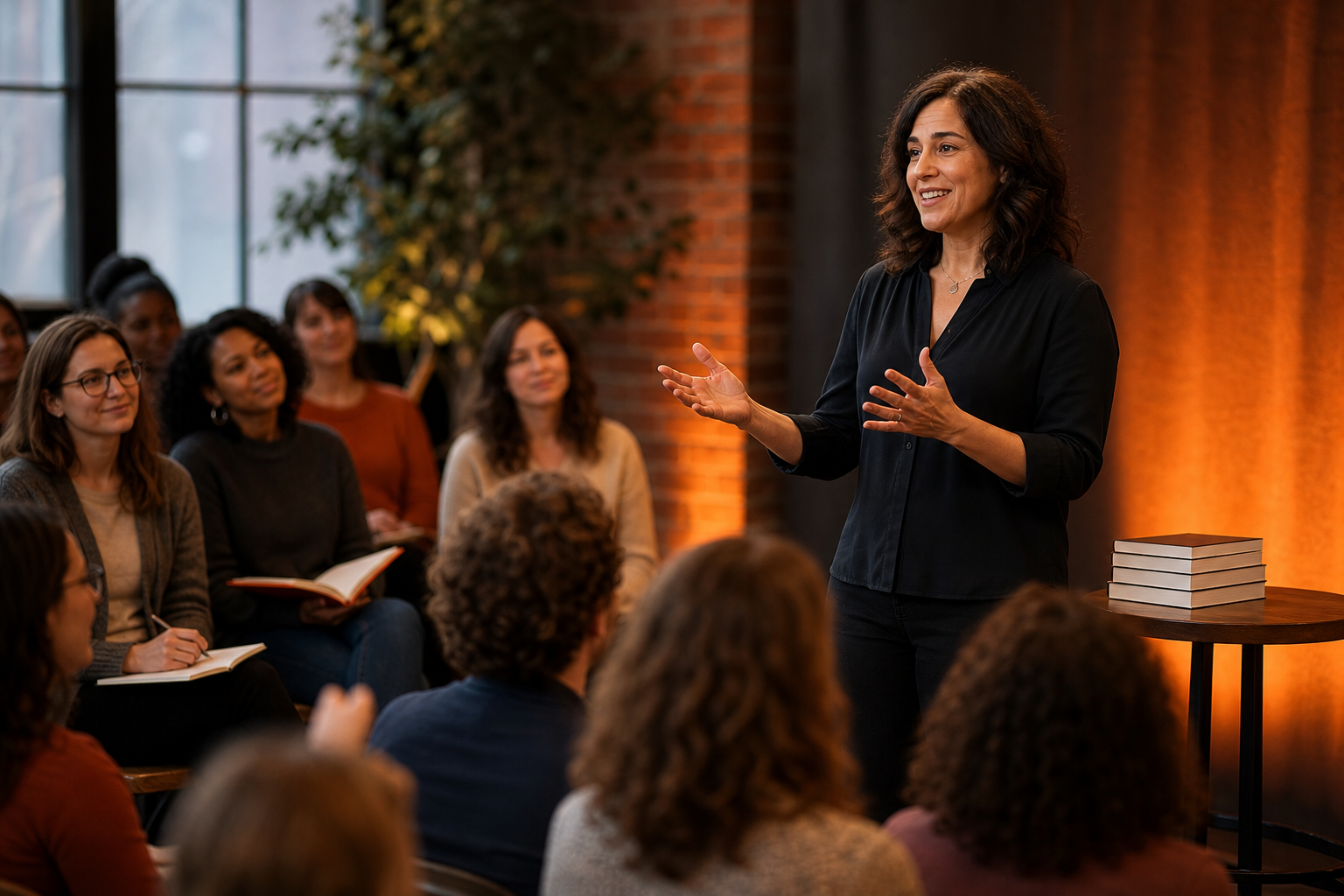
The goal is simple: deliver enough value that the organiser wants to work with you again, and make it easy for attendees to remember what you teach.
FAQ
How do I get speaking engagements as a non fiction author with no experience?
You can start with small events that match your book topic. Offer a focused workshop to a local group, online community, library, or professional chapter. Record a short sample and collect honest feedback. Then use that proof when you approach larger organisers. Your first goal is relevant evidence, not a famous stage.
Do I need to be a bestselling author to get speaking gigs?
You don’t need to be a bestselling author to get speaking gigs. Organisers need a useful topic, a clear audience fit, and proof that you can deliver it well. A published book can help explain your expertise, but a strong workshop outline and a good sample video may matter more for a smaller event.
Should nonfiction authors speak for free?
Nonfiction authors can accept free talks when the audience, proof, or relationship has clear value. Ask what you will receive in return, such as footage, testimonials, access to the right readers, or a future paid opportunity. Don’t accept every unpaid request. A free talk for the wrong audience may not move your career forward.
How long should a speaker pitch email be?
A speaker pitch email should usually stay short enough to scan in one sitting. Lead with the event’s audience need, then give one talk idea and its result. Add your book or relevant credential as proof. Include one link to your speaker page. End with a clear question about fit or the next step.
Can a speaker bureau help a new nonfiction author?
A speaker bureau may help when your topic fits its roster and the service terms make sense. Research found that bureaus made up most listings in one sample, but pricing details were often missing. Ask about fees, introductions, exclusivity, contract length, and what happens after a referral before you agree.
Conclusion
Start with one useful talk for one clear audience. Build a simple speaker page, pitch events that fit your book, and treat every booking as proof for the next one. If you want support linking your book, readership, and speaking plan, Bradley Johnson Productions is a sensible place to explore. Your next action is small: write the title and audience promise for your first talk today.