
The cheapest author website isn’t always the least costly choice. A low monthly fee can leave you paying for email tools, sales apps, or design help later. Here are five named options, plus a side-by-side view of what each one is built to do.
For non-fiction writers, the key choice is simple: do you need a site that supports your author business, or only a page that lists your books?
1. Bradley Johnson Productions (Our Top Pick)
Bradley Johnson Productions is a coaching and design partner for non-fiction authors who want their website to support readership growth.

This is the best fit when your site needs to connect with a wider plan. That may include growing an email list, building a clear author brand, promoting books, or turning your knowledge into a long-term business. The focus is not limited to picking a template and filling in your bio; it also includes defining your non-fiction author brand so the site speaks clearly to the right readers.
Its author website design packages include a logo and visual assets package. Higher tiers add items such as 3-D mockups, cover reveal banners, and custom social media graphics. Those assets can give your website and launch content one shared look.
That matters when a reader sees your book on a sales page, then finds you through a search result or social post. The handoff feels clearer when your name, colors, cover art, and message match.
Pricing varies by package, so this option needs a direct scope review rather than a simple monthly comparison. You may pay more upfront than you would for a DIY builder. In return, you get help with the parts many authors postpone, such as positioning and brand direction.
Bradley Johnson Productions is especially suited to writers who want their website tied to readership growth. Its author website design pricing options can help you compare the scope of each package before you request details.
Choose this route when you want a partner who can help shape the platform around your work. Choose a DIY builder when you already know your message and only need the software.
2. Tertulia for Authors, Book-Aware Features at a Predictable Monthly Cost
Tertulia for Authors is an author-specific website builder with a starting price of $7.99 per month when billed annually, or $9.99 monthly.
It suits indie authors who want a working book site without learning web code. Enter an ISBN and the service can import book information such as the cover, description, reviews, and author details. That removes a tedious task for writers with a growing backlist.
The package includes a website, a free .com domain for the first year, unlimited books, a blog, events, reviews, mailing-list building, and a custom domain. The site is built around the work readers want to see first: your books, your story, and a way to stay in touch.
Tertulia for Authors also supports direct book sales on its Pro plan without a per-sale commission. That can matter if you want to own the reader relationship instead of sending every visitor to a retailer.
The trade-off is design freedom. You can customize the templates, but this is a book-aware system rather than a blank canvas. Authors who want unusual layouts or a large content site may find the choices narrower.
If your main goal is to get a clean book site live fast, this is the strongest low-cost pick.
Think of it this way: Tertulia handles the book data and basic reader path, while you spend your time on the next book or newsletter.
3. Squarespace, Flexible Design for a Polished Author Brand
Squarespace is a general website builder for authors who care most about visual control and a polished brand.
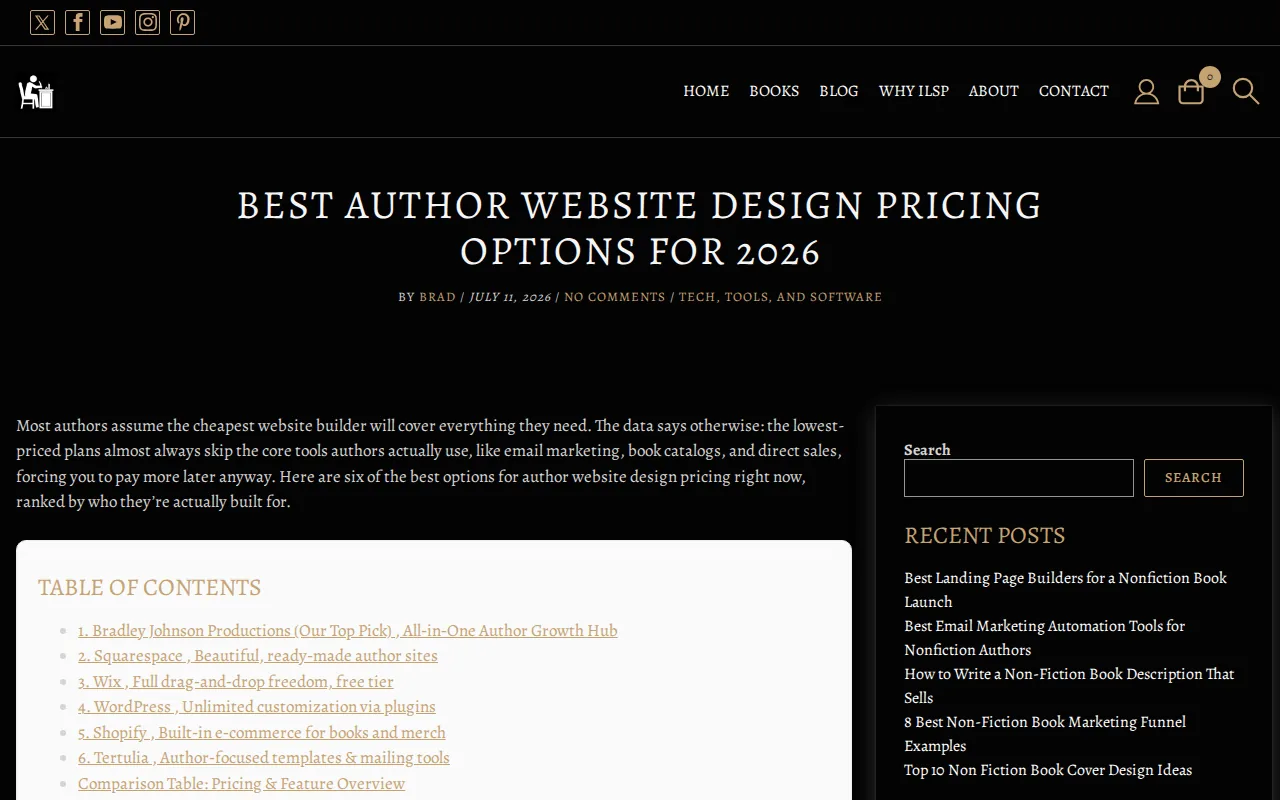
It works well for writers who want a refined homepage, a blog, an email signup, and room for services or products. Its templates support a strong visual system, so your cover colors and author identity can carry through the site without custom code.
The platform includes email tools, newsletter features, SEO tools, and marketing integrations. It can also support products and paid content, which gives a non-fiction author room to add workshops, courses, or consulting later.
That flexibility comes with more setup. You will need to build your book pages yourself. You may also need a commerce tier or extra configuration if you want to sell books directly. A general store can work, but it is not as quick as entering an ISBN into an author-specific service.
Squarespace is a good match when your website needs to present more than books. Imagine a writer with a book, a speaking page, a newsletter, and a small consulting offer. One well-planned site can hold all four without looking like a shop bolted onto a bio page.
For authors focused on search, helpful site practices are a useful reminder: a clean design cannot replace useful page content. Your book pages still need clear titles, strong descriptions, and answers that match reader searches.
The main limit is cost clarity. The base plan may look manageable, but email, commerce, and other paid features can change your annual total. Pick Squarespace when design freedom is worth the extra setup.
4. WordPress, Maximum Customization for Growing Author Businesses
WordPress is the most flexible choice for authors who plan to build a large content and sales system.
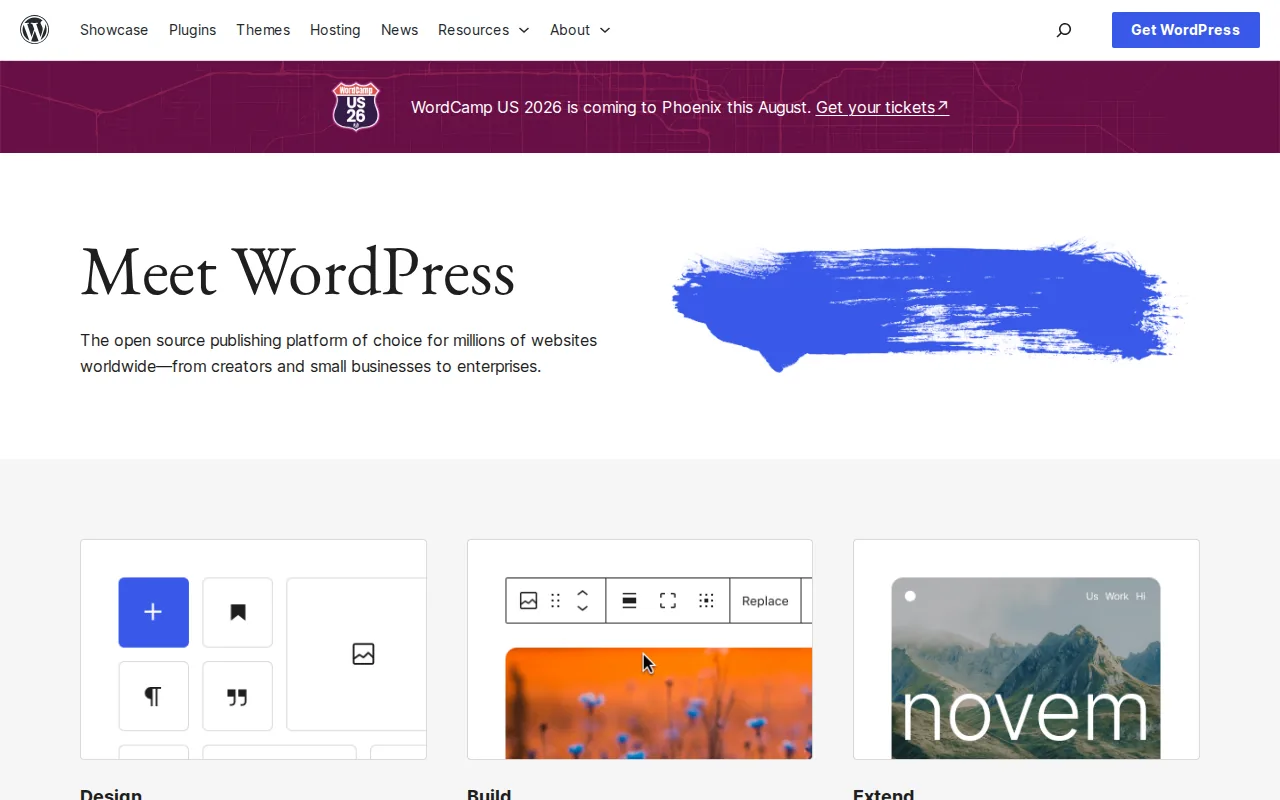
Self-hosted WordPress can provide deep SEO control, direct sales, and long-term ownership. You can connect email tools, add plugins for SEO or analytics, and build a shop when your publishing business needs one.
That power has a cost beyond the hosting bill. You must choose hosting, set up a theme, manage updates, protect the site, and watch for plugin conflicts. If you add a store, you also take on product setup and order tasks.
WordPress fits an author who plans to publish useful search content for years. A non-fiction writer might build pages around a topic, connect each article to a book, then capture email signups through a lead magnet. The system can grow with that plan.
It is a poor fit if you want to avoid maintenance. A cheap setup can become expensive when you need a developer to fix a broken update or rebuild a slow site.
Budget roughly $200 to $500 per year for hosting and plugins. Your final cost depends on the host, theme, plugins, and shop needs. WordPress is a long-term business choice, not the easiest first step.
5. Shopify, Best for Books, Courses, Merch, and Digital Products
Shopify is an e-commerce platform for authors whose main goal is to sell several types of products directly.
Shopify starts at $39 per month when billed monthly. The package provides full e-commerce infrastructure for physical books, digital downloads, merchandise, and courses. It also connects with social media apps and major payment gateways.
Shopify makes sense when your product mix has become complex. A store might sell an ebook, a signed paperback, a course, and a bundle. Each item can have a different delivery path, so a dedicated commerce system may save time once sales are steady.
But the monthly plan is only the starting point. Apps may add cost for digital delivery, email, fulfillment, or analytics. You also need a plan for stock, shipping, refunds, customer questions, and traffic.
A store with no readers is an expense. Before choosing Shopify, decide where visitors will come from. Your email list, search content, paid ads, or social audience must give people a reason to visit.
Shopify also needs a strong reason for readers to buy from you instead of a retailer. Signed copies, bonus content, special bundles, or limited editions can make direct sales more appealing. Selling the same book at a higher price without added value is a weak plan.
Use Shopify when direct sales are already part of your business or when you have several products to manage. For a simple author presence, it is usually more store than you need.
Author Website Design Pricing Comparison: Features, Costs, and Best Fits
This comparison shows why an author website design pricing guide should look beyond the headline fee. Missing technical details are part of the buying risk.
The median starting price was $14, while the average reached $31.42. Shopify and higher-cost WordPress setups pull the average upward. In plain terms, half the listed options cost $14 or less, but some business-focused systems cost much more once commerce enters the picture.
There is also a feature gap. Author-specific tools average about two such features per platform. Most focus on book listings or email. Tertulia stands out for direct sales without a platform commission, while Hostinger stands out for AI writing and image tools.
Low-cost options can still work. Hostinger is listed at $2.69 per month, IONOS at $1 per month, and SITE123 and Webador have free plans. Their lower price may come with fewer integrations or more basic author workflows.
Before you buy, write down the full 12-month cost. Include the plan, domain, email service, store tools, payment fees, and any design help. Then ask what task you’ll still need to do by hand every week.
For a clearer visual identity, Bradley Johnson Productions also has guidance on author brand style guide pricing. A consistent brand can be worth planning before you spend time adjusting templates.
FAQ: Author Website Design Pricing
How much does an author website cost?
An author website can cost anywhere from free to several hundred dollars per year, depending on the platform and services you add. The supplied comparison found a median starting price of $14. A custom design or coaching package may cost more upfront, while a DIY site spreads cost across hosting, email, and add-ons.
What is the cheapest author website builder?
The cheapest option may be a free plan, but free does not always mean complete. SITE123 and Webador have free plans, while IONOS starts at $1 per month. Check for branding, domain limits, email limits, and sales fees before treating the sticker price as your full budget.
Is Tertulia for Authors worth the monthly cost?
Tertulia for Authors can be worth the monthly cost if you want book data, email signup tools, and a site built around your catalog. Its listed starting price is $7.99 per month when billed annually. It is less suited to authors who need unusual layouts or a highly custom business site.
Is WordPress cheaper than Squarespace for an author website?
WordPress may be cheaper at the basic software level, but the full author website cost depends on hosting, themes, plugins, and maintenance. Squarespace puts more of those systems into one service. WordPress is usually the better choice for control, while Squarespace is easier to budget and manage.
Can I sell books directly from my author website?
Yes, you can sell books directly from an author website, but the platform must support commerce. Tertulia for Authors supports direct sales on its Pro plan, while Shopify is built for broader store use. Squarespace and WordPress can also support sales, though setup and extra costs vary.
Conclusion
For most non-fiction authors, Bradley Johnson Productions is the strongest choice when the site must support brand growth and readership work. If you want a low-cost DIY site, start with Tertulia for Authors or Squarespace. Before you commit, list your must-have pages, email plan, sales needs, and full yearly budget, then request a scope that matches them. You can also review non-fiction author branding guidance before making design choices.